The ability to effectively outline how a grant for new equipment could address barriers to participation and performance has helped the Sydney Para Fencing program secure funding through Paralympics Australia’s ‘PEEP’ project – the Paralympic Equipment Enhancement Program.
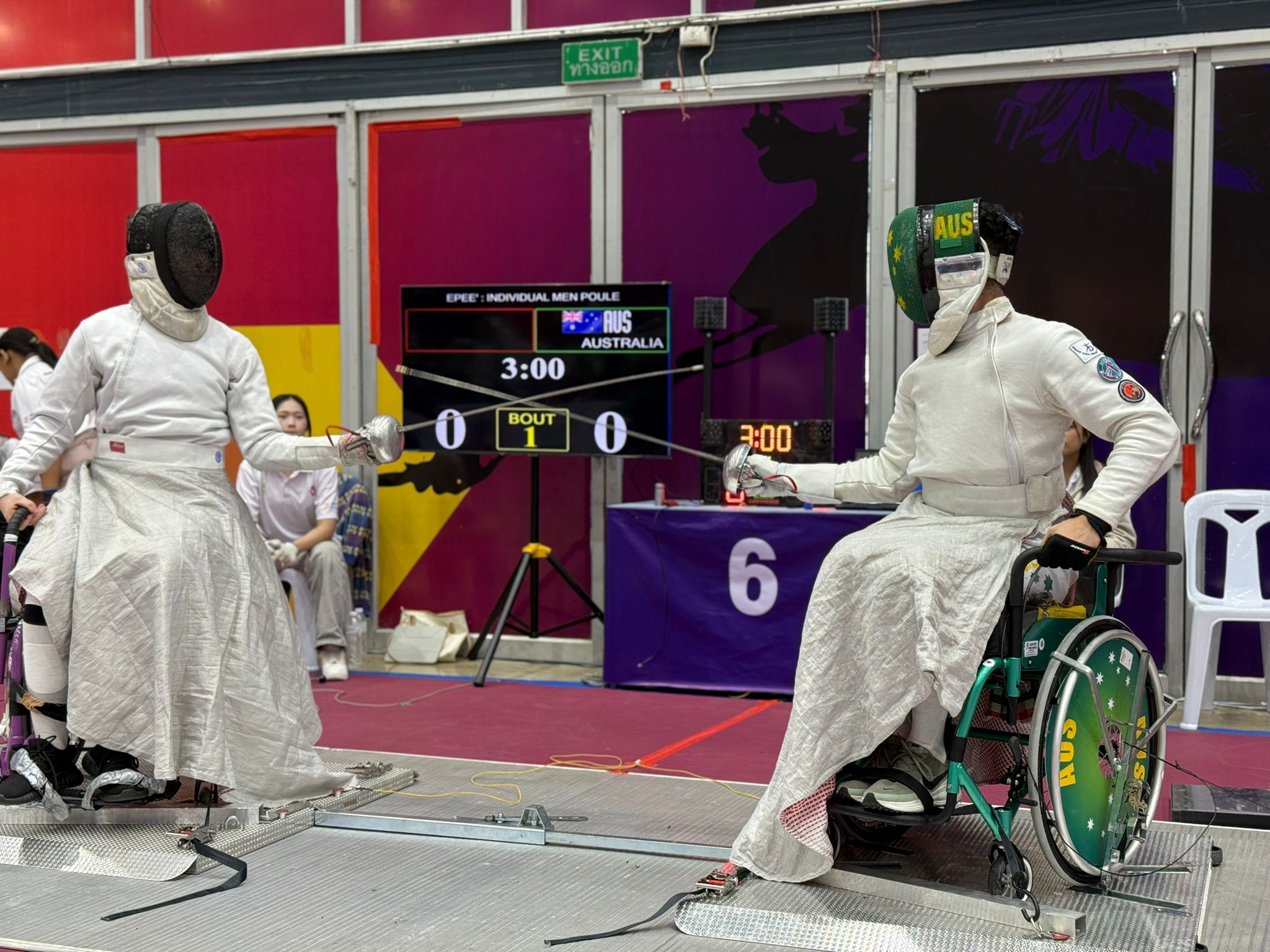
Current and prospective wheelchair fencers now have access to essential equipment, such as masks, jackets and pants in a variety of sizes, a new fencing platform for training and competition, as well as a junior fencing wheelchair to cater for athletes who are growing.
Sydney Para Fencing coach Alex Andre said the new equipment would boost participation numbers and allow talented and dedicated athletes to pursue representation at the Paralympic Games.
“It means we’re able to run our training program properly,” Andre said.
“We don’t have to modify chairs, which is unsafe. We’re able to train our fencers to the maximum ability of what they’re able to do in a safe environment, doing the correct actions.
“It also means that we’re able to hold competitions, clinics and camps. We’re looking at hosting a national camp next year and having these chairs means we’re actually able to do that.
“We have the facilities now to operate in a safe environment and be able to have people involved who don’t have their own chairs. We’re able to give them access to something they might not be able to get otherwise.”
Since it’s relaunch as part of the Federal Government’s Para System Uplift, the PEEP has approved more than 100 individual and sport program grants totalling more than $1.65 million for the acquisition of equipment specific to Para-sport.
The recipients range from major Paralympic sports such as Para-athletics and wheelchair basketball to developing sports such as boccia. The program is set to grow further next year, with an additional allocation of $1.2 million from the Australia Sports Commission.
Wheelchair fencing was a foundation Paralympic sport at Rome 1960 and has featured at every Games since. Australia has won one silver and one bronze medal, both at the 1964 Tokyo Games, and hasn’t been represented in the sport since Sydney 2000.
Wheelchair fencing does not currently receive Win Well High Performance ASC funding; however, the Australian Fencing Federation is committed supporting the development of wheelchair fencing across the country. It relies on passionate coaches and clubs and funding opportunities such as the PEEP to sustain programs and develop athletes.
“It means a lot to receive this grant because it means that the program is getting some kind of recognition,” Andre said.
“There are people committing hours and hours of their day to be able to do it. There’s no professional program. There’s no national program; there’s no national coach. So, for everybody, it means a lot that Paralympics Australia is a great supporter and has been since we started, essentially. We really, really appreciate that.”
Among the beneficiaries is rising star Sam Blade, who up until now had been using a heavily modified fencing wheelchair which, he said, left him bruised after each use.
“There was a whole lot of Bunnings plumbing pipe involved,” he said of the chair which was partially funded but wasn’t built to accurate specifications.
“It got me through up until now. But this new one was built just in time for my recent comp at the World Ability Games in Thailand and it was great, no issues at all. It allows me to really focus on fine tuning my technique rather than trying to get comfortable. My old chair can now be used by new people who want to try the sport and get a feel for it.”
Blade said his goal is to compete internationally as much as possible and reach the LA 2028 Paralympics. He said his favourite things about the sport are its speed and the mental challenge.
“It’s just so fast,” he said. “It’s like how my brain works, a thousand thoughts a second – but in a sport. Just, in general, it’s been really good for my mental health. It’s given me a lot of structure when I didn’t have it.”
Liam Wood, Paralympics Australia’s Para Sport Equipment Enhancement Manager, said Sydney Para Fencing’s PEEP application clearly defined how the equipment support they requested would produce positive outcomes.
“They provided clear insights into the challenges faced by current and potential athletes in their program and they articulated how the equipment received through the grant would directly improve participation levels and strengthen the sport’s pathway, ensuring more athletes could engage and progress,” he said.
“Having fencing equipment available at the facility in a wide variety of sizes would address barriers to people coming along to try the sport. A new fencing platform for wheelchairs would increase capacity for training and competition.
“They also outlined a strategic approach to support junior athletes, to foster growth within the sport, with the acquisition of a junior- and youth-sized fencing wheelchair.”
By David Sygall, Paralympics Australia.
Published 15 December, 2025.



"*" indicates required fields