SUPPORT OUR PARA ATHLETES IN GLASGOW
Buy Your Green and Gold Seat
There are seven impairments that the International Paralympic Committee (IPC) includes in Para Sport. These seven types of impairments are either physical, vision or intellectual impairments.
Many sports offer alternative programs or competitions for people with disabilities who sit outside of the Para sports system, through to international competition, such as the Deaflympics, Special Olympics and Transplant Games.
For more information refer to our Classifications Page.
Refer to Vision Impairment, Physical Impairment, and Intellectual Impairment pages for further information about registering your interest in a classification. Classification for athletes with a Vision Impairment can be obtained by making a request for VI classification at: www.paralympic.org.au/classification/vision-impairment-classification/vi-request-for-classification/
Classifiers are sports officials with a medical or sport science background who have completed the required training and certification as determined by the International and National Federation of their nominated sport. Refer to our Physical Impairment or Vision Impairment classification pages for further information.
The 7 eligible impairments the International Paralympic Committee included in Para sport:
Not all impairments are eligible in each Para sport.
There are 7 types of impairments that the International Paralympic Committee (IPC) recognises in Para sport which fall within either physical, vision or intellectual impairment categories. The International Federation for each Para sport decides on which of those impairments are eligible for their sport. Some sports are open to all ten impairment types, including swimming and athletics. Whilst other sports are open to only one impairment type, for example, goalball and judo. Some athletes will be able to compete in one Para sport but not another. We follow the rules of the International Federation for Para sport competition in Australia.
The decision about which impairments and events that are offered at the Paralympic Games is a complex one, managed by the IPC and the International Federations and is decided many years in advance of each Paralympic Games. We understand that there are many factors considered when deciding which events and impairments to offer at a Paralympic Games and it isn’t as simple as just adding more events or impairments. More information about Paralympic Games can be found at www.paralympic.org.
Many sports offer alternative programs or competitions for people with disabilities who sit outside of the Para sports classification system.
Each athlete must have a minimum level of impairment or meet what is called the Minimum Impairment Criteria for that sport in order to be eligible. Each sport has a different Minimum Impairment Criteria.
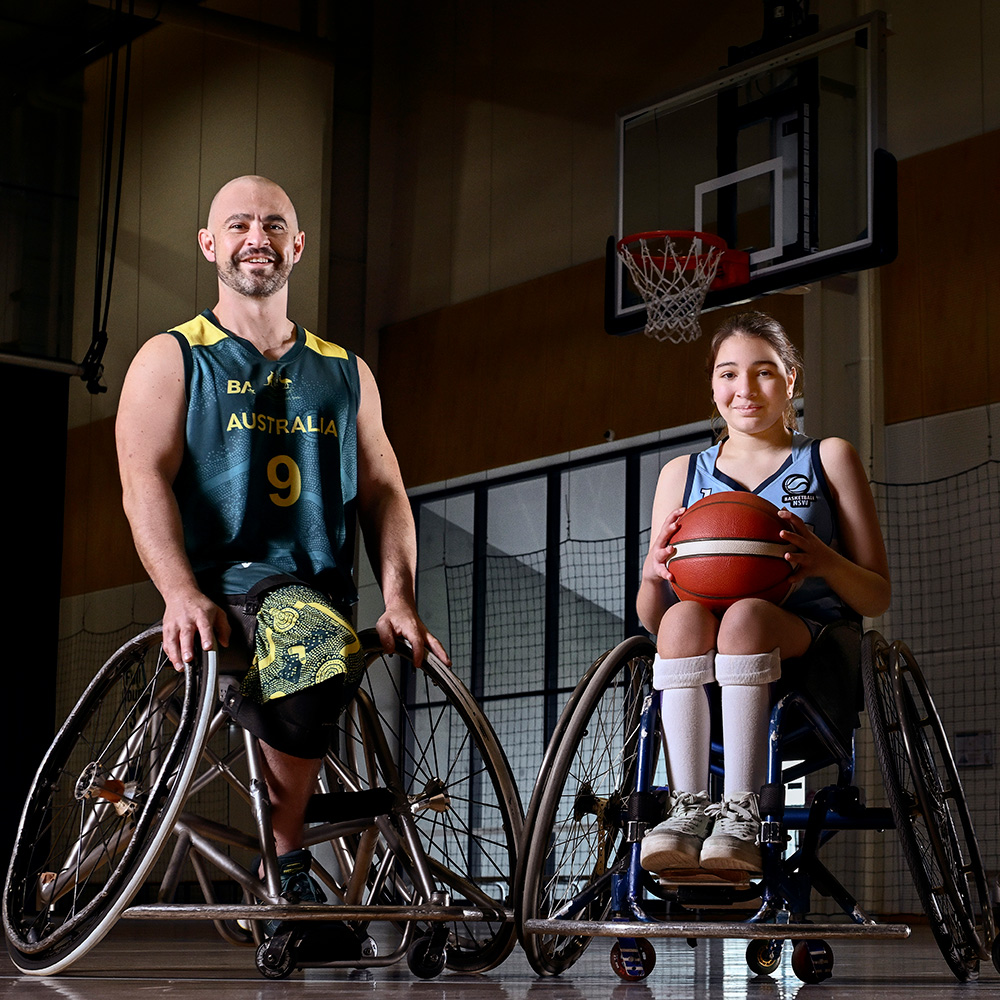
For example, in Wheelchair Basketball an athlete must have a physical impairment in their legs severe enough that it affects their ability to play standing basketball. In Wheelchair Rugby, athletes must have a more severe impairment that affects both their arms and legs.
When an athlete does not meet the minimum criteria and is made Not Eligible – Minimum Impairment Criteria (NE-MIC), it does not question whether an athlete has an impairment, it just means the athlete does not fit the classification rules for that Para sport. Since the classification rules are different in each sport, some athletes may be eligible for one Para sport but not for others.
If an athlete does not have one of the seven eligible impairments or does not meet the Minimum Impairment Criteria (MIC) for a sport, they will be given a Not Eligible – Minimum Impairment Criteria (NE-MIC) Sport Class.
Any athlete who is found to be Not Eligible because they have not met the Minimum Impairment Criteria has the right to go through another classification by a different classification panel.
Many sports offer alternative programs or competitions for athletes with an impairment or diagnosis who sit outside of the Para sport classification system.
Some athletes might have a number of impairments such as both a vision and physical impairment, or a combination of eligible and non eligible impairments.
If both eligible impairments are permitted to compete in their sport of interest, the athletes may receive two classifications, for example one for their vision and one for their physical impairment. Due to the different ways impairments affect each sport, the impairments are treated separately and are not ‘added’ together.
For example, an athlete who has both a vision and physical impairment in Para Athletics might be given a T37 class for their physical impairment and a T13 class for their vision impairment (or provide example relevant to sport).
The athlete will need to pick which one of those classes they want to compete in, as long as this is permitted by the sport rules. If they want to change, they will usually need to apply to their National Sporting Organisation (NSO).
Athletes must supply medical paperwork to their sports organization from their medical doctor
and other health professional that confirms their condition and diagnosis, within the timelines
set by their sport. This is called the Eligibility Assessment. An athlete must complete the
Eligibility Assessment prior to being able to see a classification panel.
The Eligibility Assessors must be able to see evidence of a diagnosed medical condition and that the diagnosis leads to at least one of the eligible impairment types for that sport. The classifiers cannot take in to consideration impairments that are due to difficulties with training.
The medical paperwork needed is different for each sport. Examples include doctors reports, vision tests, muscle strength assessments and X-rays. As an athlete progresses to international
competition the medical documents needed may be more specialized. It is best to confirm with your sport of interest the exact requirements.
Currently, athletes with intellectual impairment can compete in Athletics, Swimming and Table Tennis at the Paralympic Games. The decision about which sports, events and impairments that are included in the Paralympic Games is decided by the IPC and the International Federations, of which Paralympics Australia has no control. We are aware that there are a number of other opportunities for athletes with an intellectual impairment to compete in sports outside of the Paralympic Games both at an international and national level.
The Global Games are offered every 4 years and offer a large program of events and is a large scale international event.
In addition, just to name a few, Equestrian, Basketball, Cricket, Football, Netball, Sailing, Tennis, Golf, Soccer all offer sports opportunities within Australia. Sport Inclusion Australia would be a great organization to contact to explore opportunities outside of the Para-sport specific ones, as they have a greater understanding of the opportunities offered by other sports.
Athletes are grouped together based on their level of impairment and its impact on their sport. As the skills required to compete in each sport varies, each sport has a different classification system. Because athletes have impairments that range in severity, most Para sports have a range of Sport Classes and there will always be a range of athletes in every class.
In general, athletes whose impairments affect their sport a small amount will compete together, and so will athletes whose impairments affect their sport to a larger amount. This allows athletes with different severities different opportunities to compete.
The Classification Rules for each sport outline the rules and information for each sport.
Para athletes have many different types of conditions and it is not feasible to have an unlimited number of classes. This means there will always be a range of impairments and abilities in every class.
Just because an athlete might perform or look differently to other athletes in the same class, this doesn’t mean that their classification is wrong, or the athlete is cheating. This is more likely to be explained by the design of the classification system.
The Classification Rules for each sport outline the rules and information for each sport.
Athletes who have impairments such as limb deficiency/amputation, short stature or leg length difference will not have any change in their classification due to training, because these impairments stay the same regardless of how hard or how little an athlete trains.
Classification is more difficult in athletes who have one or more of the other seven eligible impairment types and is either physically not yet mature, is less experienced in their sport, has medical treatment or have only recently acquired their impairment or diagnosis. This is because maturation, skill acquisition and natural recovery may influence how their impairments present. These athletes may change over time, which may affect their classification, but it is not necessarily because of training.
The classification of athletes who are physically mature and highly experienced in their sport is extremely unlikely to change over time.
Yes. Classification Rules can and do change to help the sport to keep moving towards fairer competition. Some changed are driven by research, some by feedback from their members and athletes and others may be due to changes required by the IPC to maintain compliance with the IPC Classification Code.
If the classification rules in a sport change, affected athletes may need to be reclassified.
The International Paralympic Committee is the governing body of the Paralympic Movement and governs how classification rules are followed. Like anti-doping, there is a Code document, the IPC Classification Code, that governs how classification is done.
The International Paralympic Committee (IPC) Athlete Classification Code is a set of rules which apply to all classification systems around the world.
Each of the International Sports Federations, such as World Triathlon and World Para Swimming, and National Sports Organisations, such as Triathlon Australia and Swimming Australia, must base their national Para sports classification on the Code.
The Code also outlines the classification responsibilities of classifiers, athletes and all other people involved in Para sport.
The International Federations (IF) run each of the para sports and are responsible for their own classification rules. The IF decides who can compete in their sport and how athletes will be divided or classified for competition.

Paralympics Australia (PA) oversees the implementation of the IPC Classification Code and Rules in Australian Para sport. PA assists the National Sporting Organisations to follow the rules and improve their national systems.
PA also delivers the national classification system for athletes with a Vision Impairment.
The International Federations (IF) run each of the Para sports and are responsible for their own classification rules. The IF decides who can compete in their sport and how athletes will be divided or classified for competition.
NSOs are the Australian sports organisations who run each sport, such as Athletics Australia and Swimming Australia. They handle how classification in run in Australian competition.
NSOs use the same classification rules for Australian competitions that the IFs do. NSOs, with support from Paralympics Australia (PA), handle national classifier training and the education of athletes and people in their sport.
Classifiers are officials who conduct classification. Their job is to follow the classification rules for all athletes involved.
Classifiers are medical experts, such as doctors, vision specialists or physiotherapists, or are sports technical experts, such as a sport scientist or coach. They complete specialised training to become a Classifier. Classifiers usually work in panels of two so that they can make decisions as a team.
Athletes can get classified by contacting the National Sports Organisation (NSO) for their sport of interest. Athletes should contact their National Sports Organisation a few months before they need their classification. Classification is usually held alongside competitions or held as its own classification day.
The National Sports Organisation will give athletes the information and forms that are needed. All National Sports Organisations have classification contact details on their websites
An athlete can play Para sport socially without needing a classification, however for competitive
Para sport for all ages, classification is a requirement.
Once an athlete is ready and of the right age to start competing in their sport, there are three levels of classification available, provisional, national and international.
Athletes in swimming and athletics can be classified and start competing from age eight for school sport swimming and athletics events. Whereas most other sports start offering Para competition and classification between ages twelve and sixteen.
There are 3 levels of classification available in Australia:
Provisional classification which is used by athletes who are just starting out in Para sport, such as school sport or local competition, or those that can’t get to a national classification
National classification is a face-to-face classification assessment completed by classifiers during a sporting event or held on its own as a classification day. National level classification is needed to compete in national level events in Australia. National outcomes override provisional ones.
International classification is the highest level of classification available in the world and is needed to compete at international competitions such as Regional or World Championships and the Paralympic Games. International outcomes override national level outcomes.
Prior to classification an athlete must supply medical evidence that confirms their diagnosis which is reviewed and approved by their sporting body/classifiers prior to the athlete being confirmed to move forward with the classification assessment.
During the classification assessment, the classification panels test athletes in three steps:
Classifiers will record and keep information on a classification form and may take videos or photographs if needed.
The best way to support an athlete at the beginning of their journey is to understand what options are available and to participate in opportunities of greatest interest. Each sport has its own competition structure and pathway, so it is best to contact the specific sporting organisations of interest to find out more how to get involved.
When an athlete is first classified in Australia they are allocated a Sport Class Status which outlines when they may be required to be reclassified. Athletes with Review (R) and Fixed Review Date (FRD) will need to be seen again for classification at the next competition or after the review date. Athletes with a Confirmed (C) sport class status will not need to be reviewed again for classification, unless the classification rules for their sport change . Most athletes will have to be classified more than once throughout their sporting life.
If an athlete progresses to international competition, they will need to be reclassified by International classifiers, and this will also likely be on multiple occasions.
If an athletes condition changes after their classification, such as their condition getting worse or having treatment to make it better, they must report this to their sports organization as this might affect the classification they have been given. The sports organisation will decide if the athlete needs to be classified again.
Athletes who dont declare changes to their condition may be in breach of the rules of their sport, as this may be considered to be a form of cheating or intentional misrepresentation.
It is true that no corner of sport, Para sport or otherwise, is immune from cheating. What you are describing is called Intentional Misrepresentation (IM). This is when an athlete, or their support person, intentionally mislead classifiers by misrepresenting their impairment to gain a favorable outcome. It undermines the integrity of sport and is extremely damaging to athletes, their sport, Paralympics Australia (PA) and the Para sport movement. We encourage anyone who has any information about potential IM to make a report using PA’s confidential integrity reporting channels, via PA Integrity pages on our website. Any information no matter how big or small is important as it could a key piece of info to help PA move forward with an investigation. It’s also important not to spread rumors or information that cannot be confirmed as true as this can be extremely damaging to the athlete, coach or whoever the unfounded allegations are against. It is key to remember that the majority of athletes and their teams around them follow the rules and compete cleanly and fairly.
Athletes who have been classified will have their classification details entered into the classification master list for that sport. Competition organisers can confirm an athletes classification by referring to the master list for each sport.
Safety and integrity are taken very seriously in Para sport and no person should experience any bullying, discrimination, disrespect, harassment or abuse during classification. Any concerns may be raised with the classifier directly, or via PAs reporting channels.
Classifiers and sports organisations must, by law, protect certain information about athletes. Athletes should expect that their information is handled privately and safely. Athletes have a right to access the classification information held about them and can do so by contacting that Sports Organisation.
No. Athlete classification is protected by data privacy law, and can only be provided to the athlete (or their guardian). Athlete consent is gained and their data rights explained and agreed to via the Classification Consent Form that is signed prior to Classification being conducted.
International classification is the highest level of classification available, and the process will be very similar to the national level assessment. Each International Federation (IF) sets a minimum age for when an athlete can be internationally classified, this is usually different to the national classification age. The IF decides where classification takes place, how many athletes can be classified, and what date and time athletes are classified.
There are limited spots available for classification, and sports may need to be prioritise which athletes they nominate to attend.
Sometimes equipment changes will require the athlete to go through classification again. It is best to discuss any sports equipment with your sports staff who will have a good understanding of equipment rules. Changes to equipment or competition aids usually need to be reported to the International Federation (IF).
Classification has evolved over time with research being used to develop fairer and best practice classification systems. Key research focus areas include improvement of classification measurement methods, classifier decisions and development of sports classification rules.