SUPPORT OUR PARA ATHLETES IN GLASGOW
Buy Your Green and Gold Seat
There are lots of ways to support the Paralympic movement! First, make sure you check out the Paralympics Australia website, and learn more about para-sport through The Start Line. From there, we recommend you signing up as a Para-Play Maker and get access to information and resources to help you advocate for and connect more people to para-sport.

Yes, there are opportunities to compete against other students with a disability in Athletics, Swimming and Cross Country in most states. Each state has slightly different rules and processes and you or your teacher can find out more information at the relevant school sport website in your state/territory: ACT / NSW / VIC / WA / QLD / SA / NT
There are lots of ways to support the Paralympic movement! First, make sure you check out the Paralympics Australia website, and learn more about para-sport through The Start Line. From there, we recommend you signing up as a Para Playmaker and get access to information and resources to help you advocate for and connect more people to para-sport.
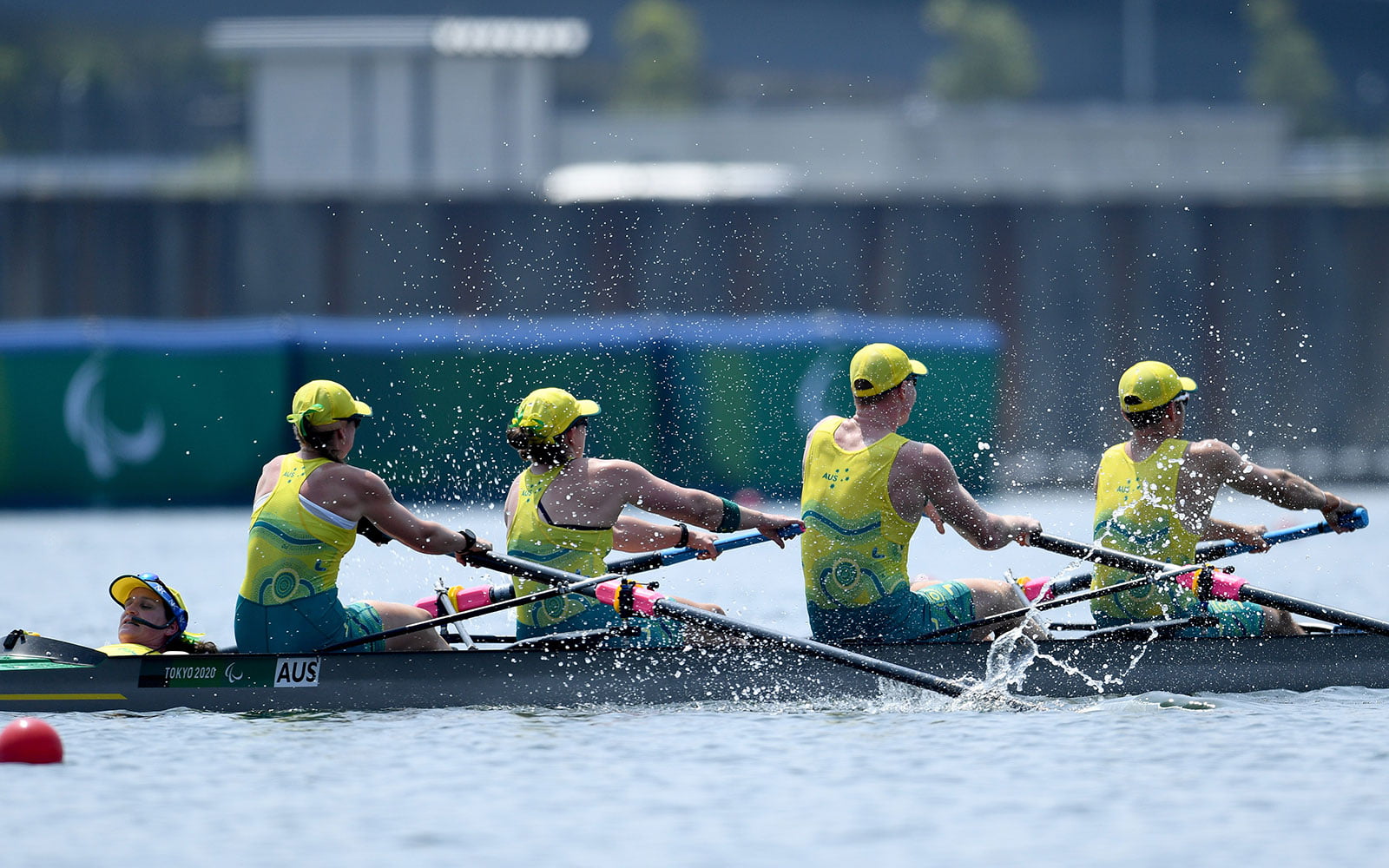
You can’t sign up to become a Paralympian. Our Paralympians are elite athletes and have often trained 6-10 times per week or more for many years, committed themselves to their sports, sacrificed other aspects of their lives to achieve their dreams of competing on an international stage.
We want people who are interested to head to our website and visit The Start Line to understand their eligibility, check out the different sports, make an enquiry or go and experience para-sport themselves.
If you have motivations to become a Paralympian, and think you have what it takes to compete on the world stage, you can register to be part of the AIS Paralympic Talent Search.
Depending on the equipment you need, it is best to seek guidance from your sport towards the best manufacturer’s or suppliers! Quite often programs will have equipment available for participants who are brand new, or just looking to try it out, while some sports offer longer-term loans of equipment, specific for para athletes. For more information on each sport, check out the list of para sports on our website.
In most cases yes! Just because you’re a para athlete, or wanting to participate in para-sport, doesn’t mean you can’t contact your local club and look to get started. However, if you’d like to ensure the environment and support will be what you’re after, you can check out the list of para sports on our website, and our Events Calendar to see what might be on offer in your local area. Our best piece of advice however would be completing our Get Involved Enquiry form, or reaching out to the sport via the National Sports Organisation directly, to identify a club that will support your aspirations. All of this information can be found by connecting with The Start Line!
The Olympics and Paralympics are independently two of the biggest sporting events in the world, so logistically, to offer a combined event they would need to build almost double the infrastructure – double the village, dining hall, transport, and venues and extend the program out over many more days. That is simply not feasible. There is also a very proud independent history to both events that provides an important legacy. From a Paralympic perspective, we are proud of our Paralympic history and culture and having the events run at a similar time and in the same location but separately.
Paralympians are fiercely proud of being known as Paralympians, because of what it stands for. Everything they have all been through to get there, all the barriers they have faced, and what they have achieved. Paralympians are proud to support each other as Paralympians and proud of the bigger social impact they are often able to make across society. Even with the most respectful of intentions, calling a Paralympian an Olympian inadvertently can take away the power of those messages. This is also the case for Olympians, who would rather not be referred to as Paralympians – two different groups with two different ideals, histories and team cultures.
‘Boosting’ in Para sport relates to the intentional eliciting of autonomic dysreflexia in athletes with high level spinal cord injuries. The result of boosting is a dramatic increase in blood pressure just prior to a competition and it can enhance performance. An example, could be during competition a wheelchair athlete’s heart rate does not increase according to the body’s demands, leading to low blood pressure, fatigue, often poor performance and a loss of endurance. Triggering a nerve or pain response in the lower-body could creates a state of dysreflexia which increases the heart rate leading to more oxygen being pumped around the body – helping the athletes arm muscles push harder during the race – with the aim of improving their performance beyond what it would have been naturally. This could give the athlete an unfair advantage. Refer to PAs Boosting statement on PA website.
We understand the decision about which sports are offered at the Paralympic Games is a complex one, managed by the International Paralympic Committee (IPC), the International Federations and the Games hosting committees and is decided many years in advance of each Paralympic Games. Typically, sports included in the Paralympic program have an Olympic discipline in place. We suggest working with the International Federation and Olympic counterpart to garner support for the concept before approaching the IPC. More information about the Paralympic Games and IPC can be found at Paralympic.
If you have more queries, reach us through our Enquiry Form.