Join AUS Squad


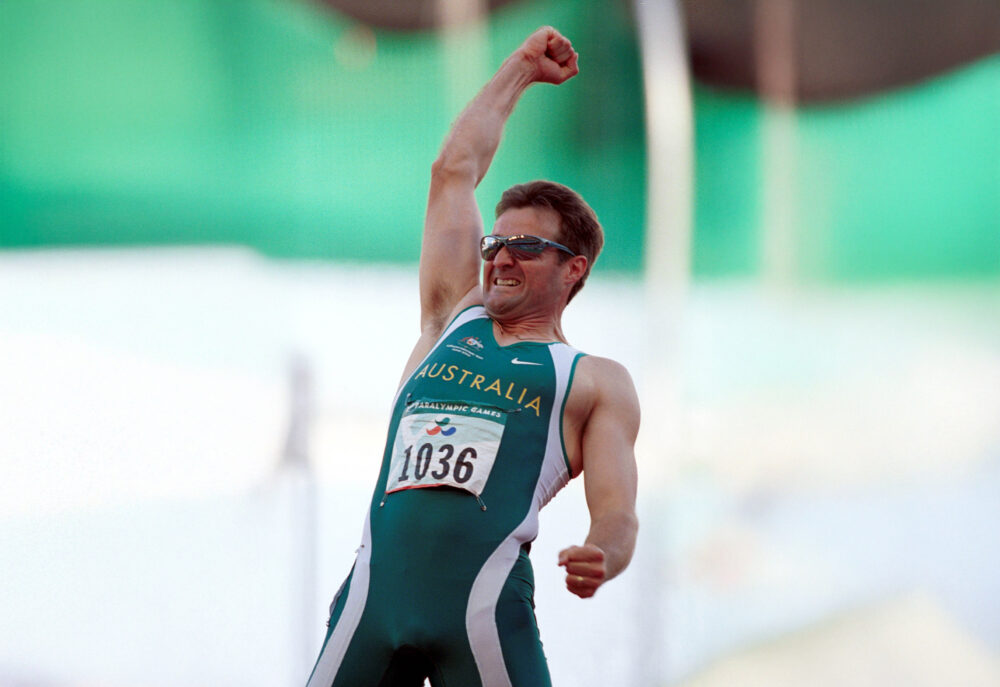 It was a Saturday night, 60,000 people were in the stands and Neil Fuller was channelling Cathy Freeman.
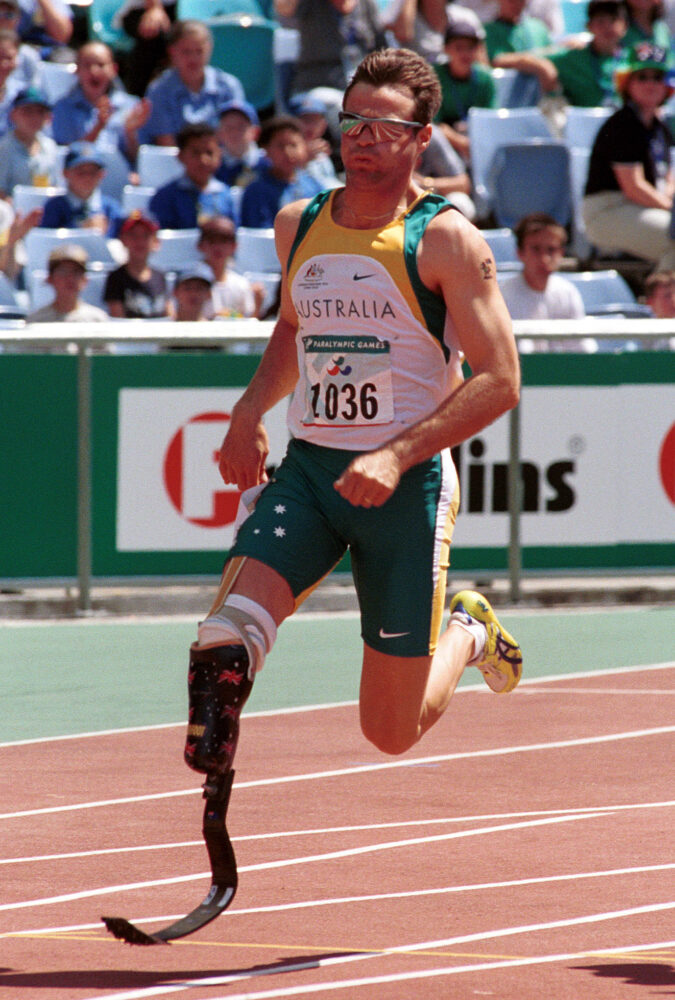
It was Fuller’s last race of the Sydney Paralympics, his ninth across six events, and he was looking to add to the three gold medals and a bronze medal he’d already won.
His confidence was high. This was his pet event, the 400 metres T44, in which he was the reigning world champion and world record holder.
Minutes earlier, Fuller had been on the warm-up track, listening to the roars of the crowd inside the main stadium, the muffled speaker announcements and chants of ‘Aussie! Aussie! Aussie!’ Next thing he was in the tunnel and then in the call room, where he did his final stretches. The nerves set in.
“I reckon I knew exactly how Cathy Freeman felt,” Fuller said.
“Of course, the whole nation was on Cathy’s journey. But, for me, like Cathy, I went into that 400 expected to win and it put a huge amount of pressure on me.”
The starter’s gun fired and 52.26 seconds later, when Fuller crossed the line in first place, rather than jump about in ecstasy, he dropped to his knees.
“I’d won but all I could feel in that moment was a massive weight being lifted off me,” he said.
“It was a completely different feeling to when I won the 200.”
In the 200 metres, Fuller had been the outsider and, coming off the bend, trailed American Brian Frasure by five metres.
“I couldn’t hear anything except what was going on in my head. There was just a voice saying, ‘Keep going, keep going, you’ve got him!’ With every step, I was narrowing the gap, focusing on the finish line.
“We hit the line together and it seemed like an eternity, bobbing my head between the replay screen and the results screen, waiting for the result to come up.
“When it brought my name up as first … even speaking about it now years on, it brings those feelings back to me. ‘Oh my God, I’ve won’”
The 200 metres was Fuller’s first individual Paralympic gold medal and it came in the third of his four Games. In total, he won 15 medals, six of them gold, four of which came in Sydney.
He said of the 2000 Games: “Nearly all my cards fell in place” – he missed out on a medal only in the 800 metres, despite bettering the then-world mark.
Yet, for all his success on the track, Fuller said the Games were about so much more than the competition.
“It goes back to when Sydney was awarded the Games, the growth of the Movement, the ambassador program which I was fortunate to be involved in, there were media and advertising opportunities… I was involved in a Toyota ad which was rewarding and enjoyable,” he said.
“There was a test event 12 months out, which was another big step. You could even gauge then, coming from interstate, the atmosphere building in Sydney, the infrastructure, changes to the airport, transport, everything was accessible, which was a first. You could tell it was going to be something special.
“Then, when it all got underway, for it to be in your home country and to perform at your best at the highest level… I’d been all over the world and won but, in Sydney, I had friends and family there.
“I was working at a school and they had a competition to fly a teacher and three students to watch me race over a couple of days. Those sorts of things were unique.”
Perhaps Fuller’s greatest honour came right at the end when he was named Australia’s flag bearer for the Closing Ceremony.
“It’s one of those things you can never expect to happen because there were that many outstanding athletes,” he said.
“It certainly took me by surprise but it’s certainly something that’s sat well in my resume, being selected from Australia’s biggest ever team to have that honour of carrying the flag.
“The only disappointing thing about it was, the flag bearers came in from the tunnel and some veered left and some veered right. I went left but the Australian contingent was all sitting on the right. So, I didn’t actually get to walk past the Australian team!”
By David Sygall, Paralympics Australia.
Published 18 October, 2025.