The Great Privilege Sauvage Kept Secret
Read More

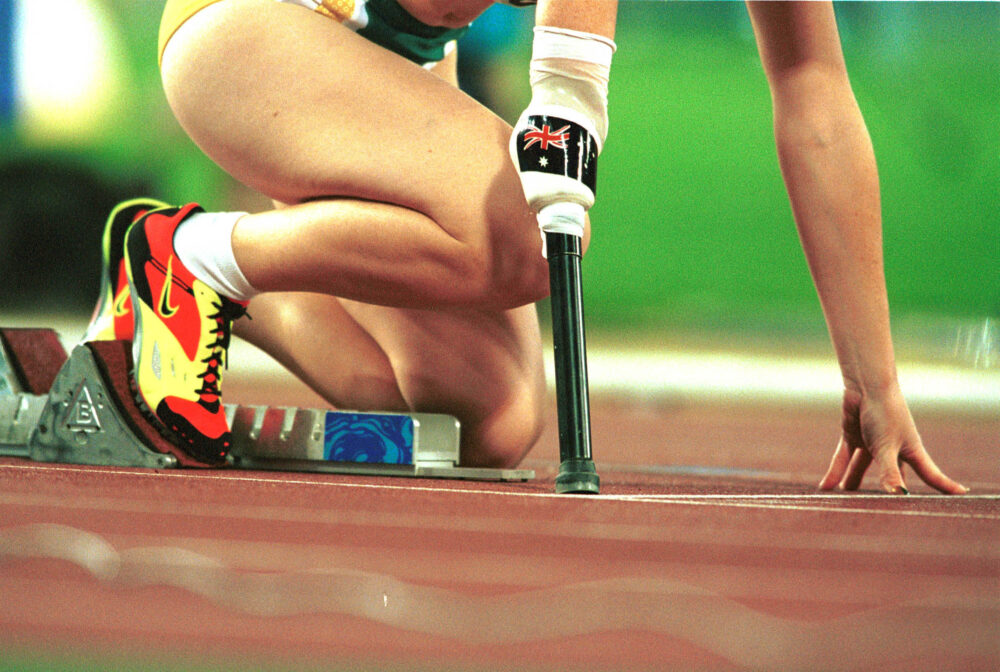
It was much more than success on the medal tally that made Sydney 2000 so momentous in the history of Australia’s Paralympic Movement, according to one of its most influential figures.
Greg Hartung was President of Paralympics Australia from 1997 until 2013 and Vice-President of the Sydney Paralympic Organising Committee. For the 1.16 million spectators who attended the Games from October 18 to 29, it was the first time many had seen Paralympic sport.
“The Sydney Paralympic Games changed attitudes and mindsets of Australians and people worldwide towards athletes with a disability,” said Hartung, who was inducted into the Australian Paralympic Hall of Fame in 2024.
“Until that point in time, Paralympians were not always recognised as equal to their Olympic counterparts. It became obvious that that mindset changed during Sydney 2000.
“Australia showed the world how Paralympic athletes and Paralympic sport should be acknowledged and the positive impact of the Sydney Games continues to be felt today.”
The Sydney Paralympics set records in almost all areas including athlete and delegation attendance, ticket sales, broadcast rights, media coverage and merchandise sales.
It was also the Games in which Australia became the world’s leading Paralympic nation. The Australian team finished on top of the medal tally for the first time by winning 149 medals – 63 gold, 39 silver and 47 bronze. It was a stunning achievement, according to Hartung, who also served on the Governing Board of the International Paralympic Committee between 2001 and 2013, including a four-year term as Vice-President (2009-13).
“It was a privilege for me to play a part in lifting the status and profile of Paralympic sport and to use the Sydney Games as the catalyst to establish the South Pacific Paralympic Committee, later to be renamed the Oceania Paralympic Committee,” he said.
“But, of course, the job is never done; it is a race without a finish line. Continuing vigilance is required to ensure that the principles of equity and fairness are made rock solid and extended to areas around the world where they do not exist or are under threat. Going forward with confidence, the Paralympic Movement is uniquely placed to be a major influencer for good.”
Hartung said Australia’s performance at Sydney 2000 justified Paralympics Australia’s ground-breaking preparation of the Australian team through the Paralympic Preparation Program, which became the prototype for future schemes to develop and support Para-sport talent.
“The performances of the athletes were spectacular and, with their help, we managed an extraordinary transformation in public attitude and in the approach and recognition of our political leadership toward Paralympic sport and, more generally, toward people with a disability,” he said.
“This has stayed with us as a permanent legacy. Paralympic sport was seen as serious sport and was lifted out of its welfare pigeonhole and into the mainstream.
“Progressively, national sport federations were encouraged to support athletes with a disability in the same manner as Olympic athletes. There is no turning back.”
Twenty-five years on, Hartung believes the Sydney Paralympics continues to be seen as the benchmark for staging the Games.
“The Paralympic Movement continues to evolve as one of the world’s great humanitarian movements and Sydney can be proud of the contribution it made,” he said.
“From the volunteers to the many supporters in attendance, and the countless people who played a role in helping to stage the Games, Australia set the standard for staging a successful Paralympic Games by which all future host cities will be measured.”
By Tim Mannion, Paralympics Australia.
Published 18 October, 2025.

"*" indicates required fields


