

 Join AUS Squad


 Back To News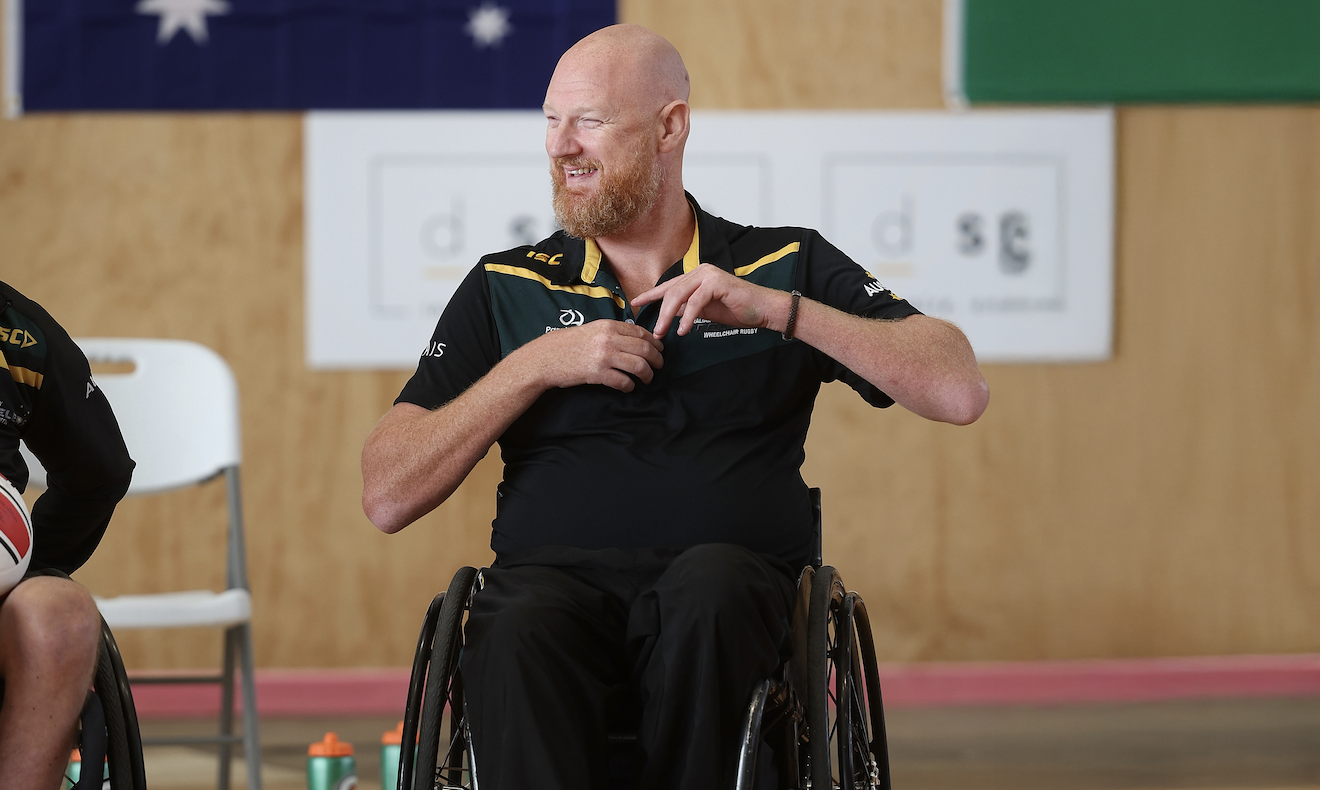
About 25 years ago, when Brad Dubberley was a player in the Australian wheelchair rugby team, he and a teammate did a school visit where they noticed a student without legs who got around on a skateboard.
That kid, Ryley Batt, would become one of the greatest players in the sport’s history.
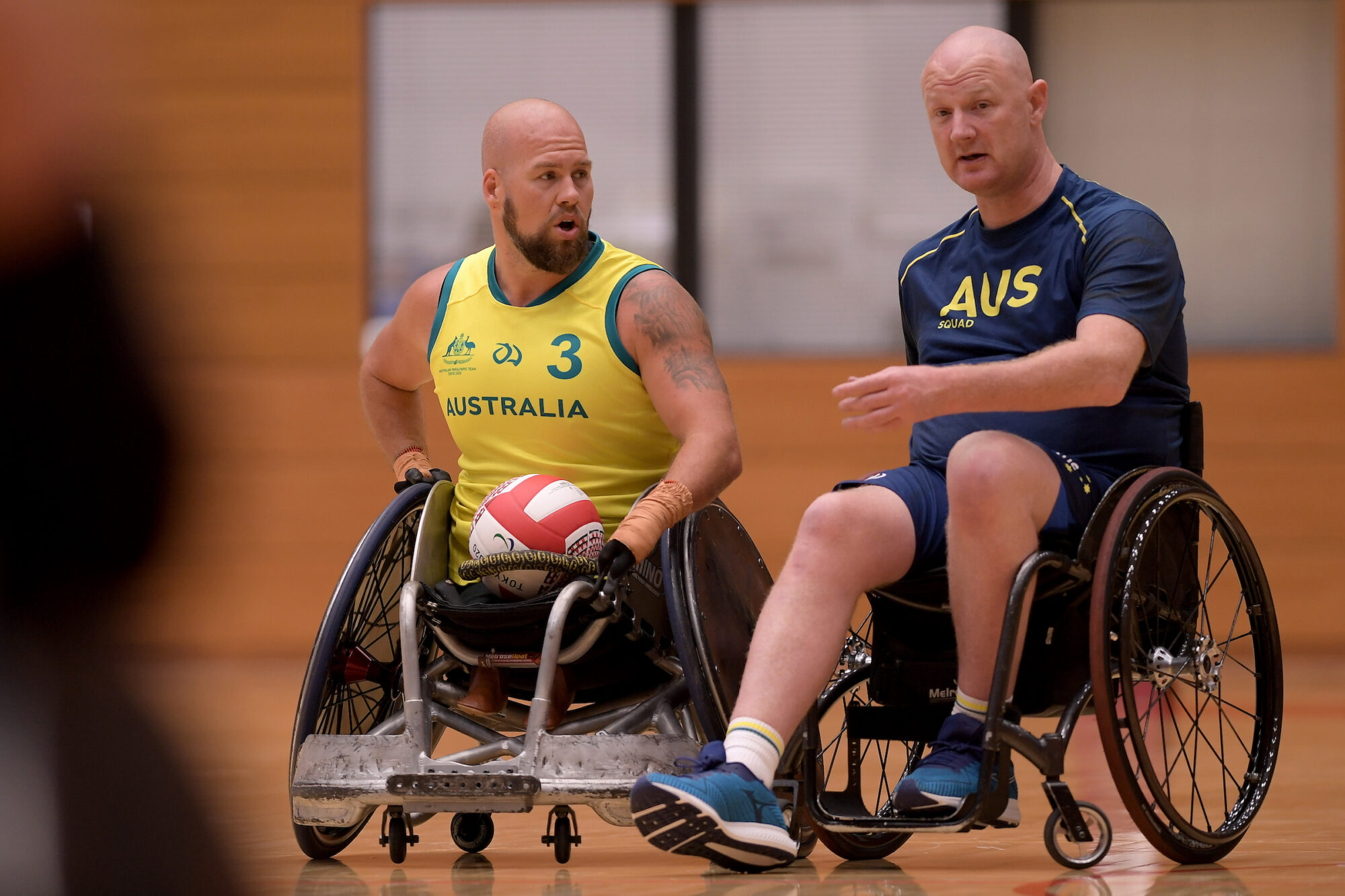
“He didn’t want anything to do with using a wheelchair at first,” Dubberley said. “Then he was playing school sport, getting around in one of my old day-chairs. Then, all of a sudden, he’s playing wheelchair rugby for NSW.
“I remember telling him, ‘Mate, there’s every chance you could play for Australia one day’ and he was so excited. Look where he is now, the most dominant player in the game.
“To be on that journey with him, to coach him and see his life develop, his relationships, his physique, all the sponsorships, his profile … it’s all you could want, really – and there are so many stories like that.
“Not everyone achieves their goals; there have been some really hard times. But it’s so satisfying to play a part in getting the best out of people, supporting them, caring for them, making sure they have resources and just giving them an opportunity.”
Batt might have had the biggest influence on the sport as a player. But Dubberley has probably had the biggest influence as a coach. After a playing career in which he won a silver medal at the Sydney 2000 Paralympics, he retired in 2006 and took the Steelers’ helm the same year.
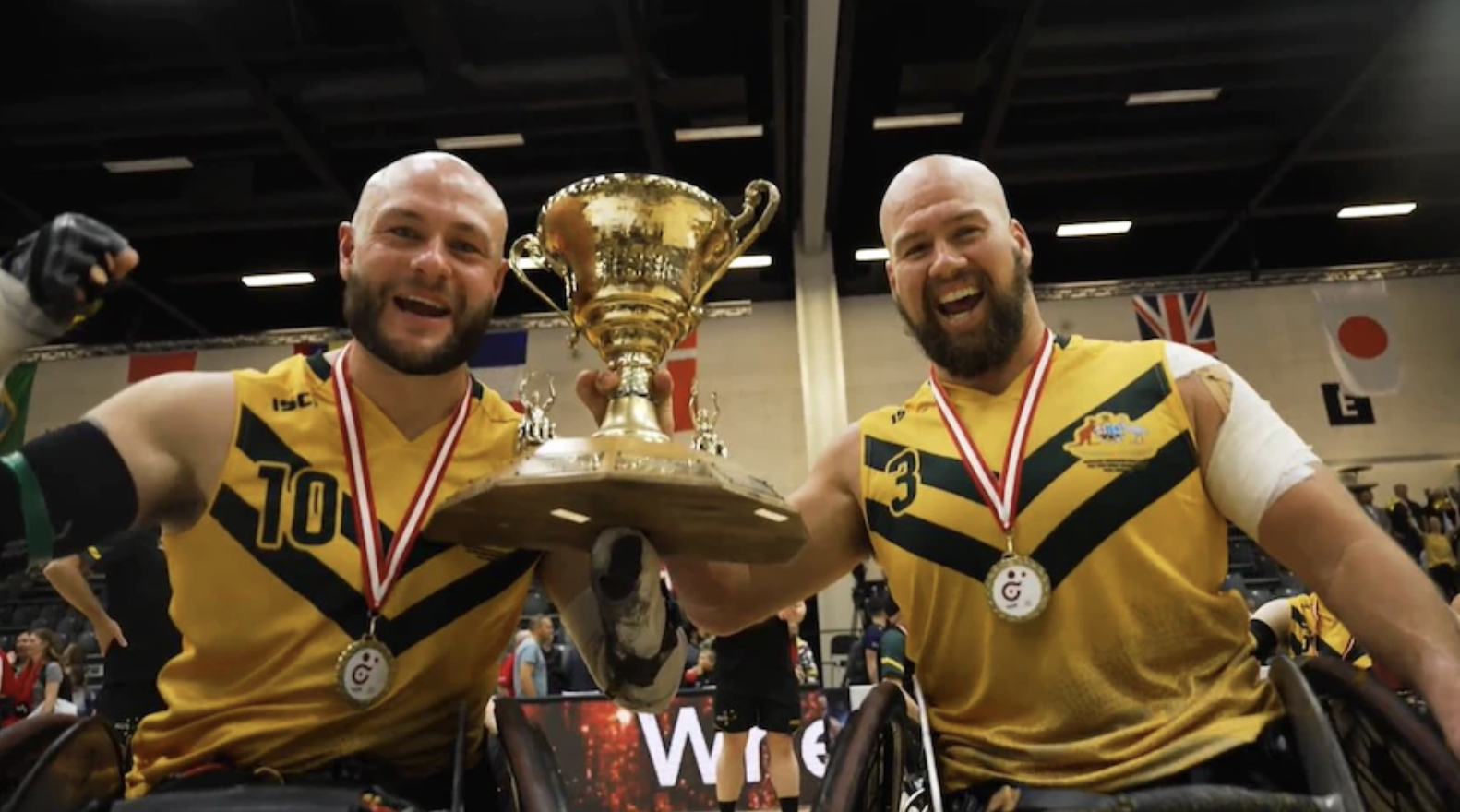
Over the next two decades Dubberley oversaw a program that went from amateur to a well-funded flagship Paralympic sport. Along the way, he led an era that included back-to-back Paralympic gold medals in 2012 and 2016, and World Championship wins in 2014 and 2022.
Since stepping down as coach last month, Dubberley, for the first time in a long time, has started to consider other options. It might be coaching internationally or transferring to a different Para sport, or even, he half-jokes, getting a job at Bunnings.
Wherever he goes next, Dubberley can look back on a period as Steelers coach in which he achieved unprecedented success but, more importantly to him, positively impacted many people’s lives.
“It’s more than just a sport, it’s an identity, it’s a big family, really,” he said.
“I know that gets thrown around a fair bit, but people genuinely look out for one another. I’ve been to weddings, funerals and all that sort of stuff through connections within the sport. After I resigned, the number of messages I got from people all over the world – from right across Paralympic sport – was just mind-blowing.”
Among those paying tribute, Paralympics Australia Chief Executive Cameron Murray thanked the man known as B-Dubb for his many years of service to the Steelers and Paralympics Australia.
“As the national federation for wheelchair rugby until last year, Paralympics Australia was fortunate to have someone of Brad’s incredible dedication as head coach of the Steelers,” Murray said.
“We’re blessed with many wonderful coaches in Australian Paralympic sport and Brad has been among the best, always looking to improve and always inspiring those around him to aim high and reach their goals.
“We thank Brad for his long service to Paralympics Australia and the Steelers and congratulate him for the remarkable success he achieved.”
Dubberley’s life in wheelchair rugby began early. He started playing soon after he acquired quadriplegia at age 12 and first represented Australia in 1996. He remembers early on “rocking up to training and someone says, ‘Nah, we’re not training today, we’re just going to have some drinks in the car park and not worry about it’.” But those days didn’t last long.
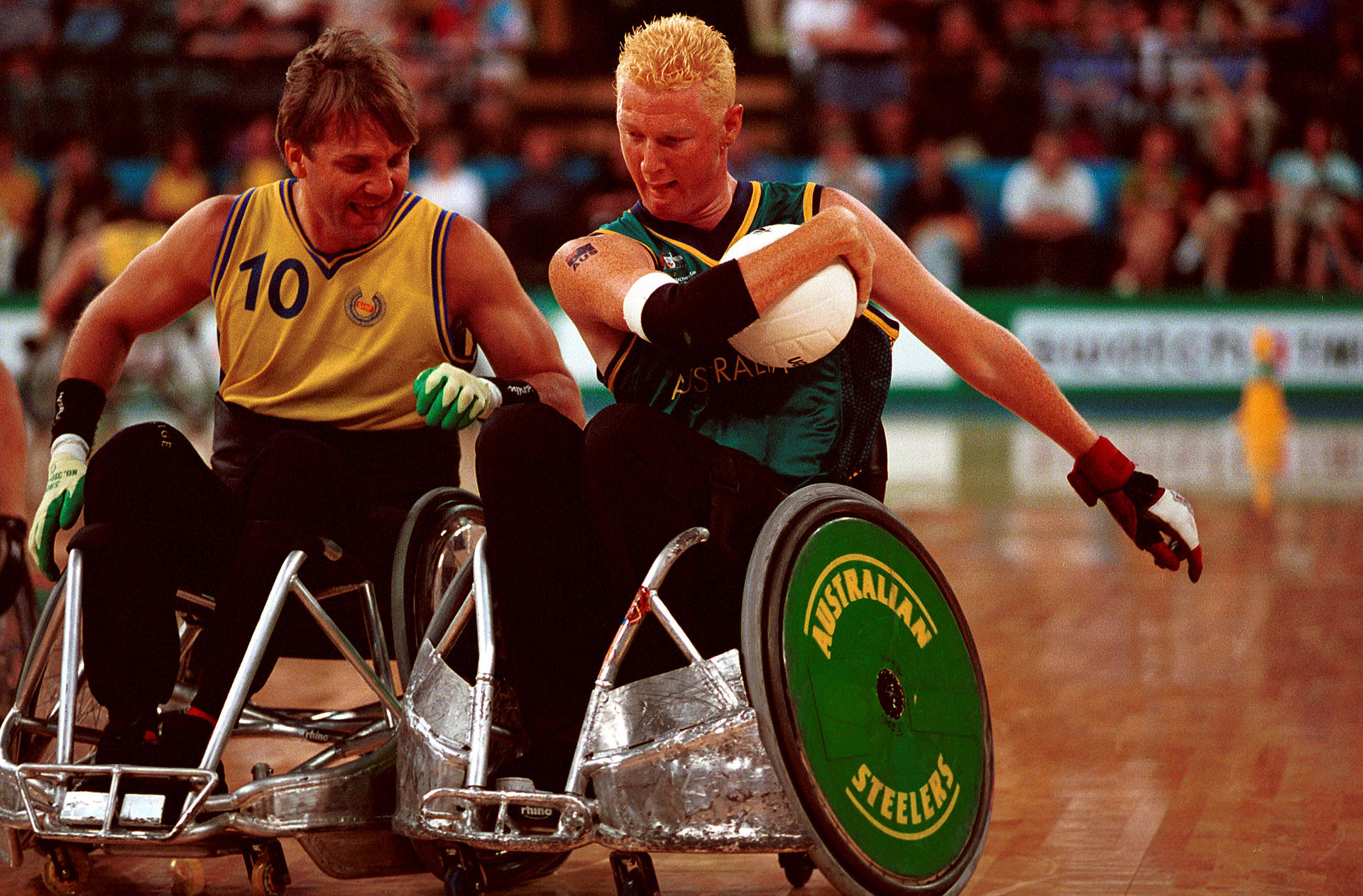
The Steelers came fifth at Athens 2004 and Dubberley retired after the 2006 World Championships, where the Australians came 6th. He took over as coach that November in a role that was very different to now.
“We didn’t have a performance analyst, for example, so I was doing the filming and cutting video myself,” he said.
“Nowadays, you’ve got people like Smithy (Paralympic gold medallist Greg Smith) doing our strength and conditioning, and a range of other staff, so you learn a lot about building a team around you. You learn to understand everyone’s strengths and weaknesses and get the right people to fill different roles.
“It’s much more about people management and that’s what’s been the biggest joy for me – being on the journey with the athletes and their families and making sure to get it right. As a coach, they’re your gold medal moments.”
There were plenty of conventional gold medal moments, too. Asked the perennial retirement question – what was your favourite achievement? – Dubberley said there were several.
“Obviously, London was huge. We were the first Australian team to win a Paralympic or World Championship gold – we won every quarter of every match; every athlete got on the court in every game – it was just enormous.
“But to be able to back it up four years later was a huge achievement. Winning our first World Champs was, again, so surreal.”
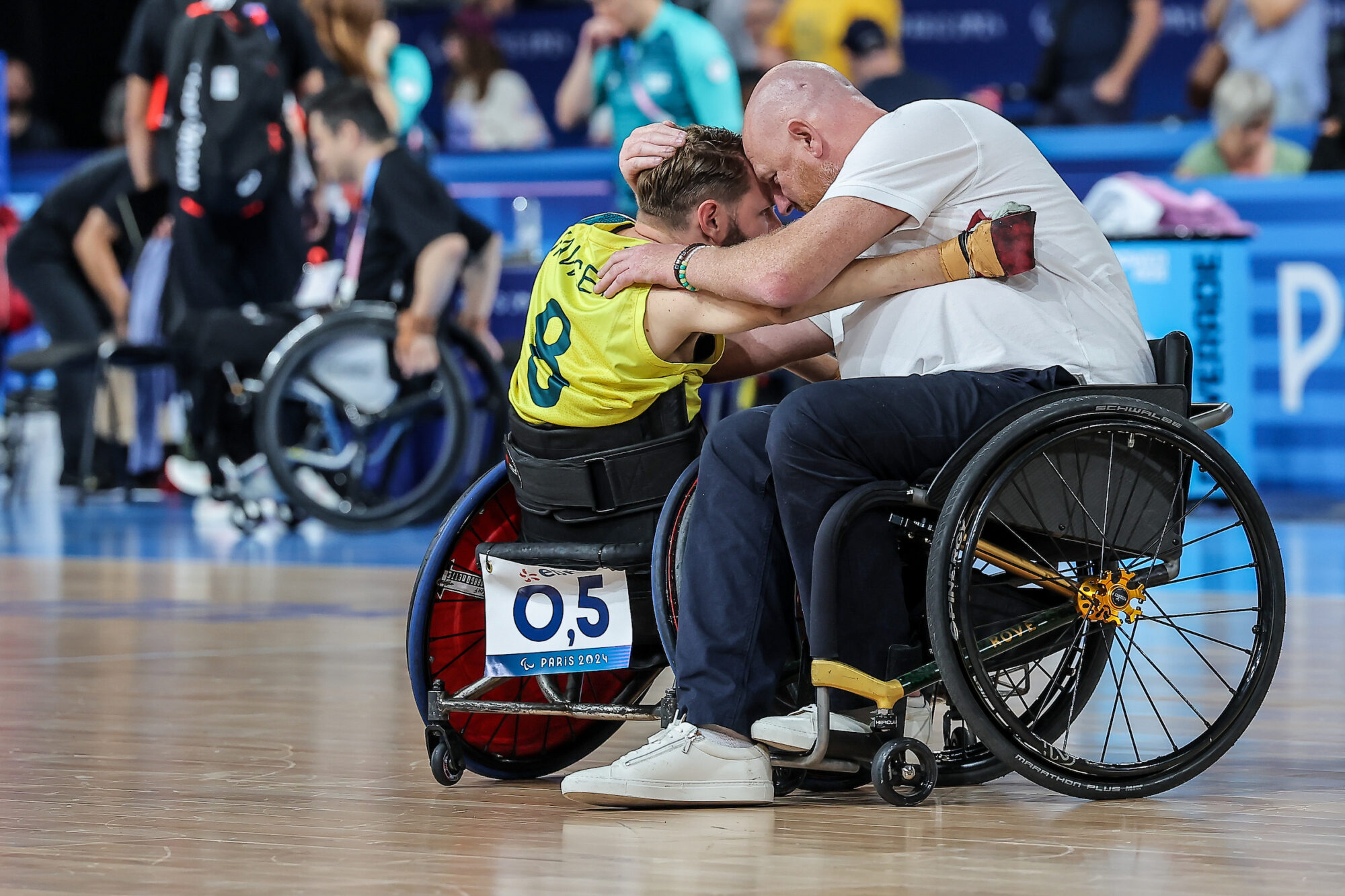
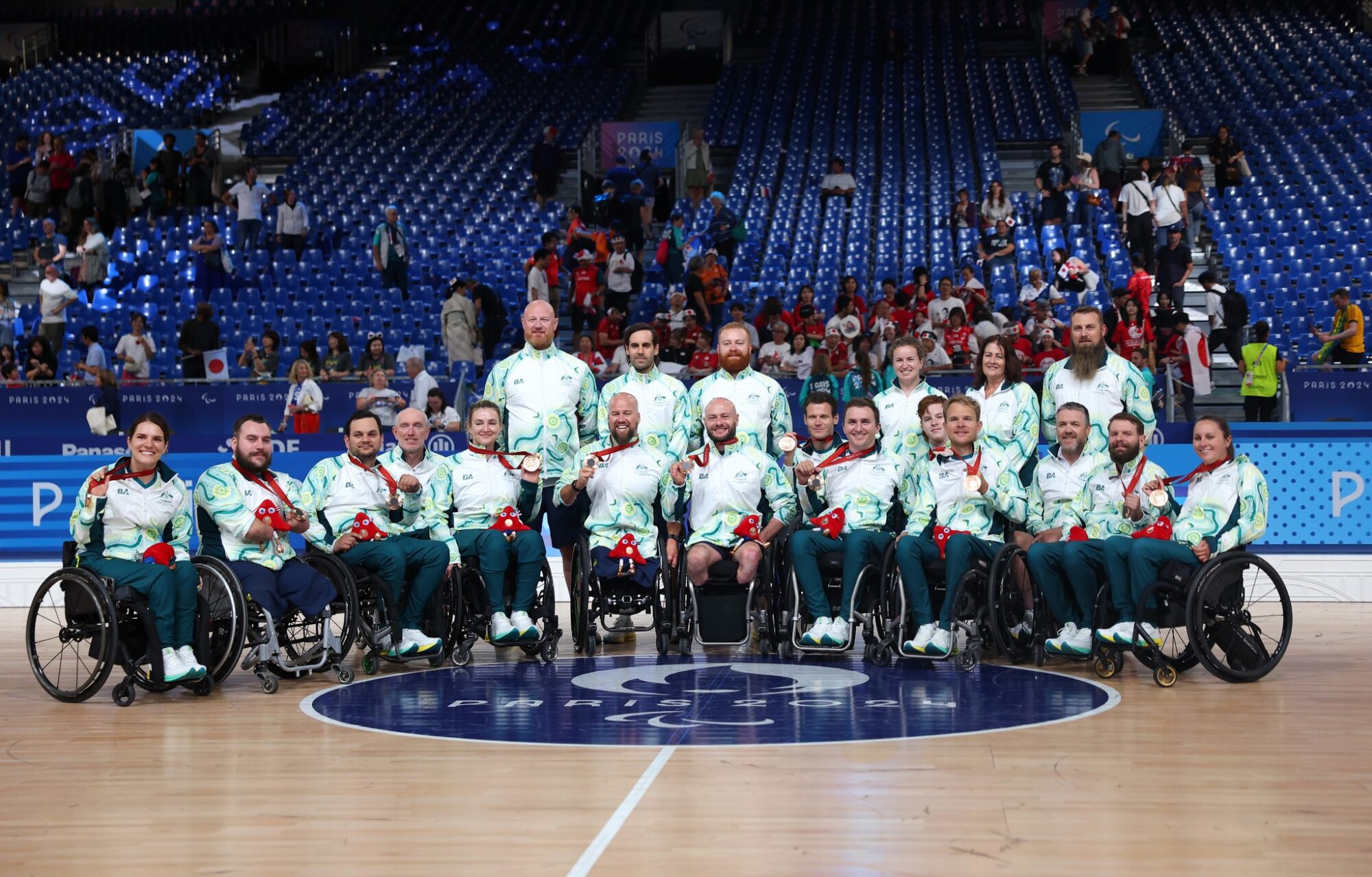
The Covid-interrupted Tokyo campaign was a proud moment for the effort the players and staff went to, he said, and fighting back to win bronze in Paris was another big achievement.
Dubberley said playing at Sydney 2000 was great, but he took more enjoyment from coaching, building the program and nurturing players to be their best.
“It’s a funny job,” he reflected. “You just move on so fast. You do well at a tournament and everyone’s trying to catch up and you’re always thinking, ‘How do we get better?’ If you lose, you’re thinking, ‘How do we get back to winning?’ It’s full on.
“Our team was the benchmark for a long time. We were a target. I feel like I didn’t really enjoy the successes as much as I probably should have.
“It’s come a long way from just rocking up and coaching a game or running a camp. There’s so many admin things now and other things that go into it that I felt like I was getting pulled here, there and everywhere. There was also a lot of change of players and staff.
“I guess I’ve been going flat out for a long time. I was injured at 12 and by the age of 15 or 16 I was playing in the US. I had my 17th birthday at Worlds in ‘98 and just went from there. I did five years in the US, travelled all over the place and then, suddenly, I was coaching.
“So, I’m happy to have some time to recharge, reset, get my health right and just prioritise family again. It’s nice not having your life dictated by a sport. It’s now – as it should be – built around the kids and my partner and activities that I’ve missed out on for a long time.”
While it’s ‘bye for now’, you sense Dubberley won’t be out of the game for long.
“I could still be involved as a coach in another country, still working in sport, maybe not even rugby. I’m not going to jump into something I’m not sure about,” he said.
“Wheelchair rugby is a big sport in a lot of countries now. The US, Great Britain and Canada were the frontrunners in terms of full-time coaching, but now you’ve got Japan, France and a number of other countries that are banging on the door trying to get better.
“It’s a great sport to be involved in. It’s had such a big impact on my life and many other people’s lives, not just within the sport, but spectators, friends, a whole lot of people.”
By David Sygall, Paralympics Australia.
Published 16 February, 2026.


