

 Join AUS Squad


 Back To News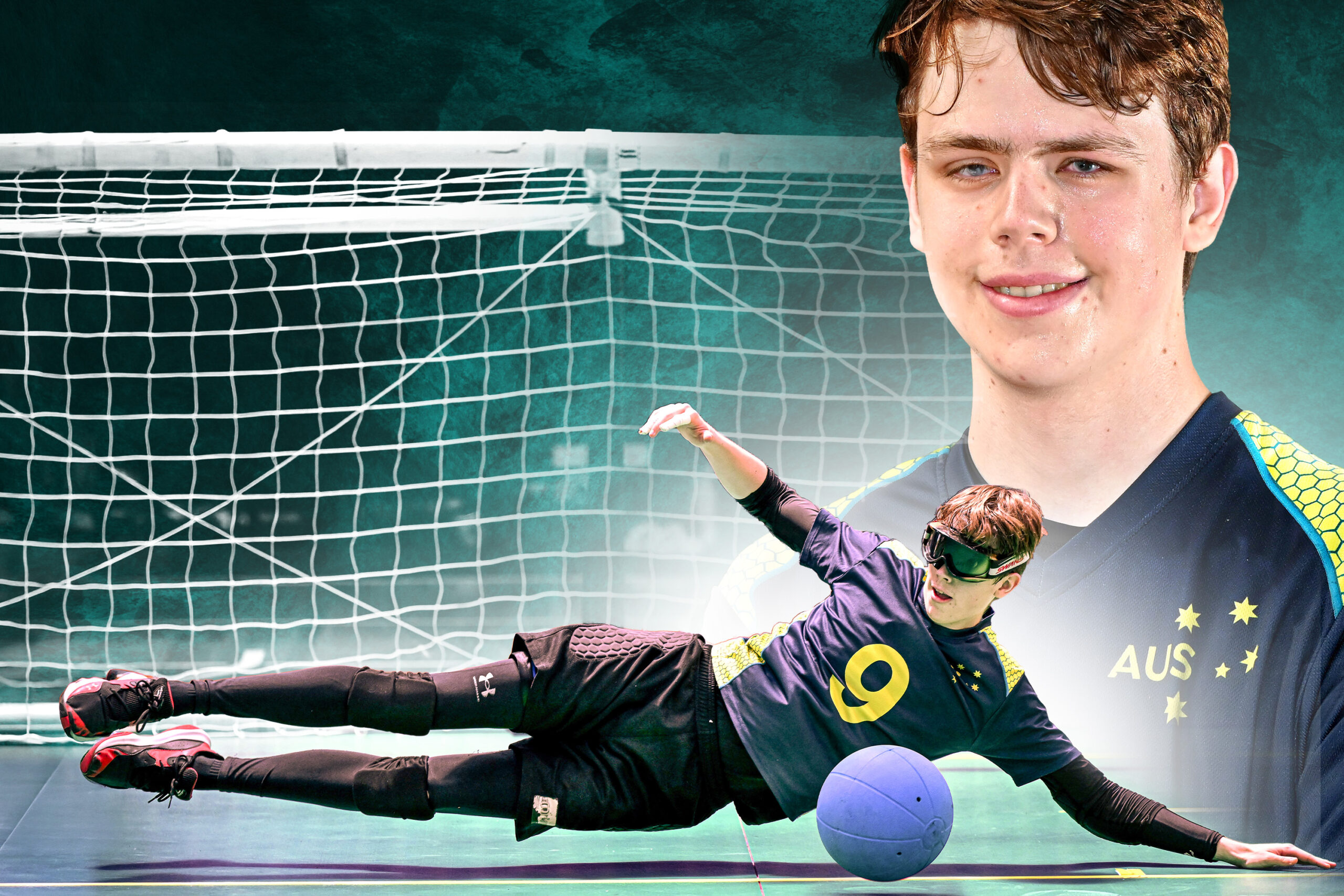
In high performance sport, the aim is to stand out, to be the best, to win.
Yet, in the furiously competitive sport of goalball, part of what makes it so appealing to those who play it is its ability to unify.
“I guess for every disabled person, we can all say we’ve got friends who are able-bodied,” said Sidney Whipp, who plays for the Aussie Storm national men’s team.
“But there is just something special about interacting with people who share your disability. That’s what I get from goalball.
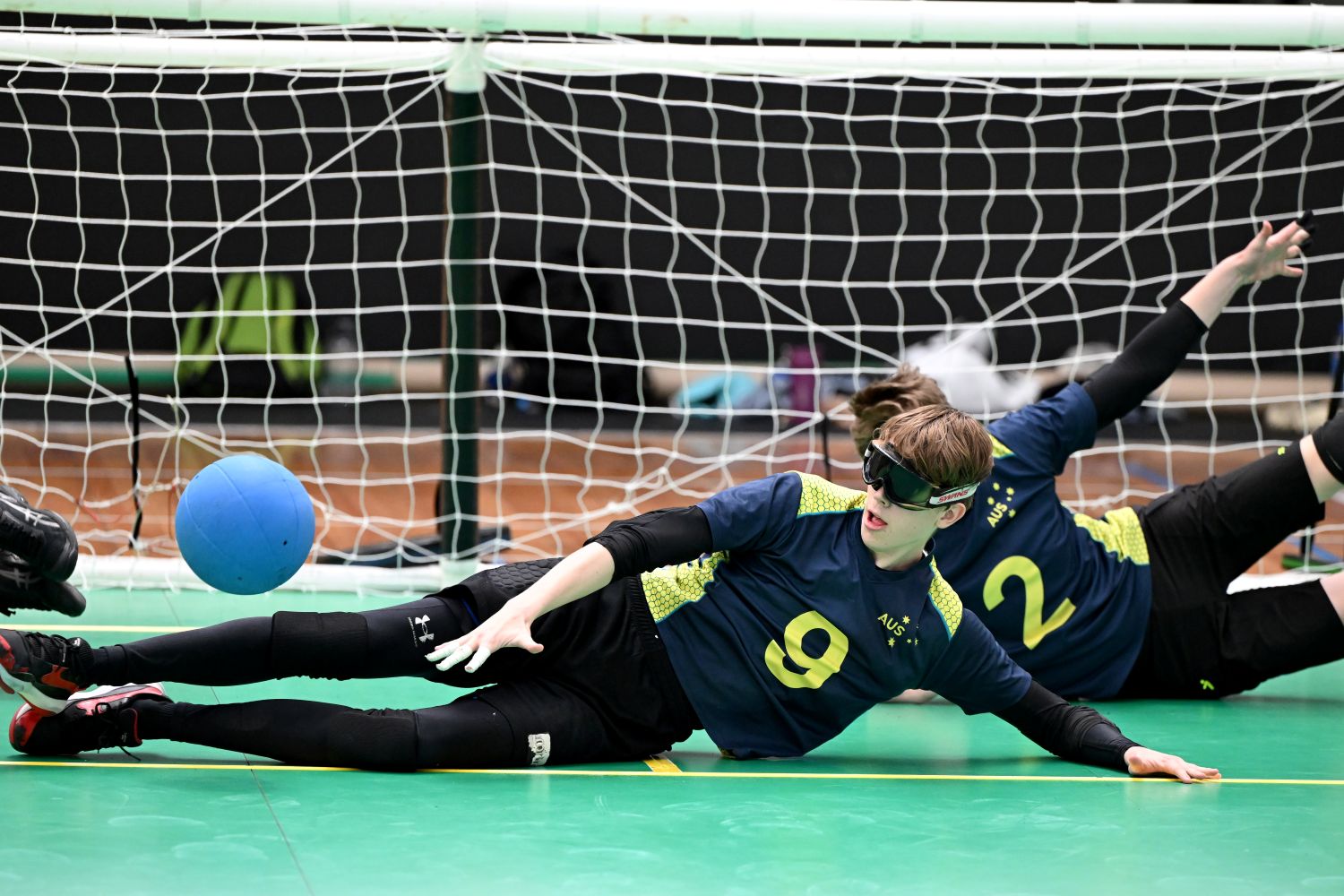
“I really like the equality of it. It’s especially good in that you’re all blindfolded on court, so no one cares how much you can see. Even if you see a bit better than the bloke next to you, it doesn’t matter at the end of the day. You’re all equal on the field.”
On this International Day of People with Disability – with its theme “Fostering disability inclusive societies for advancing social progress” – Whipp’s story of discovering and thriving in goalball after experiencing isolation and exclusion as a child is a powerful example of how sport can change lives.
“There were hardly any people around who had a vision impairment where I was growing up, in Cairns, so I was a bit unusual,” he said. “But, when I got involved in goalball, I knew that everyone around me understood my disability.
“That’s sort of where it’s been like a steady rock in my life, because I’ve been in the community for almost 10 years now, and I know that they ‘get’ me and I ‘get’ them.”
Opponents may not see Whipp in action, but they experience his strength and skill. The 20-year-old stands 193 centimetres tall – over six foot three – and uses all his considerable leverage to hurl the 1.25-kilogram chiming ball across the court.
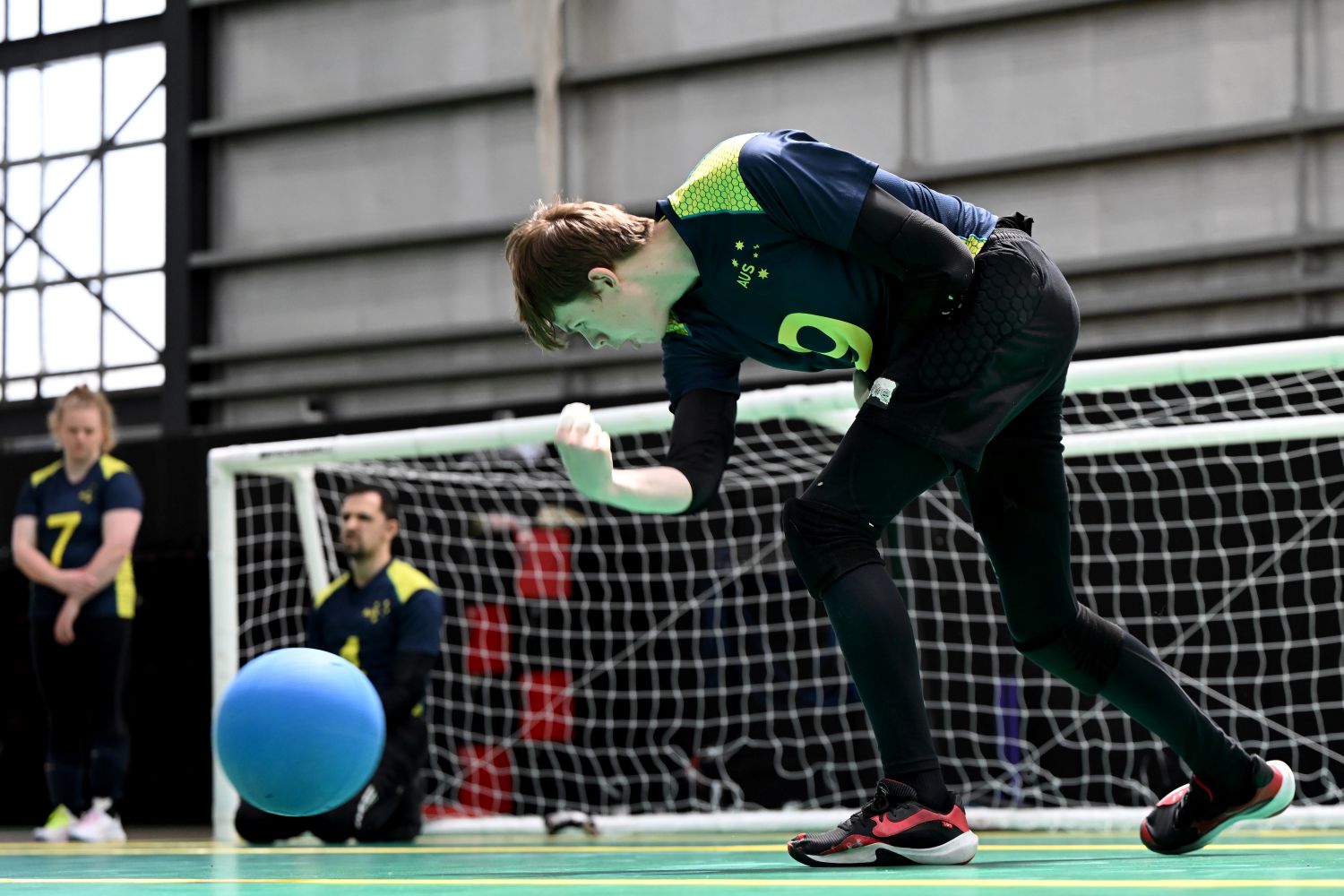
Goalball is a unique and exciting Paralympic sport designed specifically for athletes with vision impairments. It is played by two teams of three players each, who try to score by throwing the ball into the opponents’ goal. During play, there is silence, as players listen for the ball and stretch out their bodies to block shots.
The sport is played in more than 90 countries. The Aussie Belles women’s team featured at the London and Rio Paralympics and were quarter finalists in Tokyo but didn’t qualify for Paris 2024. Australia’s men’s team hasn’t appeared at the Paralympic Games since Sydney 2000. Under the Federal Government’s Para Uplift program, however, improved resourcing is already reaping benefits with both the Belles and Storm now ranked in the world’s top 20.
Whipp’s quest to play for Australia started when he was 10, after retinal detachments greatly deteriorated his vision and forced him to stop playing some other sports.
“When my vision became worse it was hard,” he said. “I loved getting out and about with sport. I played soccer, cricket, swimming, everything. I was running around the school playground. I loved it.
“Then I was almost feeling paralysed, it was a big shock. Pair that with going into high school as well, it was really hard.”
It wasn’t just insensitive peers he had to deal with.
“Even with the adults … I was the first VI kid at my school ever and there were a lot of teachers who needed teaching about how best to teach me. That was really draining because so much of the time I was going, ‘Can you please fix this?’ or ‘I can’t access this’.
“I was having to educate them and, you know, for a 12- or 13-year-old, that can be really hard.”
Whipp – who now studies Arts and Law at The University of Queensland – said that by teaching those around him about his disability, he started to feel like a trailblazer and a role model. That feeling was amplified when he returned from a tournament last year.
“A kid comes up to me and says, ‘I saw you on the TV’. I think it was a YouTube stream, or something. It was just, ‘Wow!’ It was really strange to know that other people are watching and, you know, that was me five years ago, I was watching.
“It’s amazing knowing that I have this responsibility of being able to influence other people, not just in goalball, but in everyday life as well.”
More people are getting behind the Aussie Storm as they rise up the rankings. At the Asia-Pacific Regional Championships in Pakistan in October, they finished second in their pool and beat Kazakhstan 7-2 in the quarter-final before falling 7-4 to world No.6 China in a tough semi-final. They then fought hard in the bronze medal match but lost to Thailand 5-4.
Whipp said that when he came into the national side in 2023, it was starting a period of growth and development. The players, he said, are close-knit and focused on international success.
“Theres’ the physical aspect of goalball but, first and foremost, it takes determination,” he said.
“You’ve got to be driven to be the best player you can be. Like in any high level sport, you’ve got to look at the big picture and say, ‘If I want to achieve this, there are some things that I have to give up’. That can be hard.
“I’m a young guy, a uni student, I like having a good time with my friends. I can do that, but if I want to win gold in 2032, I’ve got to be disciplined. You have to be driven, motivated and accountable as well.
“Goalball is a harsh sport. Even though it’s a team sport, an individual can make the tiniest mistake and it leads to a goal. You’ve got to be able to hold yourself to account and hold your teammates to account.
“For me and the rest of our team, it’s not just about making it to the Paralympics, the goal is a gold medal at the Paralympics. It’s such a competitive sport. Only eight teams get to go to the Paralympics for goalball, which is crazy when you think how many teams are registered under the International Blind Sports Federation.
“We’re a driven team. We’ve got great coaching, and I think, you know, as long as we put our minds to it, anything’s possible.”
Storm coach Andrew Ridley said he now had the support he needed, through Para Uplift, to take the team to the next level.
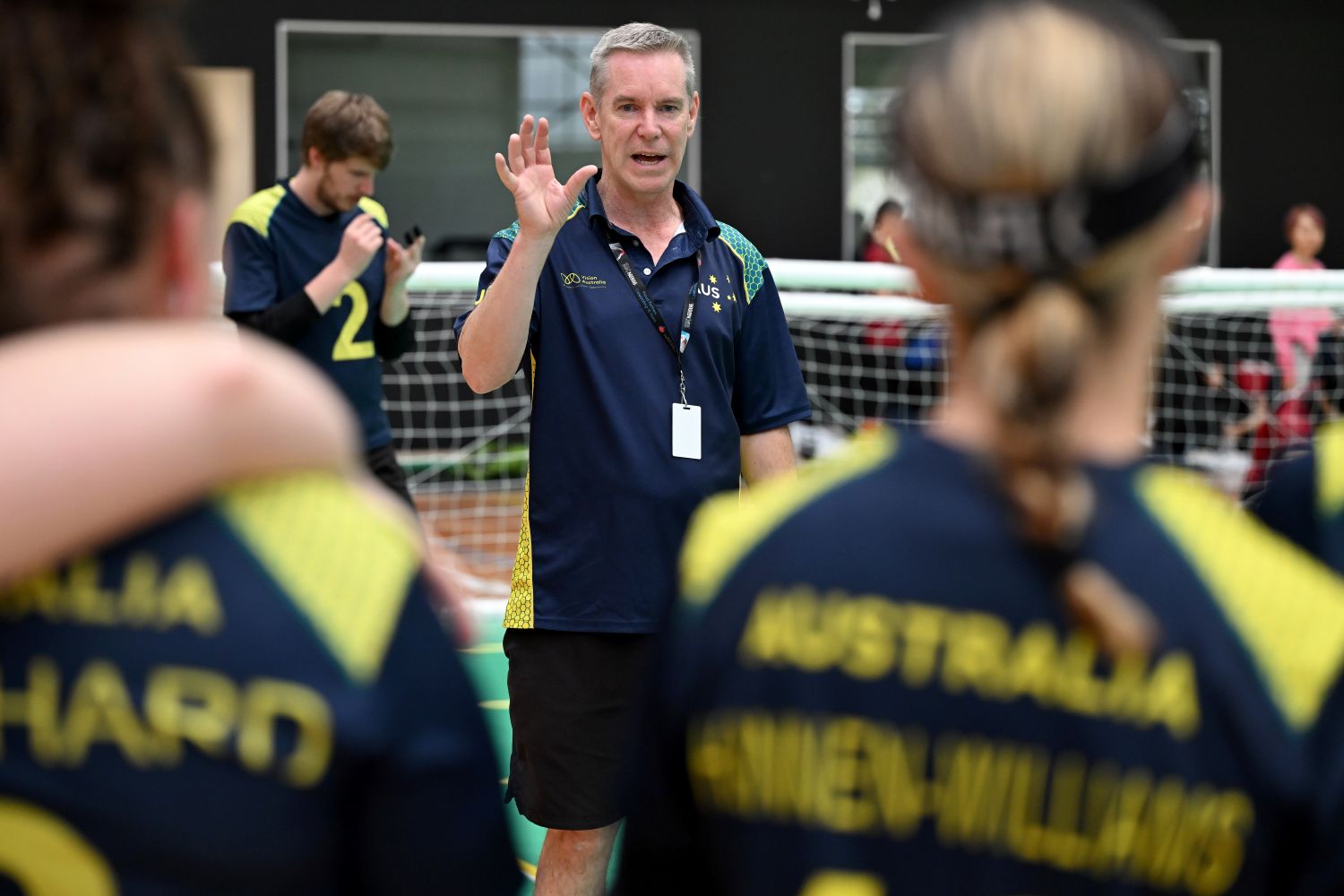
“It’s not just a one man show anymore,” Ridley said. “We have a strength and conditioning coach on board, something I desperately needed because it’s just not my area of expertise.
“Also, some of the other things, like medical … At the Regional Championships in Pakistan, we had a number of people get sick, and having access to that expertise made a huge difference.
“It’s something I have to get used to, not having to do everything myself. I was the organiser, the manager, the coach … having proper support makes it completely different.”
From a player’s perspective, Whipp said: “Having a physio to the Regional Championships in October, usually we wouldn’t be able to do that or we’d have to pay out of our own pocket for them to come. I think it made such a difference to our team’s performances.
“It’s just, it’s night and day. We’re super grateful for the help we’re getting.”
By: David Sygall, Paralympics Australia
Published: 2 December 2025


