

 Join AUS Squad


 Back To News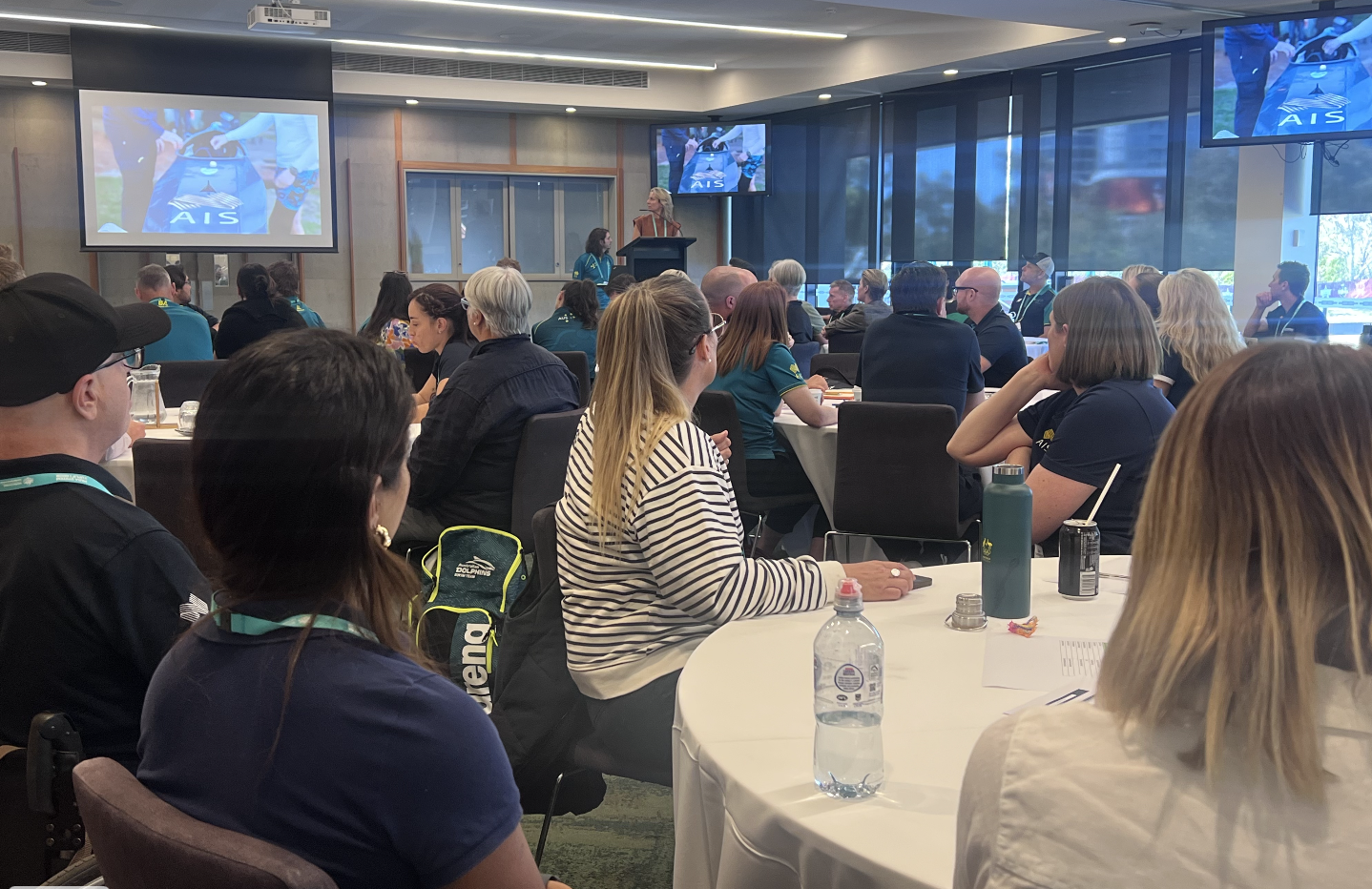
A two-day summit featuring a wealth of Australian Para-sport knowledge has outlined the crucial link between the theory and practical implementation of the Federal Government’s historic funding injection into the national Para-sport system.
The Para System Uplift Summit delivered stories of inspiration and aspiration, and the kind of conversations that need to happen if Australia is to seize the full potential of the Brisbane Paralympics in 2032.
It brought together around 150 people – including Paralympians and alumni, and Para-sport staff from across the system, including the Australian Sports Commission, Paralympics Australia, State and Territory Institutes and Academies of Sport, and National Sporting Organisations. Among those in attendance was Paralympics Australia CEO Cameron Murray, QAS CEO Troy Ayres, WAIS CEO Matt Fulton, Blind Sports Australia CEO Felicity Wilkeson, Disability Sport Australia CEO Ayden Shaw, as well Para Unit System Lead Mitch Gourley.
“Many of the people here have been in their roles now for six months or so, or a little bit longer, so we thought it was a good time to bring everyone together for the first time since the Uplift started,” said Victoria Moore, Director of the ASC’s Paralympic Unit.
“Last year it was all ‘post it’ notes and a lot of info in people’s brains, a lot of theory. Coming together like this is more about collaborating in a practical kind of way.”
The Para Uplift is a national, government-backed effort to rebuild Australia’s Paralympic strength by addressing long-standing barriers to entry and progression of athletes into Paralympic pathways. It’s areas of focus include classification, coaching, enhanced training environments, Para-sport knowledge and Para-sport equipment.
The program for the Summit was extensive and engaging. It ranged from discussion panels to seminars on Para literacy, entry and performance pathways, and stories of success from various sectors of the system.
“There’s no denying that results were tracking downwardly and we were starting to see less representation across different classes and different impairments,” Moore said.
“We’ve been at risk; someone described it recently as ‘an extinction model’. So there are a few things that have led to this point in time and now we have this opportunity to put everything down in one place to create something really successful.”
Bill Tait, the AIS General Manager, Performance Systems and Paralympic Pathways, said the Uplift had prompted a “light speed” change from identified gaps into a series of priorities to, now, “a fully stood-up workforce in action and delivering impact that’s immediate and clear”.
Tait said the Australian public can expect change to become evident through “a series of national teams, and ultimately an Australian Paralympic Team, that represents much more of what the Australian community looks like”. He added: “Paralympic sport has been a little bit out of sight. But it will start to take on a visible presence and people are going to feel great pride in a system that is clear and united and rigorous.”
Among those who presented at the Summit was Paralympics Australia’s Literacy Lead Kim Encel, who conducted an experiment to discover what areas of the Para-sport system most needed what he referred to as ‘knowledge building’.
“We at Paralympics Australia have to figure out what the priority areas are. There are many places we can build knowledge, but we can’t do everything at once,” Encel said.
“It was interesting to see that people had quite different perspectives on what areas are most important, but as the session moved on there was a bit more consistency. It narrowed down to a clear desire from people for more clarity around roles and responsibilities – who needs to do what and why – to make the recent changes work best.”
By David Sygall, Paralympics Australia.
Published 4 December, 2025.


