

 Join AUS Squad


 Back To News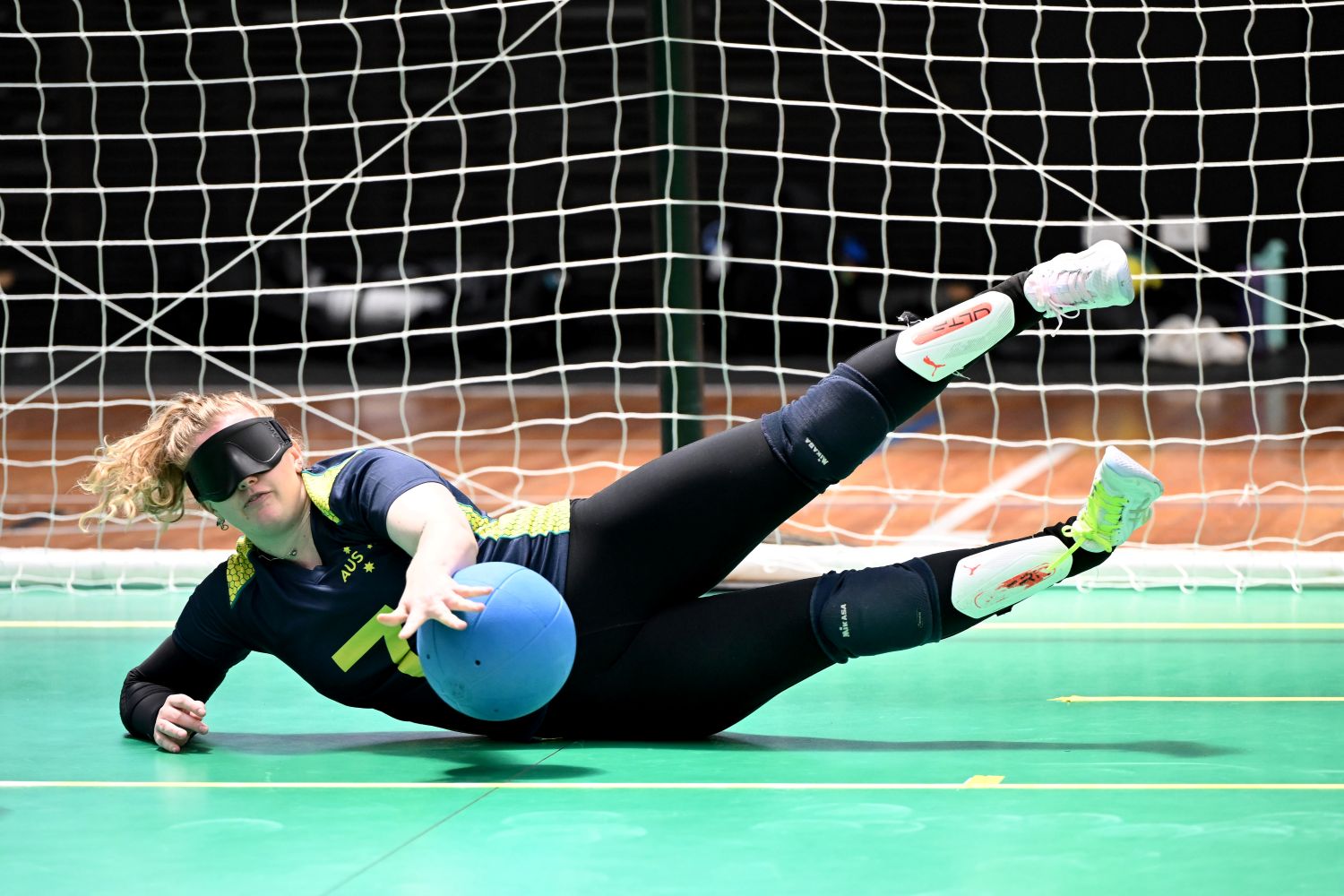
Paralympian goalball player Brodie Benson has started her return to the sport after becoming a mother by joining her Aussie Belles teammates at a camp with a visiting squad from South Korea.
The historic camp – the first time in over 25 years that an international goalball squad has come to Australia for a training stint – features the full Australian men’s and women’s goalball squads, which are each on an upward trajectory through squad development, dedicated coaching and better resourcing through the Para System Uplift.
“I think one of the best things about this camp is that they approached us,” Blind Sports Australia CEO Felicity Wilkeson said.
“I think it really signals that the Australian goalball teams are definitely on the radar. The men have really improved significantly in the last couple of years, and the women have re-formed post-Tokyo and they are looking sharp as well.
“They’ve been rebuilding their squad in terms of their depth and talent. Some of it is a cyclical nature, but certainly the increased investment that we’ve been able to put towards the high performance training environments has really helped in putting in place a lot of the essential building blocks.”
Wilkeson said the week-long camp was an opportunity for reciprocal learning.
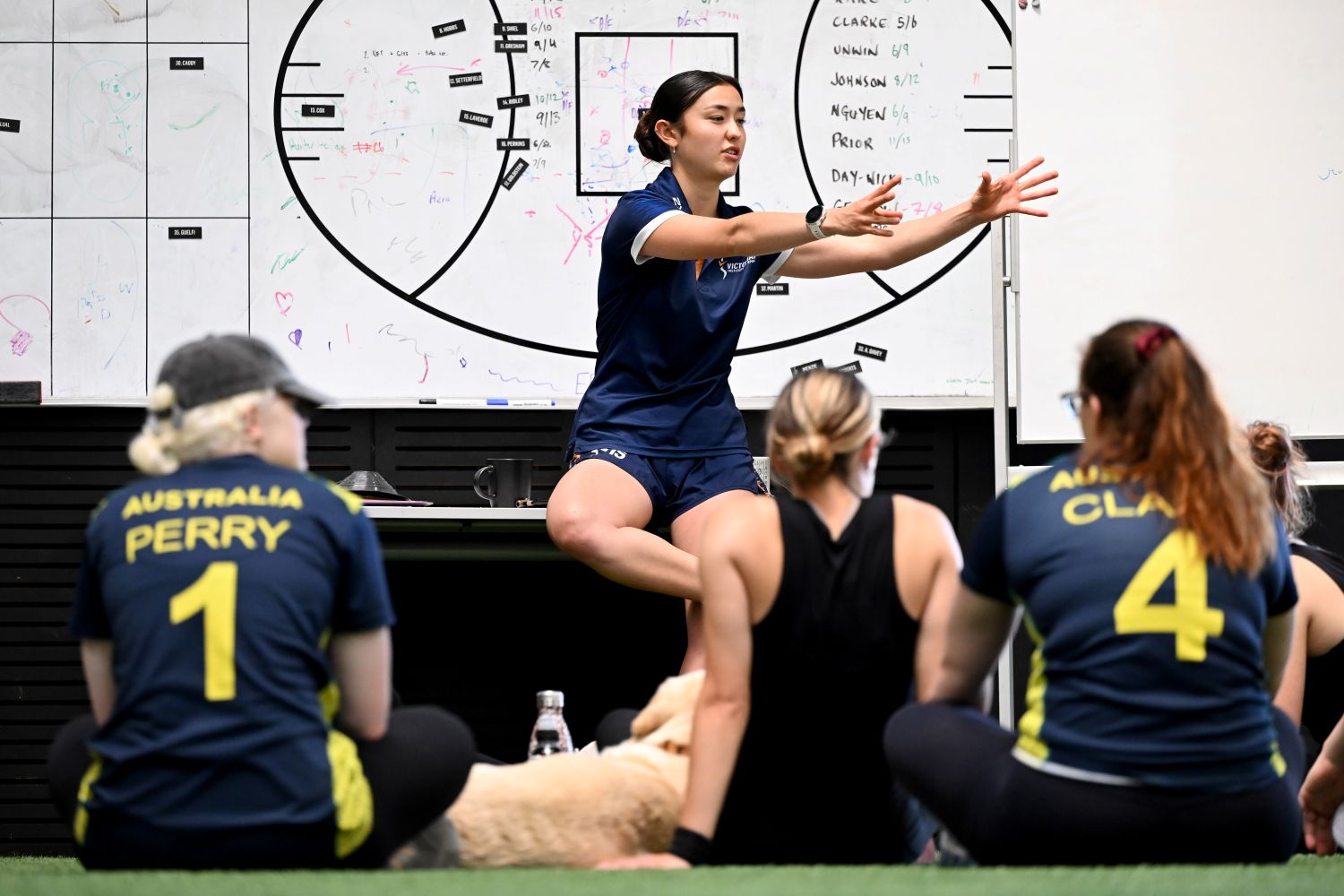
“The coaching staff will talk to each other and share knowledge – that’ s how we get among the world’s best, by working with these teams,” she said.
“Come next April or May, they’ll be competing against each other in tournaments that have direct qualification points. But here they are willing to share what they know with us. So, I think that’s very exciting.”
For Benson, it represents the start of journey she hopes to carry through to Brisbane 2032, where – if all goes according to plan – her son Miles, or ‘Milo’, will be in the crowd cheering for mum.
“I was in two minds,” Benson said of the decision to come back to the sport in which she represented Australia at the Tokyo 2020 Paralympics.
“I always knew I wanted to have a kid. After we didn’t make Paris, I thought, as much as I love sport, sport isn’t your entire life. I thought, I’ve been doing this for nine or 10 years, I can take a year off, have a baby, and just kind of see where I’m at afterwards.
“I ended up taking about a year and a half off. As I was watching the girls play while I was pregnant and just after, I was like, ‘Oh, I don’t think I’m done yet’. The fire was still there because Brisbane is too good an opportunity.
“The goal now is to get us to a Home Games and have my son in the crowd watching me play, which would be amazing.”
It’s no secret that returning to top level sport as a new mother is challenging. Milo is at the camp this week, looked after by a nanny during the days, partly funded by Blind Sports Australia. Overnights, he’ll stay with mum.
“It’s a midweek camp, my husband is working, so logistically we had to organise a few things,” Benson said.
“To go from not being able to do much to then suddenly transitioning back into it has been a lot to manage. But I’m not just representing me anymore, I’m representing him and my husband as well, so it adds that little bit extra.”
The responsibility of motherhood is mirrored somewhat by Benson’s new role for the Belles. She’s gone from ‘baby Belle’, in a team with the likes of Meica Horsburgh, Jenny Blow and Tyan Taylor, which made the quarter finals at Tokyo 2020, to being a senior leader.
“I am enjoying it. It’s a different role, but I’m excited to help build the future, help develop the team and build the Belles up so we can be competitive at international level and win a medal.
“This camp shows that we’re progressing, we’re really developing. We’re getting bigger and better. It’s wild that it’s been over 25 years since we’ve had an international team come and say, ‘Hey, can we train with you?’
“It goes to show that we’re headed in the right direction in terms of building our teams up to be competitive internationally again.”
Aussie Storm men’s team coach Andrew Ridley said the benefits of the camp were financial as much as technical.
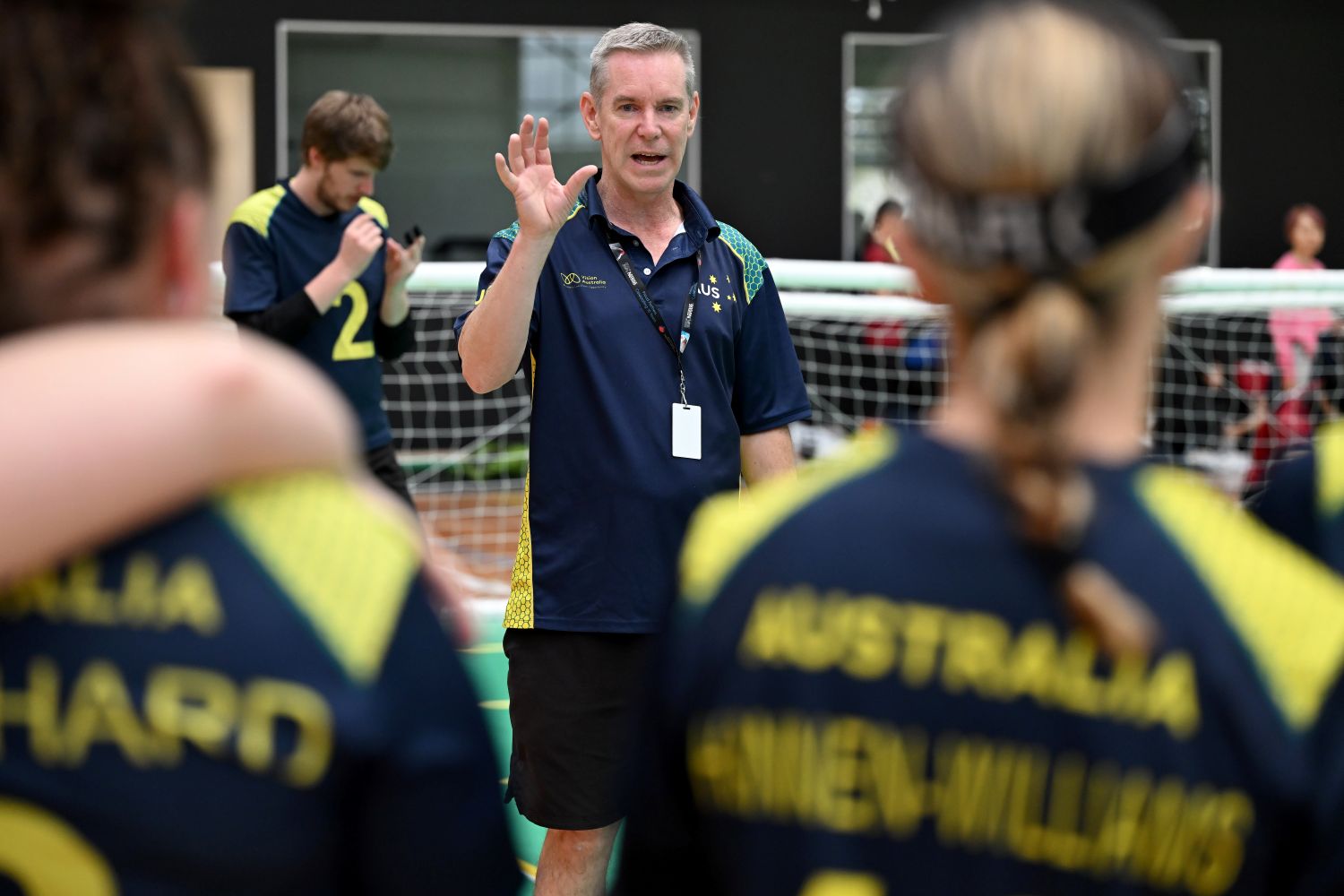
“We don’t get these sorts of opportunities unless we pay thousands of dollars to go overseas, which we’ve done with Japan and China and we will do that again,” Ridley said.
“But to have this opportunity for a fraction of the cost, having quality players coming here to play against, it’s just a massive opportunity for us. One of the Korean players, for example, the number 11, is one of the best throwers around. Having him here to train with just benefits us incredibly.
“One of the challenges we always have is when we train among ourselves we can get a bit of a false impression of how good we are. To actually have that benchmark come to you, is just great for us.”
By: David Sygall, Paralympics Australia
Published: 28 November 2025


