THE START LINE
Your Para Sport Journey
Begins Here

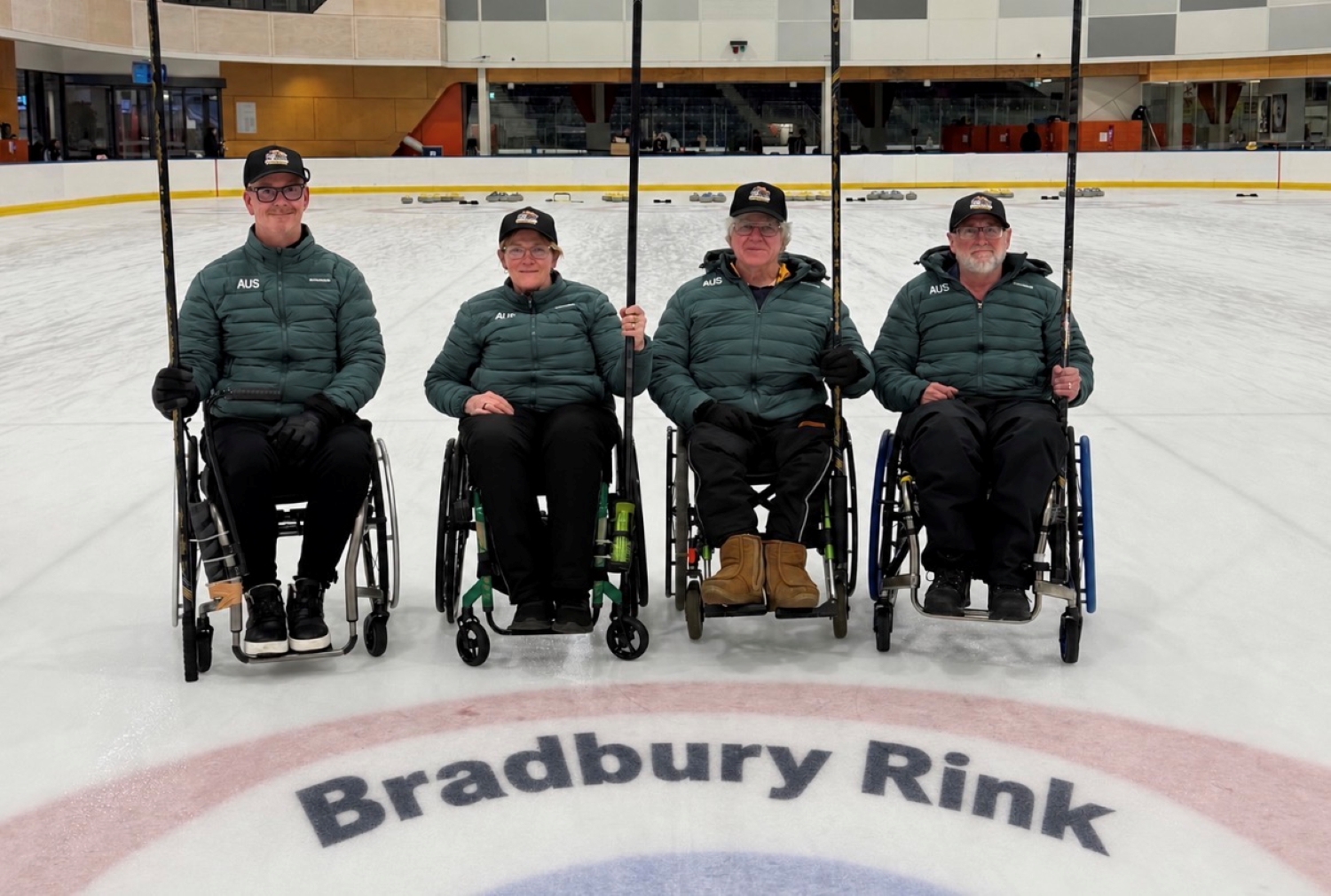
Australia is not an obvious place to cultivate an international wheelchair curling team. The country has no dedicated curling rink, its athletes are scattered across three states and opportunities to train together on competition-quality ice largely necessitate travel overseas.
Yet four Australians are preparing to compete at the World Wheelchair-B Curling Championship in Lohja, Finland, from November 22–28, with aspirations extending towards the French Alps 2030 Paralympic Winter Games.
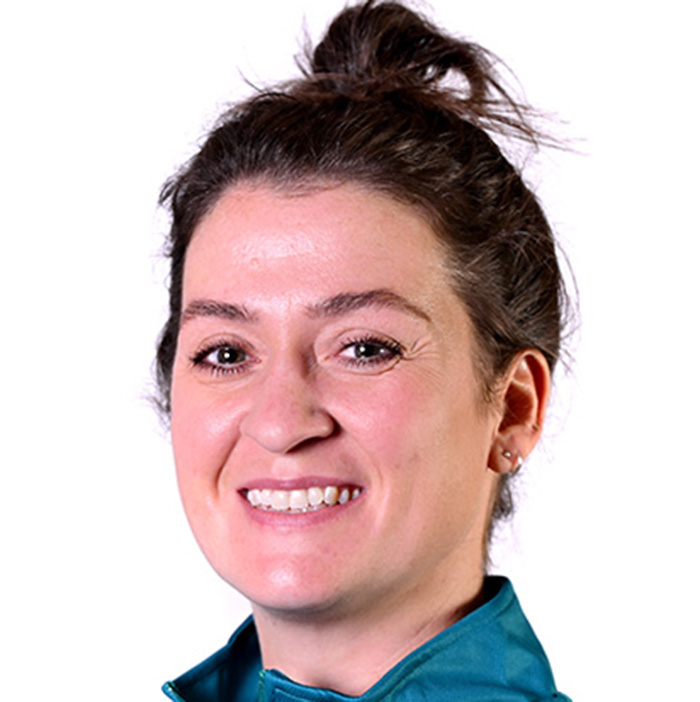
Three-time Paralympic cycling champion, Carol Cooke, one of the team’s newest recruits, is characteristically philosophical about where this unlikely venture might lead.
“Funnier things have been known to happen,” she said.
Sporting reinvention is hardly unfamiliar territory for Cooke, whose career has already encompassed swimming, rowing and cycling. Canadian-born, she knew of curling long before contemplating playing it herself, although she admits to having regarded it as something of “an old person’s sport”.
Her first Try Para Sport session left her unconvinced and she declined an invitation to attend a development camp. A subsequent session at Melbourne’s O’Brien Icehouse with National Head Coach, Perry Marshall, proved more persuasive, although several hours of technical instruction left her somewhat bewildered.
What gradually captured her interest was the sport’s complexity and the unfamiliar pleasure of being a beginner again.
“It’s really good getting my brain around something new,” she said.
Before sustaining an injury in 2023, Queenslander Mark Ferguson enjoyed golf, skiing and hiking. Returning to sport became an important part of his rehabilitation, providing both physical benefits and a welcome return to competition.
“With sport, you get the benefit of moving in a way that you can and have fun at the same time,” he said.
He discovered curling at a Try Para Sport session during the Milano Cortina 2026 Winter Games and was immediately captivated by its tactical complexity.
“Watching it on TV, I didn’t appreciate how tactical curling was and how your gameplan needs to keep evolving through the game,” he said.
Unlike Olympic curling, wheelchair curling has no sweepers to influence a stone’s course once released, placing a premium on precision and consistent practice. For Australia’s emerging national team, limited access to suitable ice makes both difficult, constraining opportunities to refine technique and develop the communication and tactical understanding essential to team competition.
“In wheelchair curling, we don’t get the benefit of sweepers, so it’s all on you!” Ferguson said.
Wheelchair curling has an established, if modest, history in Australia, with athletes competing in local leagues and representatives attending Asian championships in South Korea in 2023 and 2024. What those early efforts lacked was the structure to turn individual participation into a sustained national program.
“Developing that pathway is a priority in our High Performance Strategy,” Curling Australia’s Director – High Performance Projects, Laurie Weeden, said.
“We now have coaching, accreditation, mentoring and classification expertise in place.”
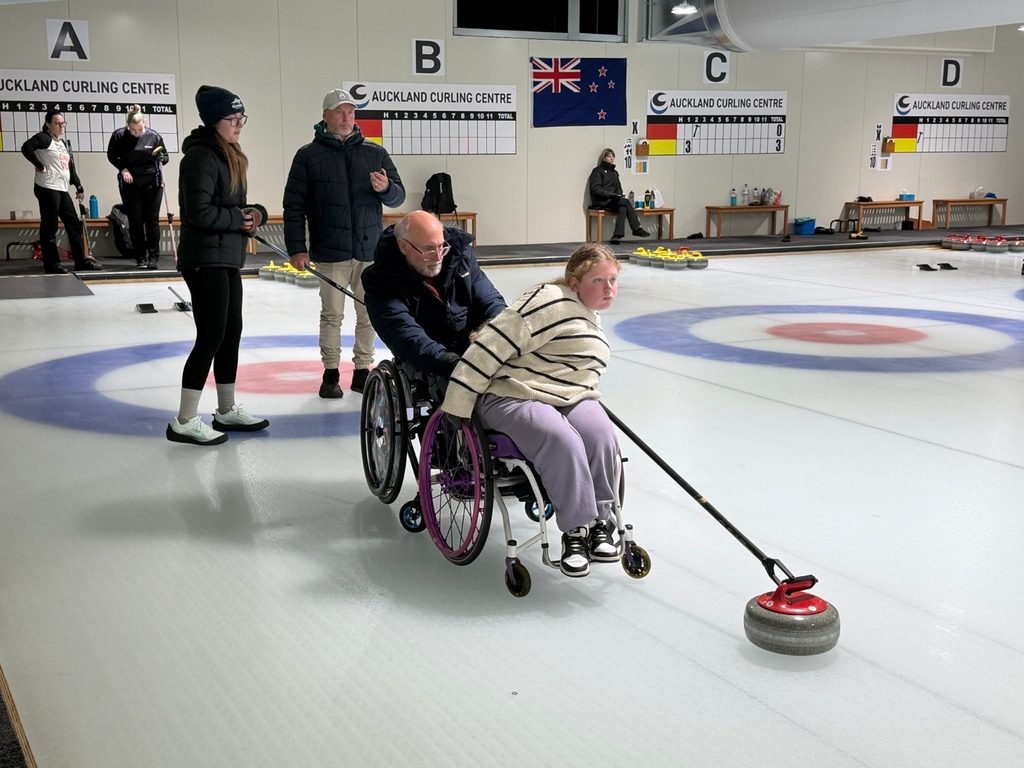
Investment from Paralympics Australia, alongside Australian Sports Commission Win Well funding and coaching grants, has helped translate those plans into practice, supporting an eight-day development initiative across Auckland, Perth and Melbourne in July.
The program brought athletes and coaches together for assessment, technical instruction and mentoring. Participants received individual development plans, while those selected for national representation subsequently completed their first full team camp in Auckland.
“We now have a selected national team training in their respective states with two new coaches, who are being mentored by the head coach,” Weeden said.
For Marshall, identifying potential in a sport unfamiliar to many Australian athletes requires looking beyond previous curling experience.
“We’re also looking for coordination, tactical awareness, focus, willingness to learn and the ability to communicate and contribute within a team,” he said.
He has been particularly impressed by the athletes’ determination to improve, both during their limited time on ice and through the technical and tactical preparation undertaken between sessions.
“Watching it on TV, I didn’t appreciate how tactical curling was and how your gameplan needs to keep evolving through the game.”
The coming week in Finland will offer Australia’s developing program its first meaningful measure against established international competition.
A top-three finish at the World Wheelchair-B Curling Championship would secure progression to the sport’s premier world championships, although the tournament’s significance extends beyond qualification.
“We’ll set specific goals for Finland and assess progress against those goals, using the international competition experience to guide the next stage of individual and team development,” Marshall said.
The experience will also inform preparations for the World Wheelchair Mixed Doubles Curling Championships in March 2027, while Curling Australia’s longer-term ambitions include Paralympic qualification and top-eight performances at French Alps 2030.
For Ferguson, whose progression from curious newcomer to national representative has been swift, the significance of his selection only became tangible when his Australian uniform arrived.
“It suddenly felt very real when I received my uniform and looked at my name printed on the back,” he said.
“At the same time, I felt this incredible sense of responsibility.”
Now he is anticipating the moment he rolls onto the ice in Finland alongside his Australian teammates.
“First and foremost, I want to enjoy my first international tournament,” he said.
“From there, with the next Winter Paralympic Games only a few years away, let’s dream big as stranger things have happened – but keep focused on the here and now!”
Between those ambitions and their realisation lie considerable practical challenges, not least the need for regular access to suitable ice.
Having previously advocated for greater integration of Para cycling within Australia’s broader cycling program, Cooke hopes her experience might prove useful in another sporting discipline.
“Who knows, maybe I can have a voice to try and push this a bit further and help with getting ice somewhere in Australia,” she said.
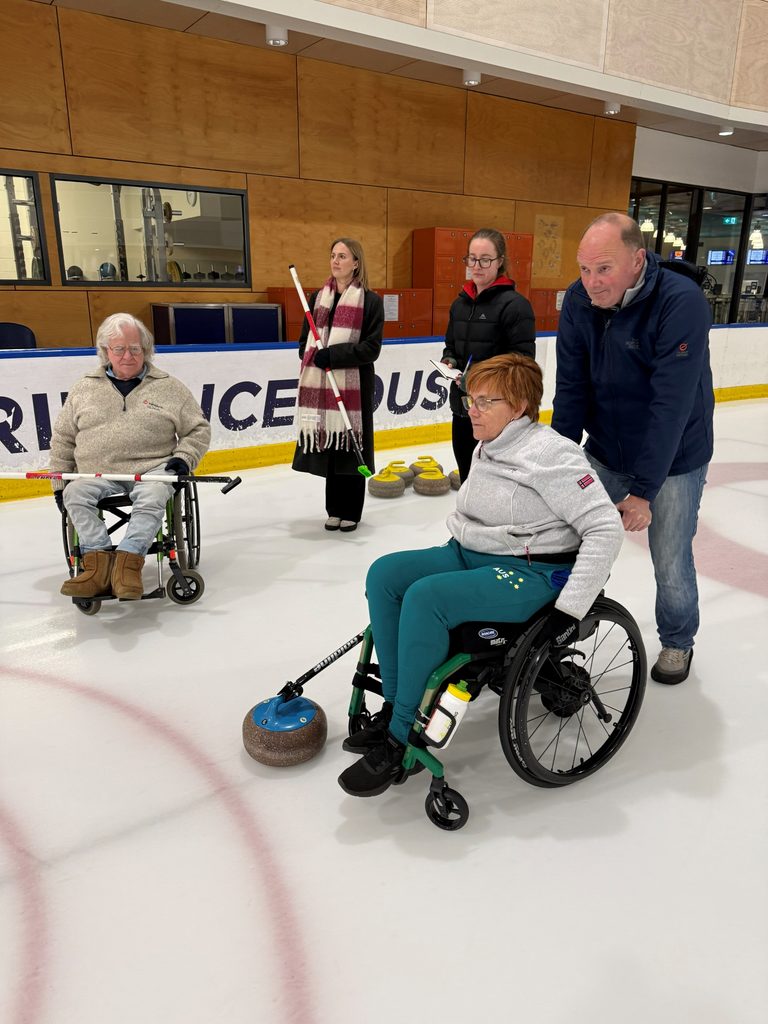
Yet for all her interest in helping establish the sport, Cooke is making no promises beyond December.
“I just said to him, look, I’ll give you to the end of the year. I can’t make any guarantees after that,” she recalled of a conversation with Marshall.
“He just kind of looked at me and he went, what?”
At 65, with multiple Paralympic medals already to her name, Cooke is reluctant to commit to another four-year campaign. But helping establish a sport in Australia and opening the door for athletes who might otherwise never discover it, presents an opportunity of its own.
“I’ve had my opportunities in sport, and if I can play a small part in helping establish wheelchair curling in Australia, so that others have those same opportunities, that would be pretty special,” she said.

Your Para Sport Journey
Begins Here
Paralympics Australia is only able to continue doing its work driving the Paralympic Movement forward in Australia because of the generous support it receives from Government, Corporate Partners and donors.
The focus continues to be on delivering teams to each Summer and Winter Paralympic Games and supporting Para athletes as they enter and progress through the Para sport system and into their post-sporting careers.


"*" indicates required fields