THE START LINE
Your Para Sport Journey
Begins Here

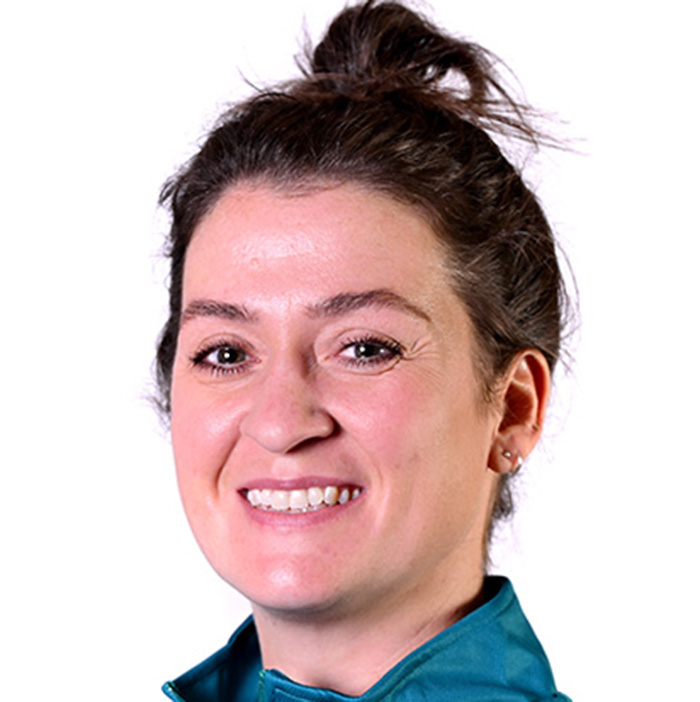
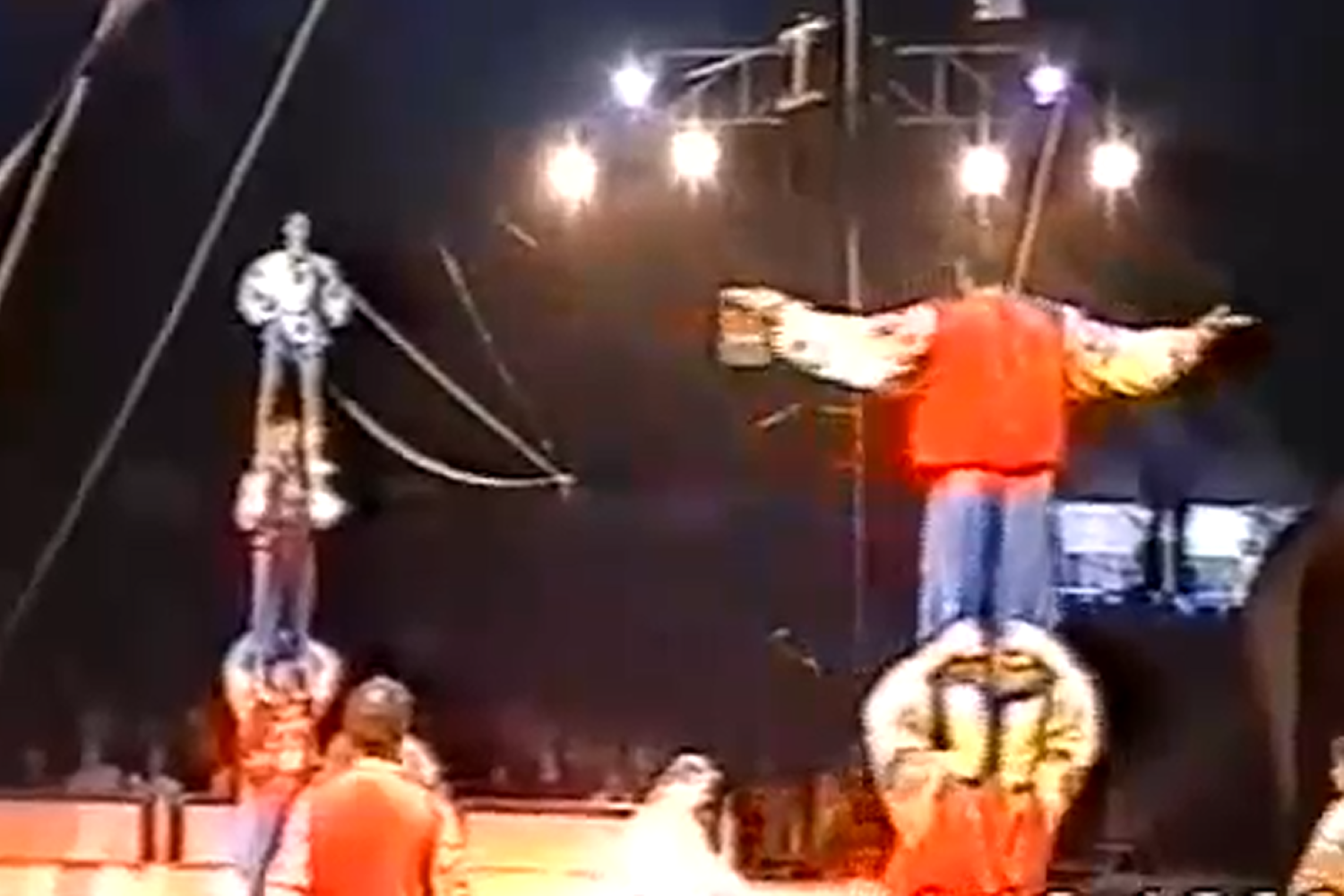
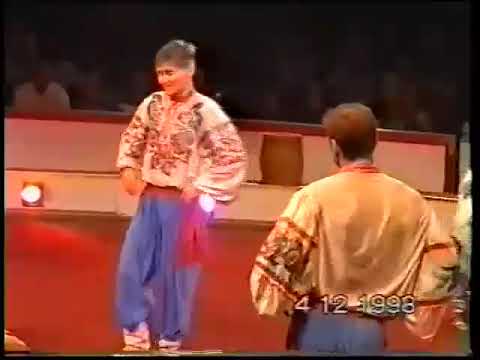
By the age of 16, Evgeny ‘John’ Savinov was already an international trampolinist, accustomed to the exacting demands of elite sport and the rather less conventional world of the Moscow Circus.
His talents brought him from Russia to Australia, where he spent almost three years touring as an acrobat, long before table tennis entered the picture.
Now, more than two decades later, Savinov is preparing to represent his adopted country at the 2026 ITTF World Para Table Tennis Championships in Pattaya, Thailand, starting on Wednesday. He will join an Australian team featuring Paralympic gold medallists Qian Yang, Lina Lei and Ma Lin, alongside Sam von Einem, Danni Di Toro and Nathan Pellissier.
It will be a World Championships debut in a sport he discovered only six years ago, although the discipline and competitive instincts required to reach this level are familiar territory.
“That high performance mindset has always been built into me,” Savinov said.
“If I’m doing something, I’m trying to put 100 per cent into it. Whatever it is, not just training, but anything in life. If I decide to do something, I want to finish it.”
Savinov began trampolining at six, progressing through Russia’s demanding sporting system to compete at European Championships, World Cups and world age-group championships.
His athletic ability also earned him a place with the Moscow Circus while still in his teens, beginning a professional acrobatic career that would eventually bring him to Australia.
“Back then in Russia, there was no recreational sport ever,” he recalled.
“If you got into sport, you were pretty much doing it professionally from day one.
“All those extracurricular activities were free, but they definitely expected you to work hard at it.”
The expectations were uncompromising, but Savinov remembers an environment in which older athletes looked after younger ones, and dedication was understood as a responsibility rather than an individual ambition.
“You start something, you’ve got to finish it,” Savinov said.
After almost three years touring Australia with the circus, Savinov decided to stay, continuing to train recreationally and coach trampolining. His appetite for the sport, particularly the challenge of mastering new skills and the adrenaline that came with it, remained undiminished.

Your Para Sport Journey
Begins Here
THE ACCIDENT
During one training session, however, Savinov became disoriented in the air while attempting a new manoeuvre and landed on his head, breaking his neck.
He was 19.
Savinov spent approximately three months at Melbourne’s Austin Hospital before transferring to Royal Talbot Rehabilitation Centre, where he marked his 20th birthday.
The months were difficult, but Savinov found something familiar in the discipline of rehabilitation. Years of elite sport had taught him to approach physical challenges methodically, to recognise incremental progress and to keep working when improvement was slow.
“You knew what you needed to do to get better,” he said.
“Life wasn’t over.”
The high performance mindset has always been built into me.
Equally valuable were the visits from wheelchair users who had been navigating life with disability for years, sometimes decades, and were willing to share what they had learned.
“They would always come into rehab to visit the patients, to have a chat, to share their own life experience,” he said.
“That was always very helpful.”
FINDING PARA TABLE TENNIS
Savinov’s enthusiasm for sport survived the accident, although finding a suitable outlet involved some experimentation. He tried wheelchair rugby and skiing, went skydiving and spent several years playing quad wheelchair tennis.
His introduction to table tennis was rather less deliberate than his first foray into elite sport.
In 2019, a friend who had joined a local club found himself its only Para player and persuaded Savinov to come along, if only to give him someone to play against.
“He said, ‘Why don’t you join me? At least this way, we can play each other, if nothing else’,” Savinov recalled.
What began as a friendly arrangement survived the disruptions of Covid-19, with the pair making use of the tables in their respective homes whenever restrictions allowed.
When competitive sport resumed, an appearance at the Australian National Championships brought Savinov to the attention of the national Para squad. An invitation to join their training sessions followed and before long, he was making the trip to Essendon every Friday to train alongside some of Australia’s leading players.
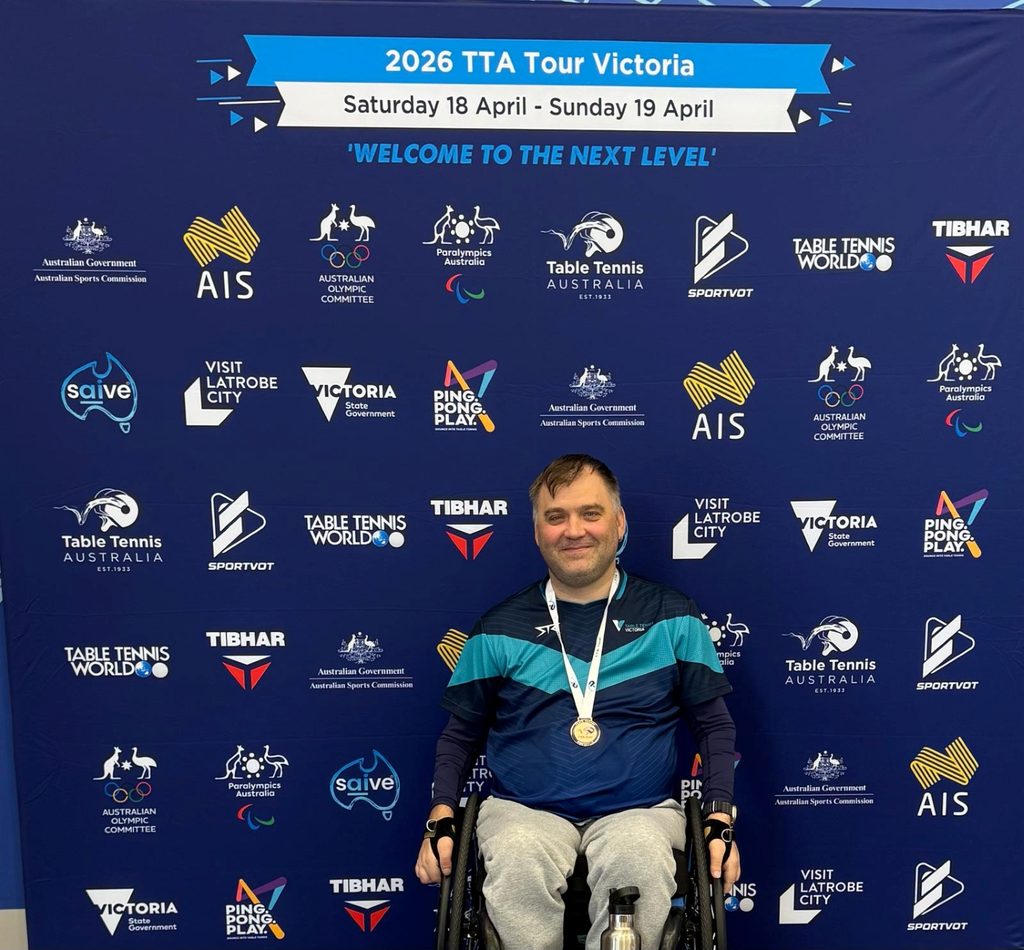
Six years after first picking up a bat, he has an international bronze medal from the Gold Coast to his name and a World Championships debut approaching.
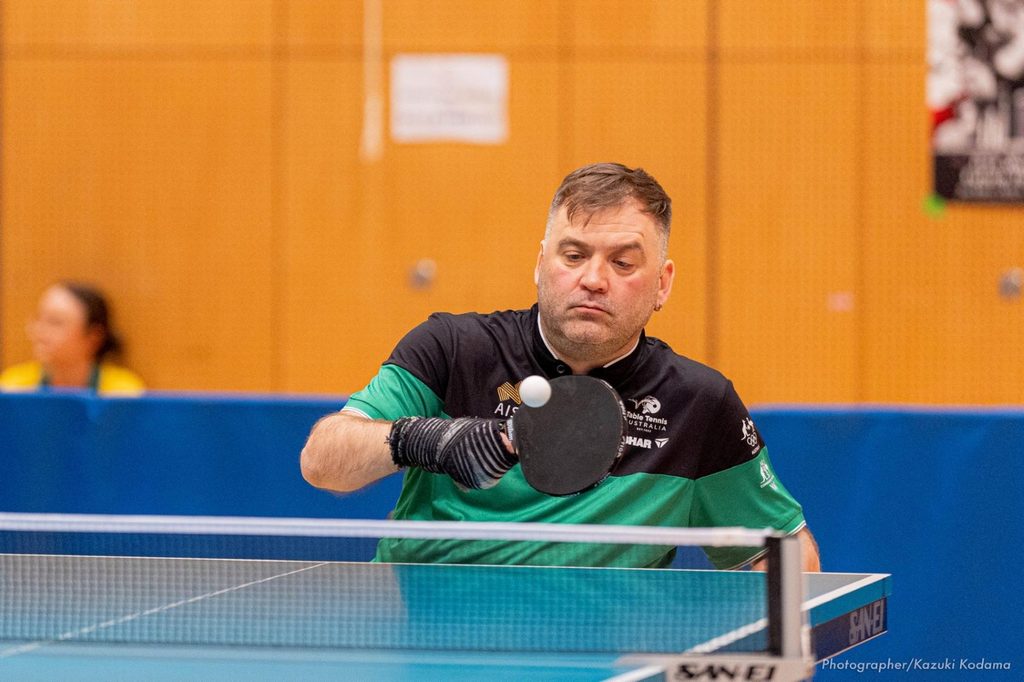
The progress has required more than technical improvement. Competing in Class 1, for athletes with significant physical impairments, Savinov has limited trunk control and mobility, making balance, reach and the generation of power unusually complex.
“You don’t really have that ability of moving around the table,” Savinov explained.
“It’s a lot harder to reach for the ball and you don’t have a lot of muscles that you would normally use to even hit the ball.”
MAKING THE SPORT WORK FOR HIM
Much of the work has involved finding ways to make his equipment function as an extension of his body – his wheelchair has been modified, strapping arrangements adjusted and his bat redesigned to accommodate his grip, with each alteration refined through practice and experimentation.
“There were a few modifications we had to do to the wheelchair itself, to the way I strap myself to the wheelchair as well, so I don’t just fall out while reaching for the ball,” he said.
“I had to completely modify my bat as well. That took a while, just a lot of trial and error.”
Savinov’s development has been supported by a growing network of coaches and performance specialists, including the Victorian Institute of Sport, where he began accessing strength and conditioning support through the Para Unit earlier this year.
The Unit was established as part of the Para Uplift, a national initiative of the Australian Sports Commission and Paralympics Australia designed to improve opportunities for Para athletes.
Savinov has since progressed to a full VIS scholarship, providing access to a broader range of specialist services and more individualised support, complementing his work with national, state and private coaches.
Savinov has never entirely left his first sport behind and continues to coach trampoline, including at the National Institute of Circus Arts, passing on skills acquired during a career that began in Russia and brought him halfway around the world.
For now, however, his attention is on Pattaya, where he will encounter the world’s leading Class 1 players in his first World Championships. He is approaching the occasion without extravagant predictions, conscious that competing at this level offers its own education.
“It’s going to be all about the experience and getting that experience of playing at that high level,” he said.
“I don’t really have a lot of expectations in the way of winning or anything like that. It’s more about just trying to do the best I can.
“Making sure that I stay in the moment, keep my concentration going, don’t get too hung up on things that don’t matter and just concentrate on my own game.”
COULD HE COMPETE AT LA28?
Beyond Thailand, qualification for the LA 2028 Paralympic Games is an ambition, although he acknowledges changes to qualification requirements may complicate his path.
Savinov is nevertheless enjoying a return to the demands and rewards of elite competition, this time in the colours of the country he has made home.
“It’s nice to be back in high performance sport, not just doing it recreationally, not just doing it for fitness, but actually representing the country,” he said.
“Putting on the uniform always makes you feel proud. Proud of the country, proud of yourself and what you’ve done.”
He is equally conscious of the people who have helped him reach this point, from coaches and training partners to those who have supported him throughout his sporting career.
“It’s definitely going to be a very proud moment to be able to represent Australia.”
Paralympics Australia is only able to continue doing its work driving the Paralympic Movement forward in Australia because of the generous support it receives from Government, Corporate Partners and donors.
The focus continues to be on delivering teams to each Summer and Winter Paralympic Games and supporting Para athletes as they enter and progress through the Para sport system and into their post-sporting careers.


"*" indicates required fields