THE START LINE
Your Para Sport Journey
Begins Here

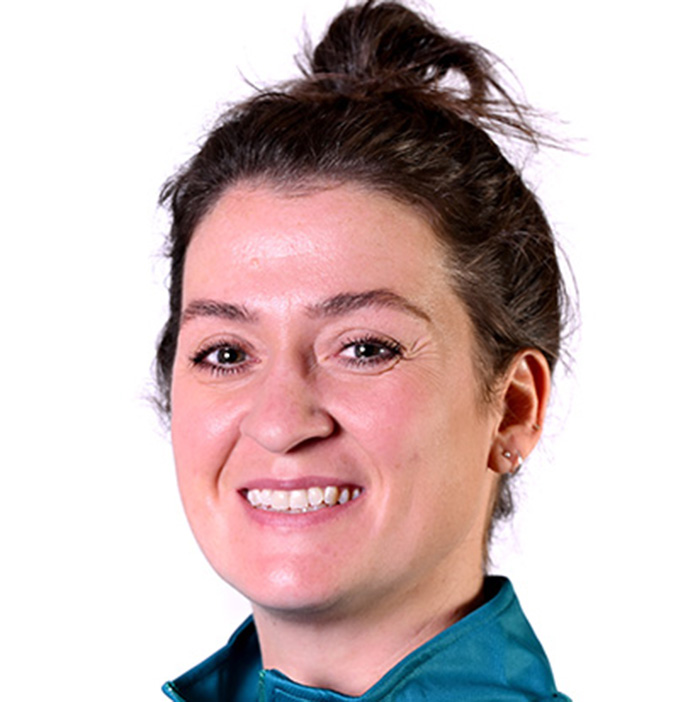
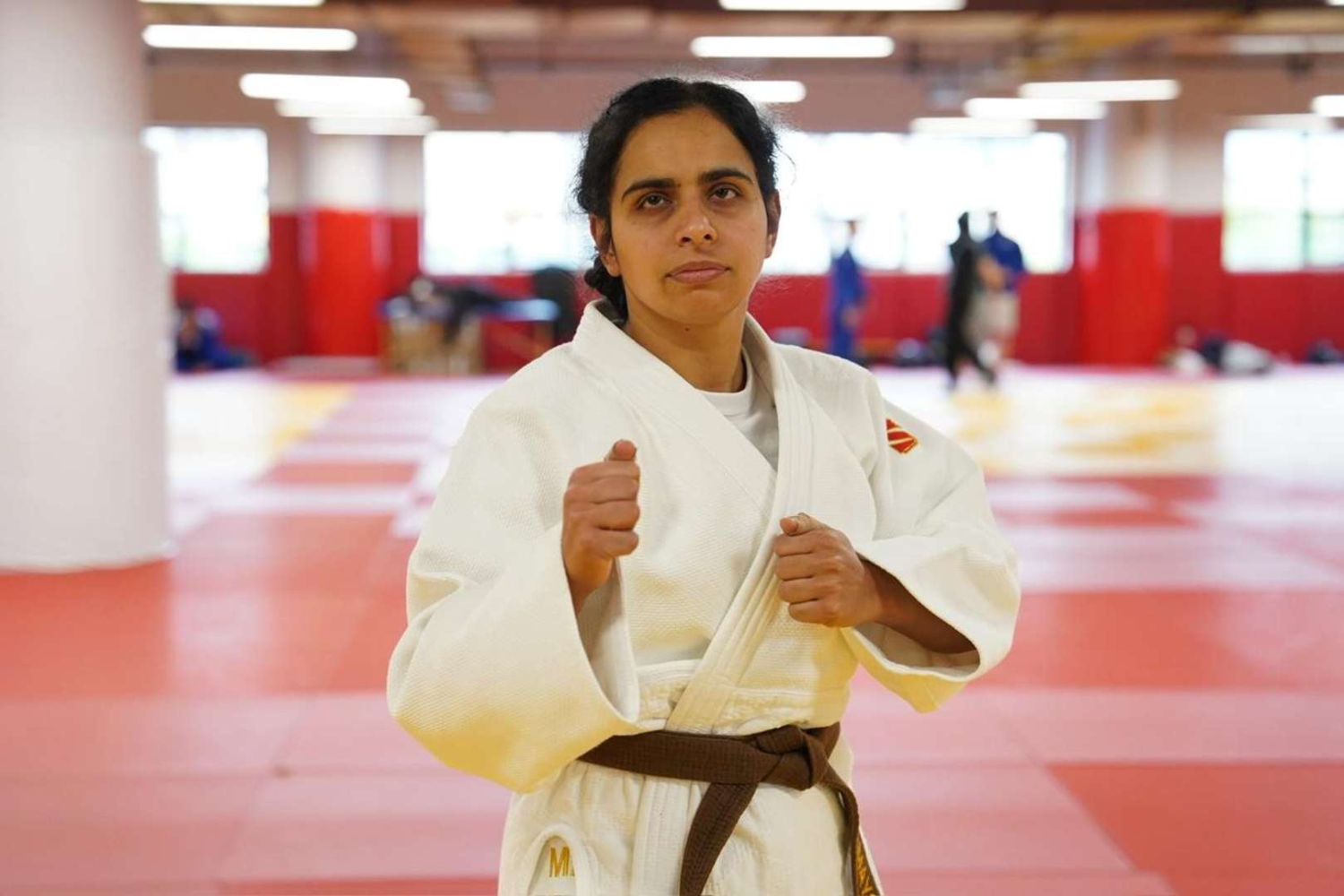
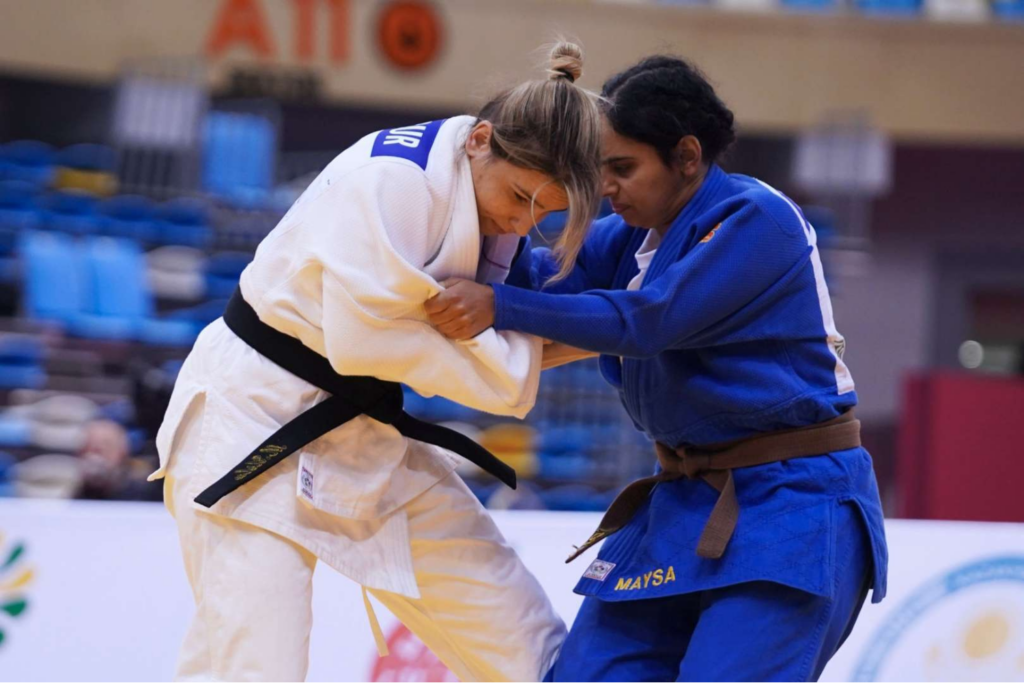
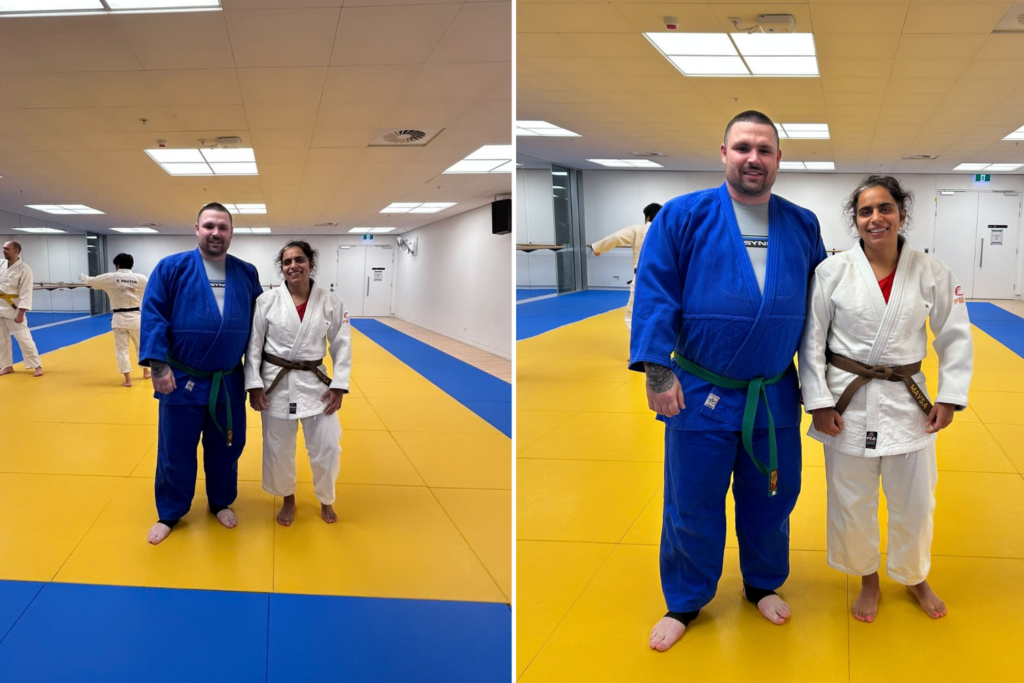
Maysa Abouzeid did not know she was fighting the world’s No.1-ranked judoka when Larissa Silva hooked a foot around hers and began to set up the throw.
What she did know was that she had no intention of being thrown.
“No, no, sis. You’re not going to throw me,” Abouzeid remembers thinking.
It was only afterwards that she discovered who had been standing opposite her.
“I didn’t know she was the number one,” she said. “I just knew she was a Brazilian.”
It is characteristic of Abouzeid that one of the most significant victories of her international career should be recounted with so little ceremony.
For her coach, Australian Olympian Ivo dos Santos, there was rather less surprise.
Abouzeid’s victory over top seed Silva came at the 2026 IBSA Judo Grand Prix in Astana, Kazakhstan, in May, where more than 140 judokas from 24 countries gathered for one of the major international events on the Para judo calendar.
Four months later, Abouzeid is preparing for the 2026 IBSA Judo World Championships in Tbilisi, Georgia held from September 20-28.
For dos Santos, the result in Astana was not an improbable leap into the upper reaches of the sport, but the latest indication of a level he knew Abouzeid could reach.
“That fight was really just a culmination of a lot of near misses,” dos Santos said. “She had shown a lot of potential against high-level players, but then we had some ups and downs.
“She didn’t do anything that she is incapable of doing every other day. It’s just on this day, she had her head straight and she had her mind where it should be and she executed quite well.”
How It Started
Abouzeid has lived with significant vision impairment since infancy, after being diagnosed with retinal scarring at nine months old. She found judo in 2008 while watching the Beijing Paralympic Games from home at age 21.
She had always been drawn to martial arts – “I watched everything growing up; Jackie Chan, Bruce Lee” – but had never found one that seemed to have a place for her.
Then she heard a commentator talking about blind judo.
The next day, she went to her university recreation centre.
“I said, I want to do judo.”
Eighteen years later, the 39-year-old is still here.
There have been around a dozen national championships and countless hours spent learning a sport in which so much is understood through touch, pressure, movement and instinct.
For years, Abouzeid has balanced elite sport with full-time work as a social worker, fitting training and competition around the obligations of everyday life. Her description of a typical week is, true to form, understated.
“Work, train, meals, sleep, work, train, meals, sleep, work, train, work, train, repeat.”
“I have been on the circuit for a while,” Abouzeid said. “I have been visible in the community. But now more resources are available and they’ve opened the doors for me.”
Your Para Sport Journey
Begins Here
The Bigger Picture
Abouzeid’s experience reflects a broader change underway across Australian Para sport.
The Australian Government’s $54.9 million Para System Uplift is directing additional investment into Para programs across National Sporting Organisations (NSOs), alongside work to strengthen athlete pathways, coaching, classification and access to high performance support.
For Australian Para judo, that broader investment has coincided with a renewed focus on the program and greater international exposure. The appointment of Ivica Pavlinic as Para Program Coach in 2026 has added further structure as the sport looks towards LA 2028 and Brisbane 2032.
Long before those structures were in place, Abouzeid and dos Santos had been working out their own.
Abouzeid is the only visually impaired judoka in most of her group training sessions. She competes in the J1 classification and has only a small amount of remaining sight.
“I’m a J1 athlete but have a tiny, tiny amount of vision in a small spot in my left eye,” she said. “My brain does clever things, using that spot to extrapolate.”
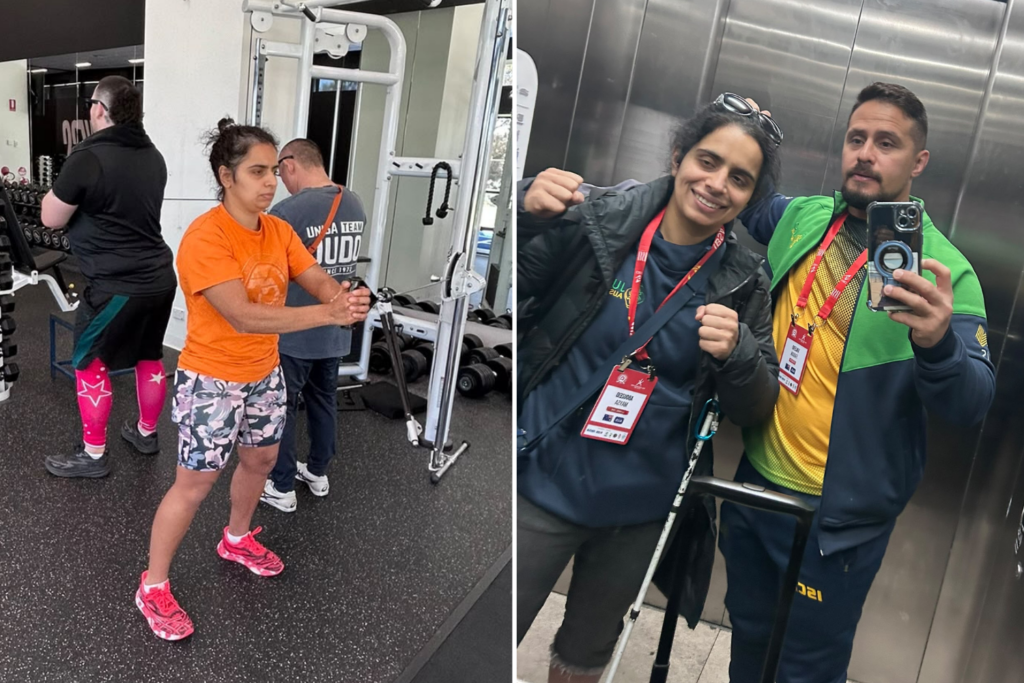
When she began training with dos Santos, the usual shorthand of coaching – a gesture, a demonstration, a pointing hand – could not always be relied upon.
Dos Santos had to become more exact with words.
He learned to describe not simply what a technique looked like, but where Abouzeid should feel an opponent’s hips, how her hands should move and where her body should turn.
“I was quite open about it,” dos Santos said. “I told her, ‘I don’t actually have the skill set to do this, but I’m happy to try and get better.’”
It is characteristic of Abouzeid that one of the most significant victories of her international career should be recounted with so little ceremony.
The daughter of an Egyptian father and Italian mother, Abouzeid speaks proudly of a heritage that spans both sides of the Mediterranean. Dos Santos, after years spent in her corner, knows her character equally well.
Fiercely self-confident and strong-willed, she can also be, in his words and with considerable affection, a “prickly pear”.
Judo, he says, is also her “safe space”: somewhere to compete and improve, but also to make friends and exist without her vision being the defining fact about her. Inside the club, she is simply another judoka.
On the mat, dos Santos sees an athlete with extensive physical and technical resources. For her category, he describes Abouzeid as exceptionally strong, with a broad repertoire and an ability to find solutions inside a contest.
“She’s got a lot of little tricks,” he said. “And she’s clicking well because she can win matches and find a way to win.”
The challenge now is doing it repeatedly.
Conditioning has been a major focus of Abouzeid’s preparation. So, too, has the part that is harder to train.
Abouzeid gets nervous.
Very nervous.
According to dos Santos, it makes little difference whether she is preparing for a World Championships or a local competition. The week before an event can bring much the same anxiety.
The answer has not been to rid her of those nerves, but to make them less consequential.
“We’re spending this last week getting her head straight and reminding her of the things that work for her, the things that work against her – and then just to get out there and learn to trust herself,” dos Santos said.
That will matter in Tbilisi, where Abouzeid will contest the 2026 International Blind Sports Federation Judo World Championships in the women’s J1 -60kg division, against the world’s leading visually impaired judokas.
For dos Santos, a medal is ambitious, but realistic.
A podium finish would require Abouzeid to reproduce the level she showed against Silva not once, but across several contests in the same day.
Beyond Tbilisi lies LA 2028.
Para judo offers only six direct qualification places in each weight category for the Paralympic Games. Dos Santos believes Abouzeid can be one of them, but getting there will require sustained international competition and repeated medal-level performances through the qualification period.
It is a considerable distance from the 21-year-old who heard, almost in passing, that Para judo existed and went searching for a club the following day.
Now she is trying to qualify for a Paralympic Games, but where qualification remains uncertain, Abouzeid is not.
“I’m going to be there.”
The 2026 IBSA Judo World Championships in Tbilisi, Georgia take place from September 20-28.
Paralympics Australia is only able to continue doing its work driving the Paralympic Movement forward in Australia because of the generous support it receives from Government, Corporate Partners and donors.
The focus continues to be on delivering teams to each Summer and Winter Paralympic Games and supporting Para athletes as they enter and progress through the Para sport system and into their post-sporting careers.

"*" indicates required fields