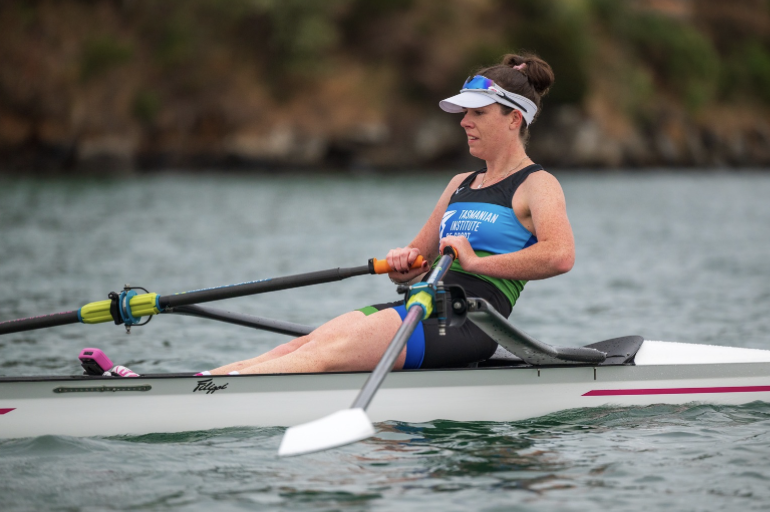
For most of her rowing career, Ella Marshall simply “got on with it”.
The water and the rituals of the sport had long been familiar: mist rising over the Mersey River, numb fingers wrapped around worn oars, salt and river air in the lungs, and countless early mornings launching out from Devonport’s Mersey Rowing Club on Tasmania’s north-west coast.
The idea that it might one day carry her towards the Australian Para Rowing Team was not.
That changed early last year when a question about eligibility set her on a different course entirely. What followed was not a reinvention, but the discovery of a pathway she hadn’t known was hers to take.
Marshall had been rowing since school and competed in lightweight able-bodied categories while balancing her career as a teacher. Like many athletes, her seasons were built around routine: dawn sessions, weekends at regattas, and Nationals as the annual benchmark.
Para sport was not part of the frame.
Until it was.
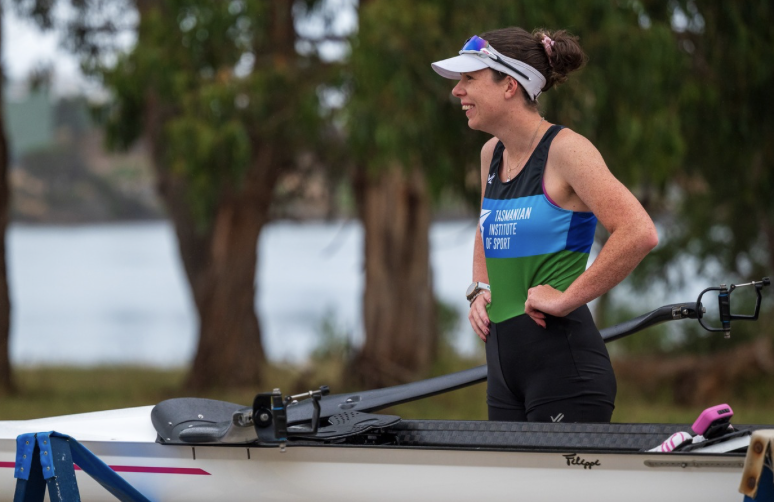
In early 2025, Marshall began to explore whether she might be eligible for Para rowing. It was a question more than a decision and one that quickly exposed how difficult the classification and pathway process can be for athletes trying to navigate it alone.
“I had an inclination I might be eligible,” Marshall said. “But I hadn’t really been able to get answers before that.”
That single question would ultimately connect Marshall into a system designed to remove some of the long-standing barriers that have historically prevented athletes with disability from entering and progressing through Para sport.
Helping guide that process was the Tasmanian Institute of Sport’s (TIS’s) newly established Para Unit, part of the national Para System Uplift – a collaborative effort between Paralympics Australia, the Australian Sports Commission, Australian Institute of Sport and the State Institutes and Academies of Sport to strengthen Para pathways, improve classification access and create more connected high performance environments for athletes with disability.
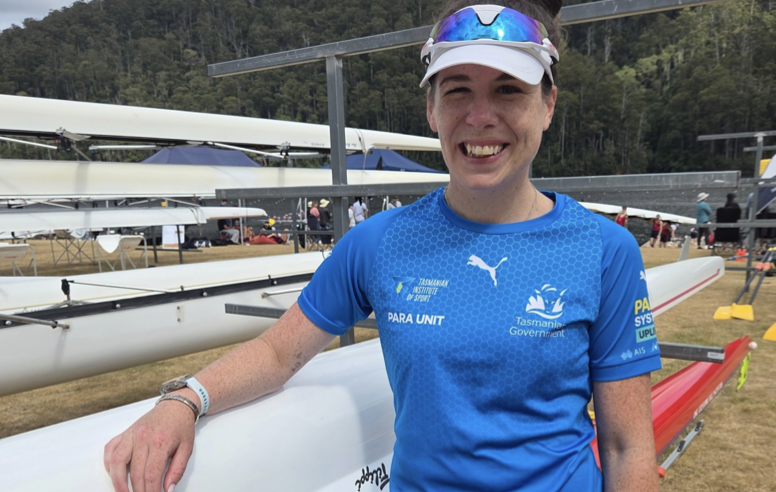
For Para Unit Lead, Dr Kirstie Turner, Marshall’s experience reflects exactly what the Para Unit was created to do.
“Ella had been rowing in able-bodied sport for most of her life,” Turner said.
“She reached out because she thought she might be eligible but hadn’t had access to the right information or process before that point.”
From there, the TIS Para Unit stepped into a coordinating role, not just in sport, but in information, classification support and early performance preparation.
Initially, the support was practical and pieced together behind the scenes – phone calls, paperwork, conversations with coaches and classifiers across the country, and investigative work tracking down medical records from more than two decades earlier linked to surgeries Marshall underwent as a child after being diagnosed with an aggressive brain tumour at the age of four.
It meant searching through hospitals, specialists and childhood rehabilitation services to locate documentation essential to classification, but difficult to retrieve after so much time.
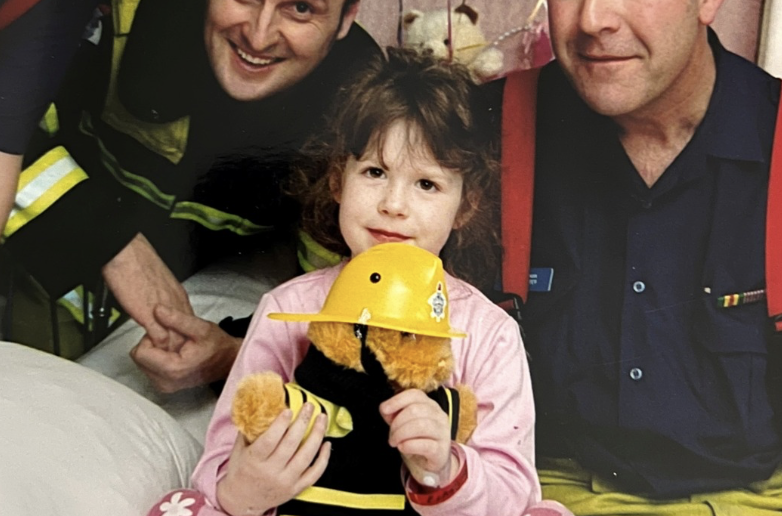
Turner said part of the Para Unit’s role was helping absorb the complexity of that process.
“We were able to absorb those questions and distribute them to the right people,” Turner said. “And then support her through the process.”
That support extended beyond classification paperwork. Even before her classification was formally confirmed, Marshall was brought into the TIS high performance environment and connected with strength and conditioning, medical and dietetic support to help prepare her for the possibility of elite Para sport.
“It was a little bit of a leap of faith – but we felt we had nothing to lose and everything to gain,” Turner said. “If classification went through, we wanted her to already be in the best possible place to take that opportunity.”
For Paralympics Australia Classification Advisor, Michael Coppo, supporting athletes through the uncertainty surrounding classification has become one of the most important parts of the Para Uplift model.
“It’s about helping athletes understand what they’re walking into,” Coppo said.
“Classification can be really daunting because ultimately it determines their pathway.”
Coppo also worked with Marshall to prepare her for what national classification would physically and emotionally involve.
“Part of our role is helping athletes know what to expect before they walk into that room,” he said. “That can help take away some of the anxiety around the process.”
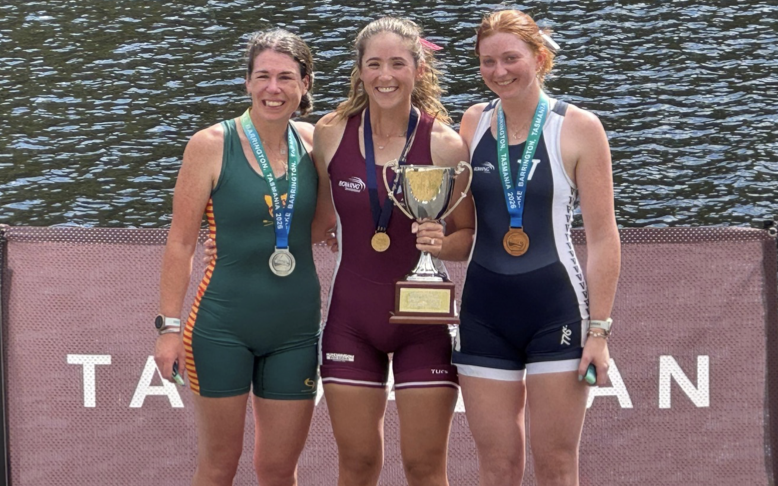
Marshall was ultimately classified as PR3 – a class for athletes with residual function in their legs, trunk and arms – and eligible for the mixed double and mixed four.
Marshall underwent multiple surgeries and chemotherapy as a child, followed by years of rehabilitation rebuilding stamina, balance and motor skills. She was left with ongoing right-sided weakness affecting both fine and gross motor function.
“During this time, I swapped my dominant hand from my right to left due to the deficit on my right side,” Marshall said.
Technically, that asymmetry creates unique challenges in a sculling boat, where balance, rhythm and connection through the stroke are critical.
Small adjustments now form part of daily training: shoe raisers beneath footplates, modified set ups on the ergo and targeted strength work designed to improve balance and coordination.
Christine MacLaren, Para Rowing Lead Coach at Rowing Australia, said Marshall’s boat set-up had been refined to maximise efficiency and connection through the boat as she adapts to the asymmetry created by her impairment.
“There’s a power difference from my right side to my left side,” Marshall said. “That’s something I have to manage as best as I can in the boat.”
After classification, things moved quickly.
Within months, Marshall had attended national camps, progressed through selection trials and relocated to Canberra to join Rowing Australia’s National Training Centre program.
The riverbanks of Devonport gave way to a very different kind of rowing life: erg tests, lactate threshold sessions and biomechanical analysis feeding into on-water training built around cleaner catches, better rhythm and sharper boat speed.
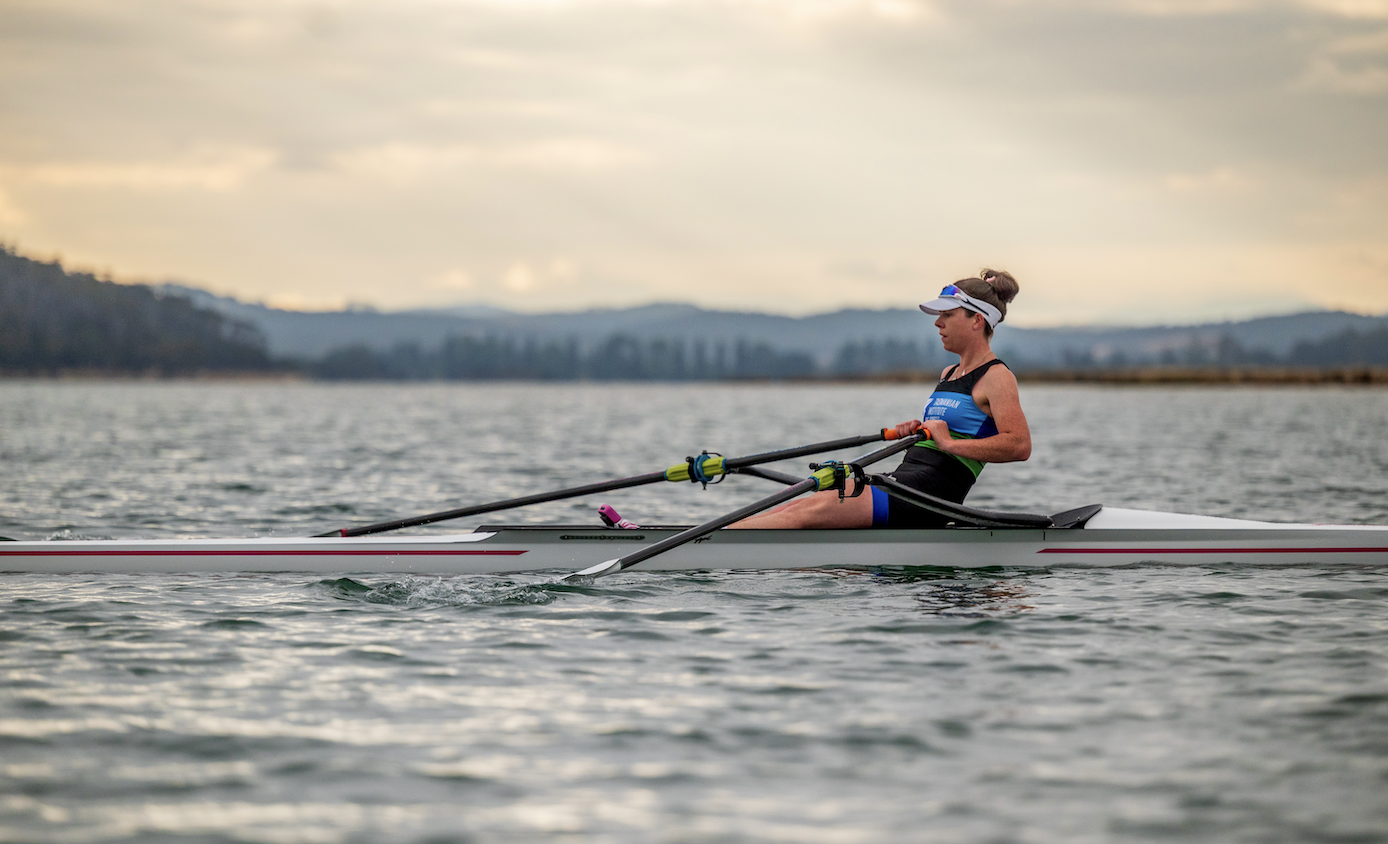
There was also the adjustment of stepping into an environment she had never imagined being part of. For so long, rowing had belonged to the familiar rhythms of the Apple Isle – now the expectations were different.
“You are around people who all want to push themselves to the limit and move the boat as efficiently as they can,” Marshall said. “It changes how you view the sport.”
The Australian squad is set to travel to Europe for a preparation camp in Gavirate ahead of World Rowing Cup II in Lucerne in late June, where Marshall will represent Australia for the first time as part of a national PR3 mixed double program still early in its international life.
The PR3 mixed double only entered the Paralympic program in Paris, where Australians Nikki Ayers and Jed Altschwager became the inaugural gold medallists after winning World Championship gold the year before.
Before racing internationally, Marshall will complete international classification in Lucerne – another significant step in a journey that only months ago felt uncertain.
MacLaren said the regatta would provide Marshall with her first experience of international racing while continuing her development inside the national high performanceenvironment.
“Ella’s journey is a gold-star example of the support now available through the Para pathway,” MacLaren said.
“The connection between the state Para Units and the National Training Centre has been vital in helping athletes transition into high performance sport.”
Now, less than a year after first asking whether Para rowing might even apply to her, Marshall has moved through the door her question opened.
For Turner, Marshall’s rapid rise also highlights a larger pattern emerging across the Para system – that many athletes may in Australian sport don’t realise Para pathways apply to them.
“That’s actually really common,” Turner said.
“Particularly in athletes with lower support needs, who may think they’re not very good at sport, without understanding they may actually be eligible for Para sport. And then in reality they are incredibly talented at sport when competing in an environment that is fair.”
It is one of the key barriers the Para System Uplift is attempting to address nationally: improving classification opportunities, strengthening pathways and ensuring athletes are better connected to coaching, competition and performance support.
“I think I’m still realising it,” she said. “It probably won’t properly sink in until I’m there (Lucerne).”
If someone had told her a year ago, she would soon be racing internationally for Australia, the answer comes quickly.
“I would have told them they were joking.”
For Marshall, simply reaching the start line already means something significant: “Above all, I’ve already achieved a dream just being there,” she said. “Anything else is a bonus.”
Yet beneath it all, the essence of rowing still feels unchanged – alarms before dawn, darkness yielding to light, the first clean catch breaking the river’s stillness – only nowthose mornings seem to be carrying Marshall towards a very different horizon.
By Ashleigh Gillespie, Paralympics Australia.
Published 28 May, 2026.

"*" indicates required fields