Ben Tudhope
Learn More

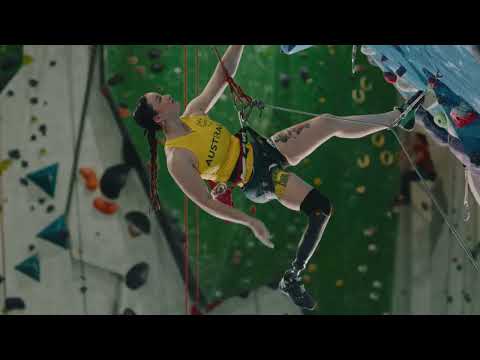
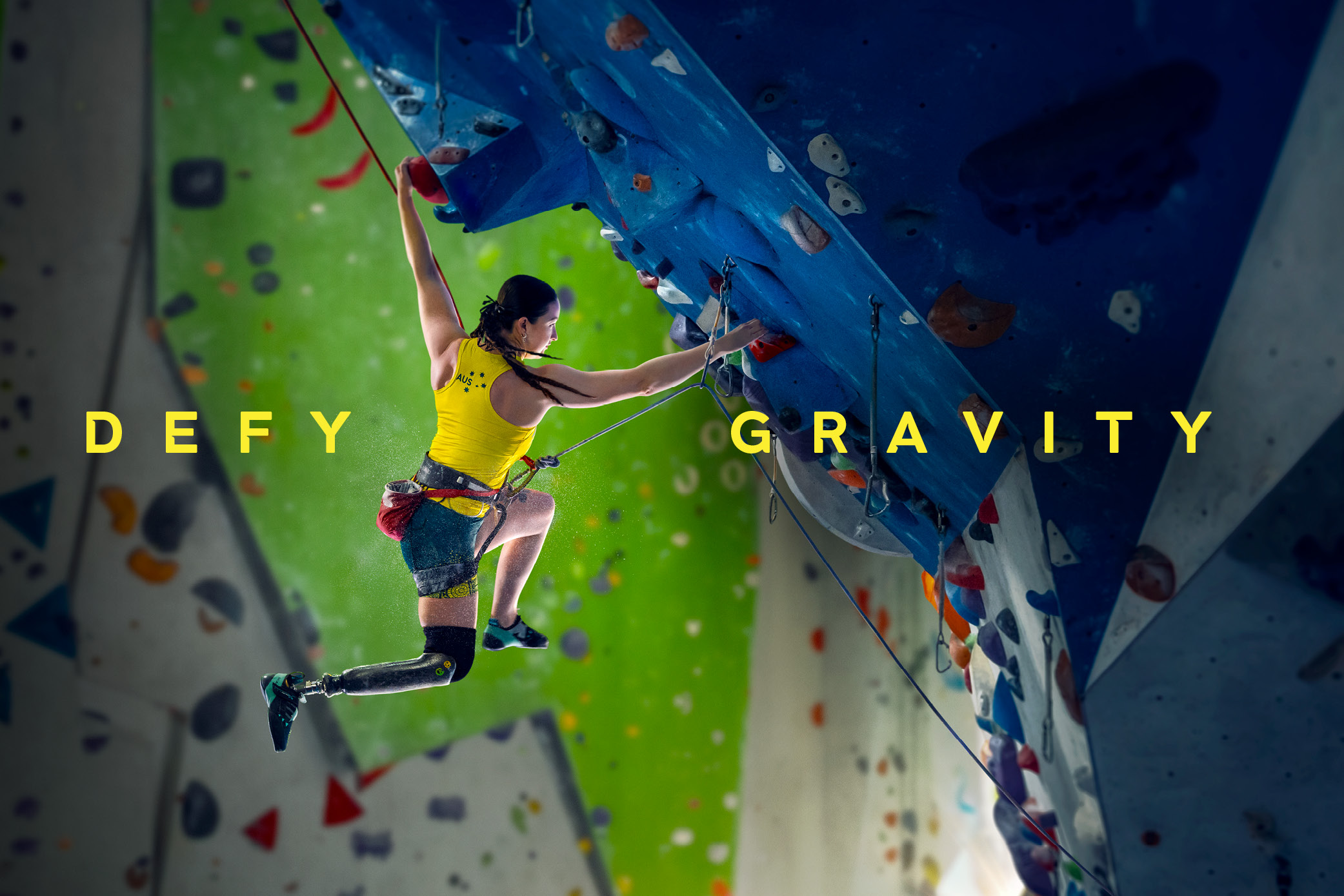
Climbing a wall that curves back on itself requires remarkable skill, balance and determination. It also helps if you have all four limbs. Except if you’re Sarah Larcombe.
Australia’s best Para climber has long gone against the grain. She became a right leg amputee before her first birthday due to congenital limb difference, but excelled in various sports as she grew up, especially Para swimming.
Eventually, she discovered climbing and was hooked.
“I started climbing because I thought it looked fun and because I was interested in climbing outdoors,” she said.
“Then I found the competitive side and I’ve loved every minute of it.
“I just love climbing so much, everything about it. You can do it as a recreational activity, you can do it as a sport, you can do it outdoors.
“You can do it at any level and it’s so much fun. It’s not something that you necessarily have to be good at to really enjoy. It’s a very inclusive sport and even at a competition level, the breadth of disabilities we have within the competition is wide.”
Larcombe competes in the AL2 classification and is ranked No.2 in the world behind her great French rival Lucie Jarrige. She has won numerous World Cup and World Championship medals.
In my mind I will be a part of the Paralympic team competing at LA and I will be on the podium.
Since Para climbing was confirmed by the International Paralympic Committee in June 2024 as the newest Paralympic sport, a new and highly enticing goal has sharpened her focus even further.
“There’s a lot of work to do, but I’m super motivated,” she said.
“In my mind I will be a part of the Paralympic team competing at LA and I will be on the podium.
“I could potentially win one of the first Para climbing Paralympic medals ever for our country, which would be amazing.”
Larcombe, who has a PhD in microbiology and worked in medical research before dedicating herself full time to climbing, recognises the impact her success can have on perceptions of disability, within both the disability and non-disabled communities.
“I think we all have preconceived notions about what we can and can’t do, and that’s especially true for people with disabilities,” she said.
“But you would be surprised by what you can achieve on a climbing wall.
“That feeling of scaling a wall gives you a sense of freedom because the way that you move on the wall is completely different to how you move on the ground. I actually think I climb better than I walk.”