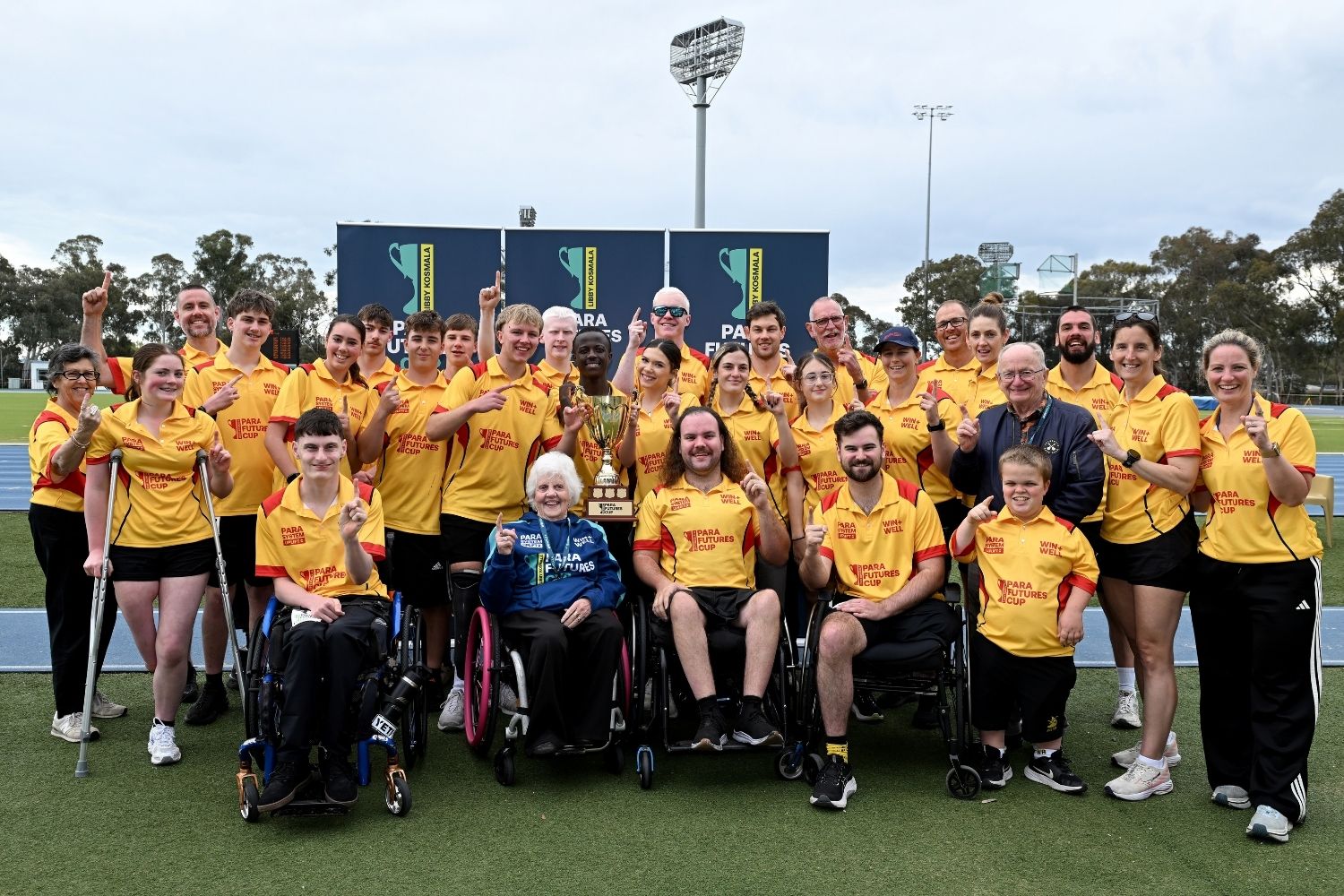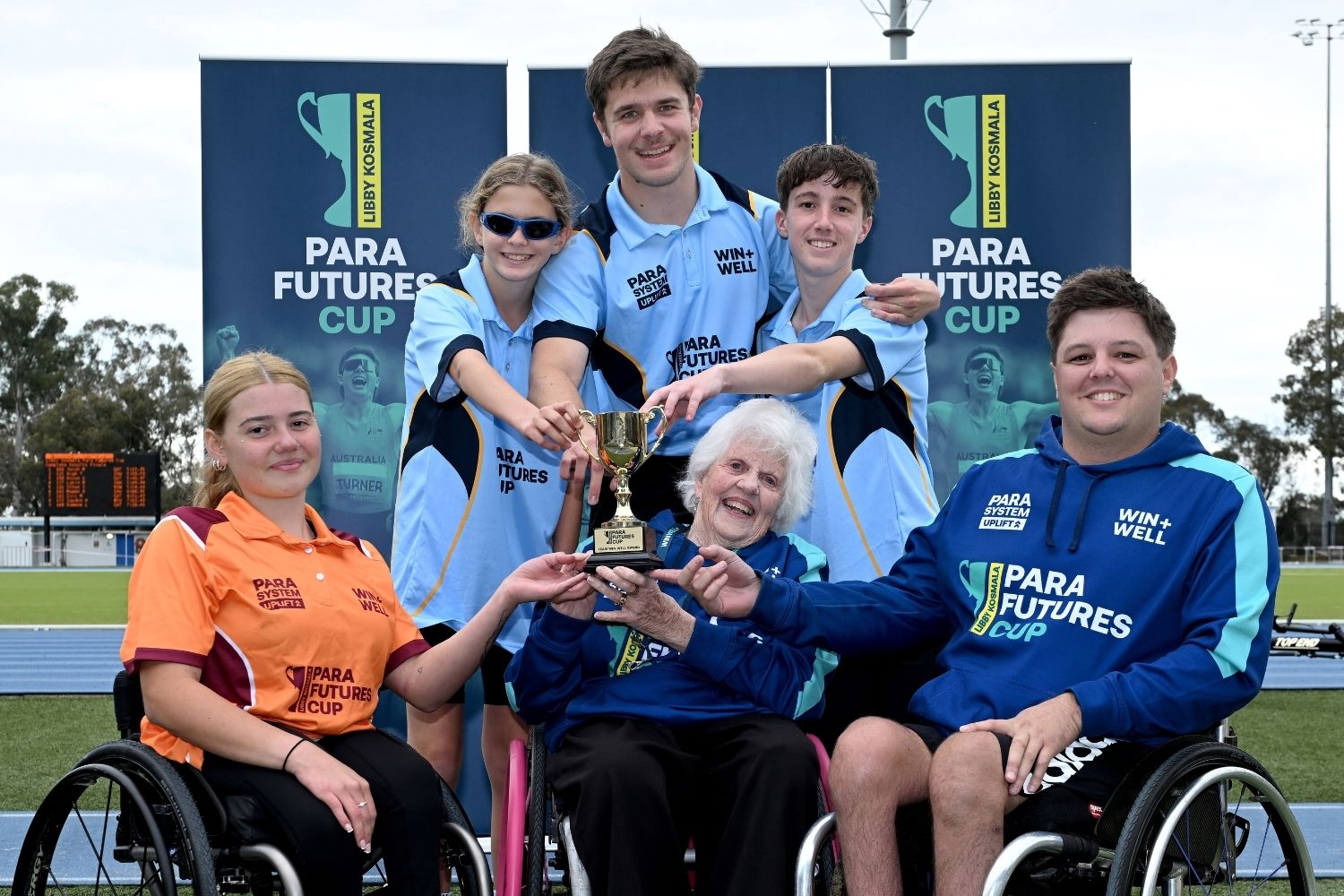
For four days, the Australian Institute of Sport (AIS) hummed with the energy of a new generation, as emerging Para athletes from across the country came together for the inaugural Libby Kosmala Para Futures Cup.
Paralympics Australia CEO, Cameron Murray, reflects on a weekend that looked to the future and showed how far Australian Para sport has come.
“One of the things I keep thinking about from the inaugural Libby Kosmala Para Futures Cup is a meeting I heard about between one of the participants, Ethan Sonter, and Western Australian Institute of Sport Para Unit Lead, Brad Scott.
During their conversation, Ethan pulled out a 2007 photograph of the pair at a ‘Come and Try Day’ at the Australian Institute of Sport. Ethan was just five years old; Brad was a young AIS scholarship athlete.
“At preschool, I was the only one that had a disability,” Ethan told Brad.
“But to see people with different disabilities in the same place … it was just a great experience overall. It gave me my first big taste of it.”
I think we’re going to look back at this being the foundational moment for them.
Reflecting on that conversation, Brad later said: “I got a little bit emotional when I was thinking about it. When I got involved in Para sport, the one thing I said to myself was, ‘I’ve got to have impact’. So many people helped me, I’ve got to have impact in a positive way.
“To know that I’d probably done that earlier on, with him back in 2007, is pretty …”
He went on.
Brad went on to become a three-time Paralympian and winner of three Paralympic medals. Ethan is now 24 and pursuing his own ambitions as a T37 sprinter.
Last weekend, back at the AIS for the inaugural Para Futures Cup, they were on opposite sides of the competition: Ethan representing Team East and Brad leading Team West. Yet the photograph was a reminder of something that ran deeper than team colours – it was a reminder of how much Australian Para sport has changed around them.
In the years since that photograph was taken, opportunities for emerging Para athletes have grown considerably. Most recently, that change has accelerated through the Para System Uplift, an era-defining partnership between the Federal Government through the Australian Sports Commission, and Paralympics Australia and the National Institute Network.
More than $55 million has been invested to identify and develop athletes, build specialist coaching and classification expertise, strengthen performance support and establish dedicated Para Sport Units across the country.
It means more young people are being identified and supported, with greater opportunities to try different sports, understand where their strengths might lie and spend time among people with deep knowledge and experience of Para sport.
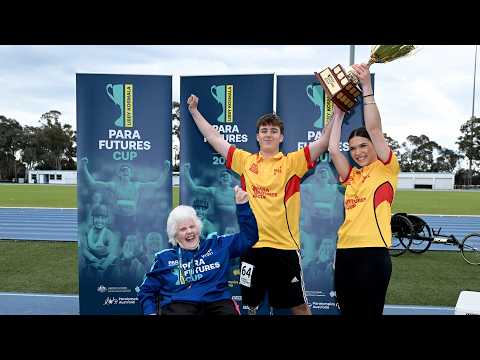
That was the point of the inaugural Para Futures Cup.
While some may be at the beginning of a high performance career, others will have left the event with greater confidence, independence, new friendships or simply a better understanding of themselves.
Over the event’s four days, athletes were surrounded not only by coaches, performance staff and Paralympians, but by people who might never have otherwise found themselves together.
Brad wondered what some of them might make of the weekend years from now.
“Not everyone is going to make it through to a Paralympic Games,” he said.
“But this could be the starting point for some to really cement their own beliefs in what they can achieve.
“I think we’re going to look back at this being the foundational moment for them.”
As CEO of Paralympics Australia, I could not have been any prouder of how the system came together to produce the Para Futures Cup. It was a pilot, there will be things we learn from it, things we refine and ways we make the next iteration better. But the overall goal – to identify talented Para athletes and give them the opportunities they need to compete with the best in the world – was clear.
For all the discussion about Brisbane 2032 and what Australian Para sport might look like by the time a home Paralympic Games arrives, much of what will shape it is already happening.
Ethan remembers coming to the AIS at age five and being struck by the fact he was not the only person in the room with a disability. Nineteen years later, he returned to find a national cohort around him.
Cameron Murray
Chief Executive Officer
Paralympics Australia

"*" indicates required fields