
SUPPORT OUR PARA ATHLETES IN GLASGOW
Buy Your Green and Gold Seat

“It is critically important that young athletes encounter a program that is prepared for them from day one,” says Daniel Pauli, Club Development Manager at South Australian Little Athletics.
For many children growing up in Australia, athletics is where organised sport begins – the first bib pinned to a slightly too-big t-shirt, the first start line where nerves and excitement blur, and the first moment a child realises their small body can do big, fast, powerful things.
Across the country, millions of children are active in organised sport each week and those early moments do more than create memories, they build confidence, ignite passions and lay the foundations for a lifelong connection to physical activity. As Pauli explains: “Early experiences in sport significantly influence confidence, motivation and long-term participation.”
Research from the Australian Sports Commission reinforces this, showing that positive early experiences in sport are critical to long-term participation, helping build confidence, resilience and social connection, while supporting mental wellbeing and fostering a sense of belonging that keeps young people active throughout life.
Yet, the readiness that makes these moments possible is often taken for granted.
Scoreboards are ready, lane ropes are in place and starting blocks sit beside the track. No one describes them as inclusion measures, they are simply ‘there’.
That same readiness has not always existed for young people with a disability.
Families have shared that previous sporting experiences faltered when environments were not equipped to meet access needs. When coaches are left to “figure something out” on the day, participation can feel piecemeal and shoddy.
South Australian Little Athletics has worked to change that: “We were dependent on other organisations which restricted our ability to deliver consistent training opportunities and structured programs,” Pauli explains.
Now, permanence has replaced shoddiness.
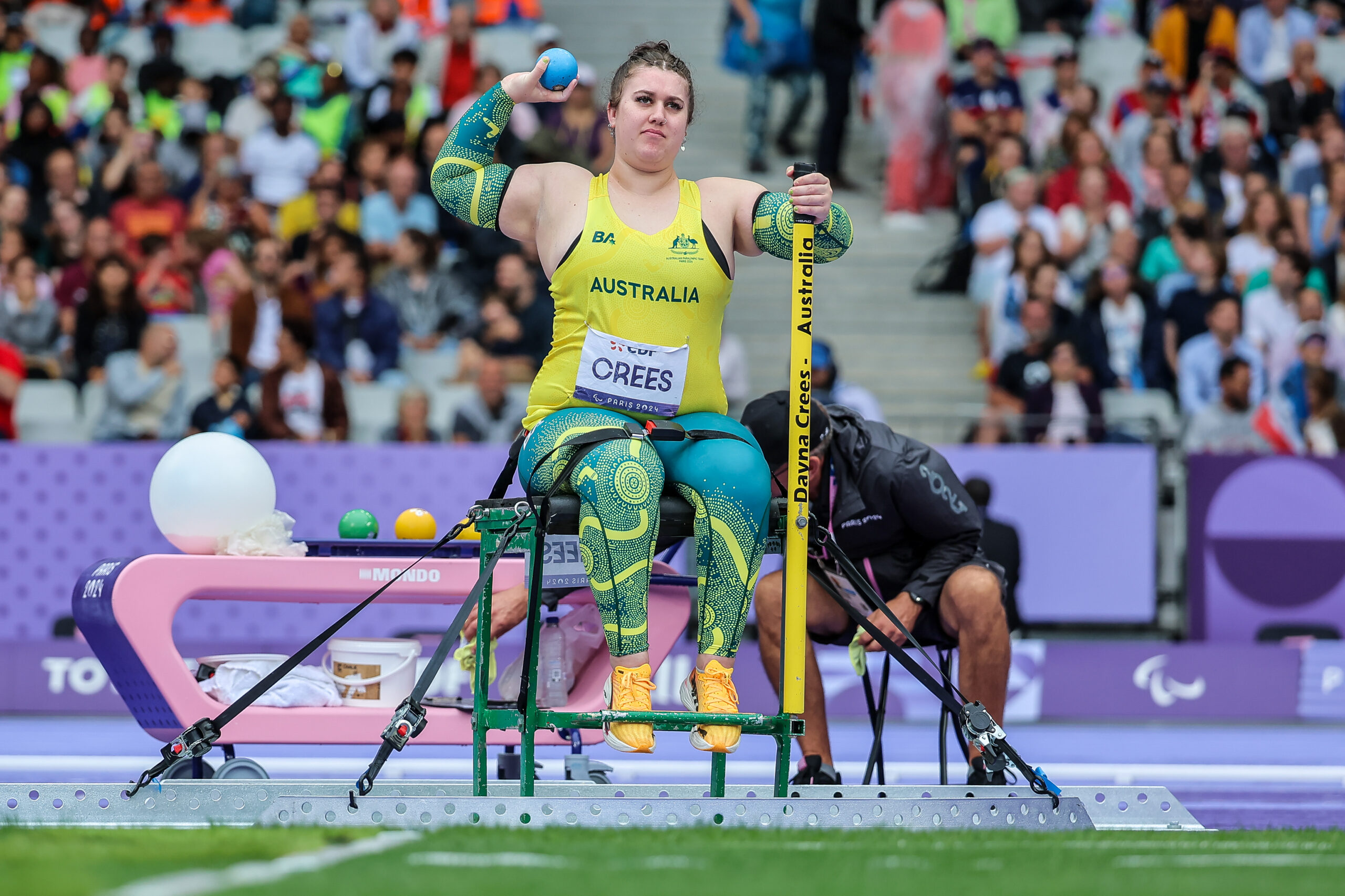
“Having permanent seated throwing frames has enabled us to deliver an independent and genuinely inclusive Para athletics program,” Pauli says. “It has removed previous barriers and created meaningful opportunities for athletes to engage in events that may not otherwise have been accessible to them.”
Fortnightly training sessions now run with consistency. Athletes participate fairly in throwing events, skill development is uninterrupted by logistics and confidence is growing as athletes train in an environment that is prepared and built to support them.
The impact extends beyond the athletes.
Permanent equipment has enabled the delivery of the Little Athletics SA Para Athletic Coaching Course, incorporating safe set-up, technical instruction and event delivery for coaches working with throwing frames.
“We have educated and upskilled a number of coaches in South Australia,” Pauli says, “strengthening their capability and confidence to coach athletes with disabilities and building sustainable capacity within the athletics community.”
This progress has been supported through Paralympics Australia’s Para Sport Equipment Enhancement Program (PEEP), backed by the Toyota Community Foundation. Through the program, South Australian Little Athletics secured adaptive equipment supporting more than 50 athletes aged under 6 to under 17.
For Liam Wood, Para Sport Equipment Enhancement Manager, the impact is clear.
“Toyota’s support through PEEP has been fundamental in helping remove equipment barriers right across the pathway.” Wood says. “Their investment means young athletes can access the equipment they need from the start, participating safely, with dignity and continuity, so that inclusivity and progression aren’t just goals, but everyday reality.”
Since its launch, the Toyota Community Foundation has supported three rounds of PEEP funding, contributing $150,000 in 2025 and bringing Toyota’s total investment in the program to $450,000.
Chief Marketing Officer at Toyota Australia, Vin Naidoo, said accessible mobility and innovative support initiatives such as PEEP do more than remove barriers, they create opportunity.
“If we want to ensure every young person can see a place for themselves in sport, accessibility must be embedded from the very beginning,” Mr Naidoo said. “Well-prepared, inclusive environments aren’t just a “nice‑to‑have”; they are the foundation of lifelong participation.
“Toyota is committed to strengthening community readiness so that more people living with disability can participate in sport with confidence, dignity and a genuine sense of belonging.”
For Wood, building a national Para sport system means understanding that equipment plays different roles at different points along the pathway.
“At the grassroots and participation level, it’s simple: equipment should be easy to access, affordable and available whenever someone wants to participate.”
“No one should miss out on sport because they cannot access the right equipment. That is how we build inclusion and unlock the social, physical, and mental health benefits of sport,” he says.
At the elite level, expectations shift.
“Performance progression within the high performance pathway is often limited by equipment, particularly Para-specific equipment requiring customisation,” Wood explains. “With the right systems – including assessment, planning and ongoing review – athletes can compete using equipment that is safe and supports their performance.
“National readiness means getting both ends right and connecting everything in between.”
Specialist equipment required to participate in Para sport is not optional, it is the starting point.
“For many athletes, the right equipment is what makes participation possible in the first place,” Wood notes, “it supports safety, function, and skill development. Without it, there is a real risk of injury or an inability to compete.”
Seated throwing frames, racing chairs, tandem bikes and adaptive skis are not special provisions or optional add-ons. They are the fundamental tools that make safe, fair and legitimate participation possible.
When those tools are unavailable, pathways can fragment or disappear entirely. Programs like PEEP help ensure that does not happen, guaranteeing that when the next young athlete arrives at a community club, the program waiting for them is not improvised or incomplete.
It is ready.
When inclusion becomes standard practice, the benefits extend far beyond participation.
“Access improves, barriers reduce and more people can participate in sport,” Wood says. “That not only brings immediate social, health and community benefits, it also strengthens the system. More participants means a larger talent pool, stronger pathways and better outcomes at the elite level.”
When an environment – like that created by South Australian Little Athletics – is set up to succeed from the outset, every child can step boldly into sport with curiosity and confidence, laying the foundation for what ultimately shapes the future of Australian Para sport.
Pauli reflects on the impact: “Now, when young athletes walk in and everything is ready for them, it changes the entire experience – it builds excitement, strengthens confidence and fosters a sense that they truly belong in sport.”
By Ashley Gillespie, Paralympics Australia.
Buy Your Green and Gold Seat


"*" indicates required fields


