SUPPORT OUR PARA ATHLETES IN GLASGOW
Buy Your Green and Gold Seat

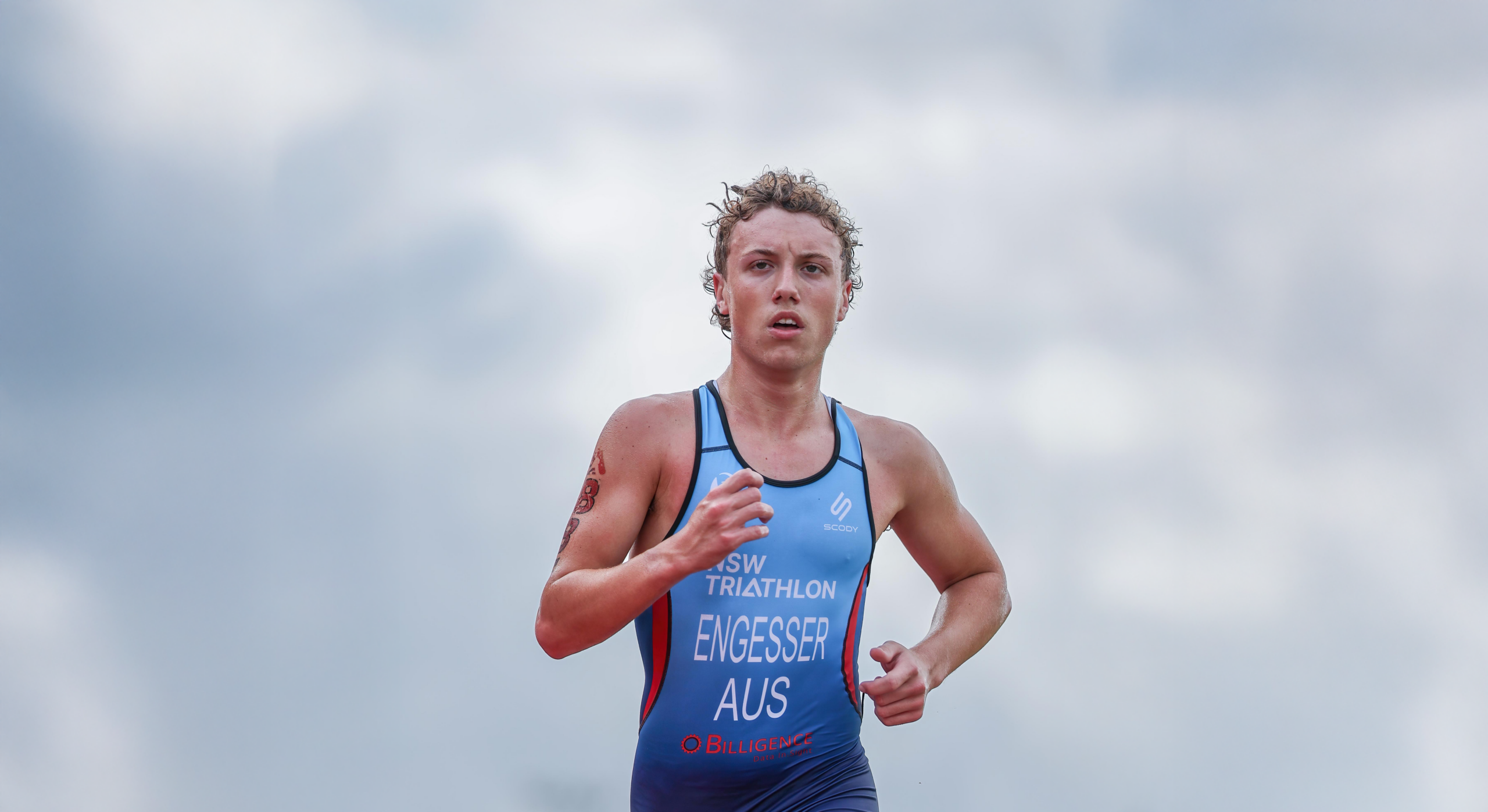
The 2026 Oceania Triathlon Para Championships in Runaway Bay, Queensland, on Friday will bring together some of the region’s strongest emerging and established Para triathletes, with Australia’s Matthew Engesser set to line up in a key test ahead of his next phase of international racing.
The event forms part of a busy international period for the Para triathlon community, with athletes continuing to build form and benchmark performances across the World Para Series and regional championships.
Competing in the PTS4 classification, Engesser has hemiplegia cerebral palsy, primarily affecting his right side. In Para triathlon, athletes are grouped by functional impact to ensure fair competition across swimming, cycling and running. For Engesser, that impact is most evident in stroke symmetry in the water, power delivery on the bike, and efficiency through the run — areas where margins at international level continue to tighten.
Engesser made his World Triathlon Para Series debut in Devonport in 2025, stepping onto the international stage for the first time. He returned this year for the 2026 season opener, again lining up against seasoned international competitors — gaining valuable experience and establishing a clear benchmark as he continues to close the gap.
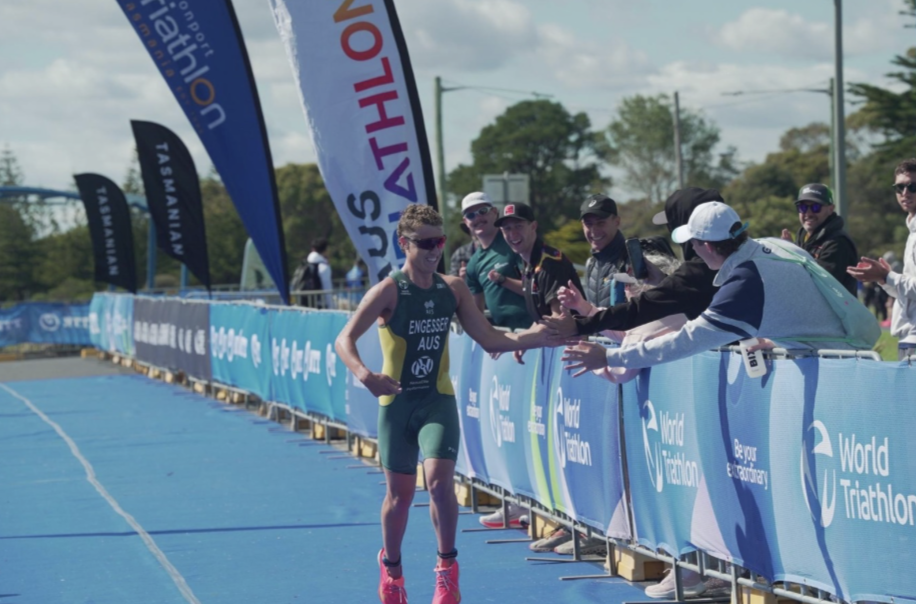
The upcoming race on the Gold Coast marks another step in a rapidly developing journey, shaped by a national Para triathlon pathway that is becoming more structured, connected and increasingly effective in turning potential into performance. At a state level, pathway programs help prepare Para athletes to enter and progress through the performance system, while national programs drive development as athletes transition to international racing.
For Engesser, it sits within a longer arc that is beginning to extend toward Los Angeles in 2028, with Brisbane 2032 also emerging on the horizon.
Within the PTS4 field, that progression is already being tested against high-level competitors. Engesser will line up alongside Paris Paralympian Jeremy Peacock — a clear benchmark within the classification — as well as a growing group of international competitors he is now regularly exposed to through World Para Series racing.
It is an environment where familiarity is building quickly and where each race continues to sharpen the margins between emerging contenders.
For Engesser, however, the focus remains firmly on the present.
“It still feels pretty new in a way,” he says. “But I can already see how much the pathway has helped me improve quickly.”
“I was initially drawn to triathlon because it allowed me to combine cycling with running. Once I discovered Para triathlon during lockdown, I knew it was something I wanted to pursue.”
That early interest quickly became commitment.
“After my first triathlon, my focus shifted entirely,” he says. “Seeing a clear pathway for Para athletes was the final piece.”
Once fragmented, that pathway is now defined by aligned support across Triathlon Australia, the National Institute and Academies of Sport network, and Paralympics Australia, creating clearer entry points and more consistent progression.
For Engesser, that system is delivered day to day through NSWIS and the Western Sydney Academy of Sport.
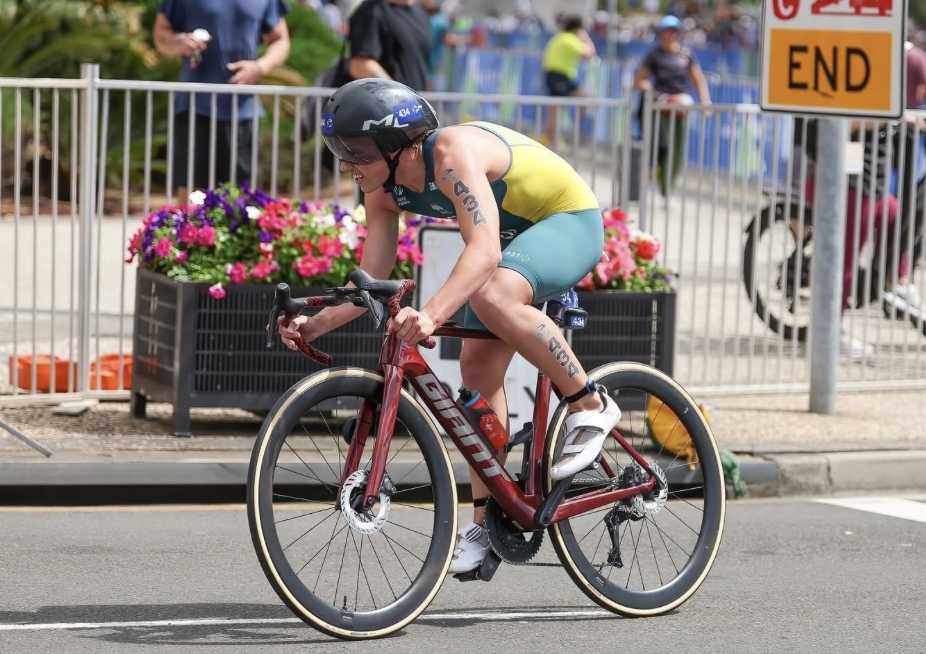
Photo Credit: Fred Etter
For coach Anel Radford, that alignment has been critical.
“There are more opportunities now, especially for developing Para triathletes,” she says.
“There are clear entry points and progression through the pathway.
“Matt came through both the NSW pathway and the AusTri national Para pathway — both are critical in identifying and developing athletes.”
Early exposure to high performance environments has accelerated that development, both in NSW and through national initiatives such as the Para Tri Hub — a collaboration between AusTriathlon, Paralympics Australia and the VIS — helping athletes bridge the gap between emerging talent and international readiness.
“He was part of the NSW Pursue32 program, which introduced him to high-performance early,” Radford says. “Now we’re seeing stronger system support, including a dedicated Para Unit within NSWIS.”
For Engesser, that system is felt day to day.
“Progressing through the Western Sydney Academy of Sport, Triathlon NSW, Triathlon Australia and NSWIS has given me the guidance to reach my potential,” he says.
“The early pathway allowed me to integrate and compete alongside able-bodied athletes — it made everything feel possible.”
As he has progressed, support has become more specialised and more connected.
“The NSWIS environment has been a game changer,” Engesser says. “Access to strength and conditioning, physio and dietetics means every part of my preparation is at a high performance level.”
Radford describes a “layered support model”, where all disciplines operate from a single, shared plan — delivered through the institute network and Para units, with integrated performance services spanning strength and conditioning, physiotherapy, nutrition and wellbeing.
“The difference is how connected the team is,” she says. “It’s not just about performance — it’s about supporting Matt as a whole person.”
That approach is particularly important in Para triathlon, where athletes often move quickly into senior international racing.
“This time last year I was still at school,” Engesser says. “Now I’m seeing what consistent training looks like.”
Despite the rapid progression, Radford is focused on long-term development.
“Para athletes can progress quickly, but the structure ensures it’s sustainable,” she says. “When you look at how far he’s come already, it gives confidence in where he can get to.”
That longer-term perspective sits alongside major international milestones, but Engesser remains focused on process over projection.
“If I keep training and my support team keeps working together, I think I’ll have every opportunity,” he says.
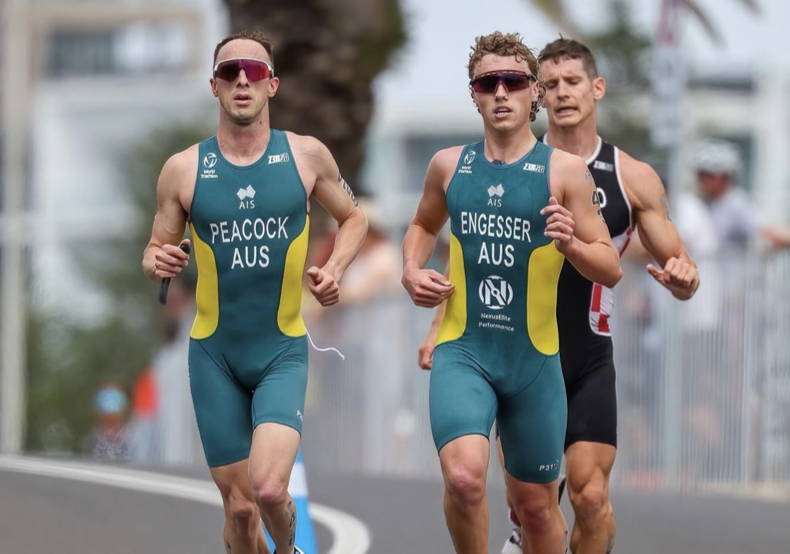
Photo Credit: Fred Etter
Mentorship has also played an important role in his transition into international racing, both formally and through the broader Para triathlon environment.
“Being part of the Para system has provided clear guidance as I’ve moved into international racing,” Engesser says. “Having mentors around me has made that transition much more seamless.”
That support exists across multiple layers. At a coaching level, Engesser works closely with Radford, drawing on her experience competing at the highest level, while within the national Para team, peer support — even among direct competitors — continues to shape both performance and culture.
“It’s helped me understand what it takes to perform at that level,” Engesser says. “Having people around who’ve been there makes a big difference.”
Access to equipment — often a barrier for Para athletes — has also been a key factor in levelling the playing field, with support from Paralympics Australia’s Para Sport Equipment Enhancement Program helping athletes progress through the pathway.
A Paralympics Australia equipment grant enabled him to secure a time trial bike, removing a significant performance gap.
“Now I can focus purely on execution,” he says.
As he prepares for the Oceania Para Triathlon Championships, the support around Engesser remains largely unseen but consistently influential — and for Radford, that consistency is a sign of a system maturing.
“We’re seeing more Para athletes coming through in NSW — that shows the pathway is building depth,” she says. “It also creates belief. Athletes can see that pathway and think, ‘that could be me.”
Engesser is part of that next wave, still early in his career but already operating within a more connected, more complete system than before. In Runaway Bay, that will be on display as much in him as in the field itself, with standards lifting, margins tightening, and Para triathlon continuing to deepen internationally.
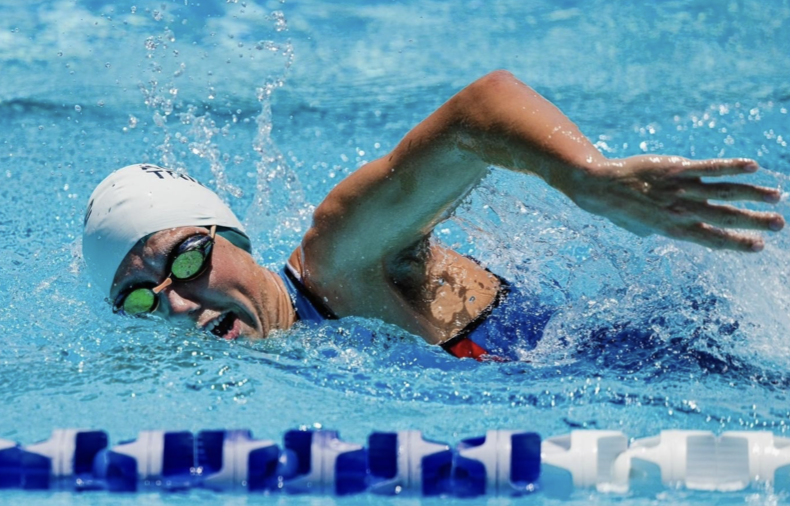
Photo Credit: Michael Thomas
Start List – 2026 Oceania Para Triathlon Championships (Runaway Bay)
PTS2
Kailyn Joseph (F), Anu Francis (F), Thomas Goodman (M)
PTS4
Matthew Engesser (M), Jeremy Peacock (M), Sally Pilbeam (F)
PTS5
Grace Brimelow (F), Monique Muskens (F), Jack Howell (M), Jack Gibson (M), David Bryant (M)
PTVI
Matt Cameron (Guide: Lachlan Morley), Sam Harding (Guide: Aaron Royle), Mitchell Wilkes (Guide: Sam Ovenden), Patrick Whelan (Guide: Benson Crick), Maggie Sandles(Guide: Skye Wallace), Ashley Bryden (Guide: Felicity Craddick), Caroline Baird (Guide: Sophie Walker), Carly Meyer (Guide: Gemma Berry)
PTWC
Nic Beveridge (M), David Miln (M)
By Ashley Gillespie, Paralympics Australia.
Published 15 April, 2026.
Buy Your Green and Gold Seat

"*" indicates required fields


