Join AUS Squad


 Sometime around blind swimmer Tracey Cross taking the athletes’ oath and equestrian referee Mary Longden taking the officials’ oath, Louise Sauvage told her nearby teammates she was off to the loo.
Hardly a soul among the near-100,000-strong crowd knew where she was really going.
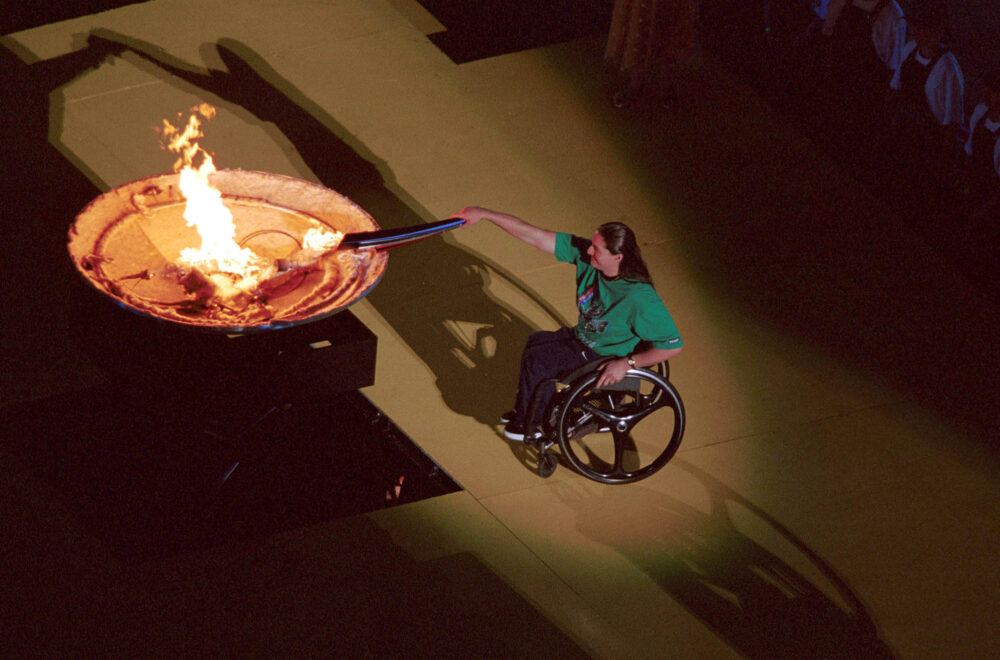
The Para-athletics superstar had been announced as one of the last six torchbearers for the Opening Ceremony of the Sydney Paralympics that memorable night 25 years ago. But not even those closest to her knew she’d also been bestowed an even greater privilege.
“Being one of the final torchbearers was a massive honour in itself,” Sauvage said.
“But when I was told I was going to be lighting the Cauldron, I don’t know, it was just beyond belief really. I was sworn to secrecy, couldn’t tell anyone, so it was a big surprise even for my family. I got to march out with the team, then I ducked off – going to the bathroom, of course – just nearing when the torch was going to be lit.”
 The official opening of the 11th Summer Paralympics, featuring 3,843 athletes representing 123 delegations, heralded the start of 11 days of competition which were to change the face of sport in Australia and attitudes towards people with a disability worldwide.
However, for Sauvage, the Games were part celebration and part expectation.
“For me, it was a very stressful time,” she said.
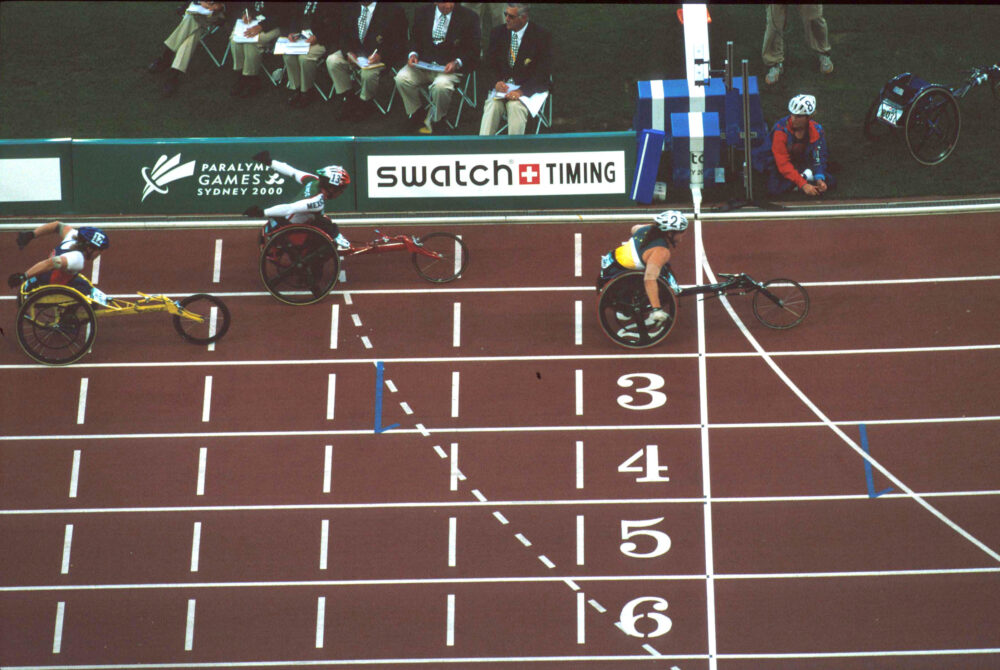
“I was the favourite for all of my events and the first final I had I didn’t win, so a lot of people were stressing out. There was a lot of pressure on me but, at the same time, it was a fantastic event.
“To have my family and friends there for the first time to see what I really did and what my sport was all about was very special. It was a once in a lifetime event to have at home.”
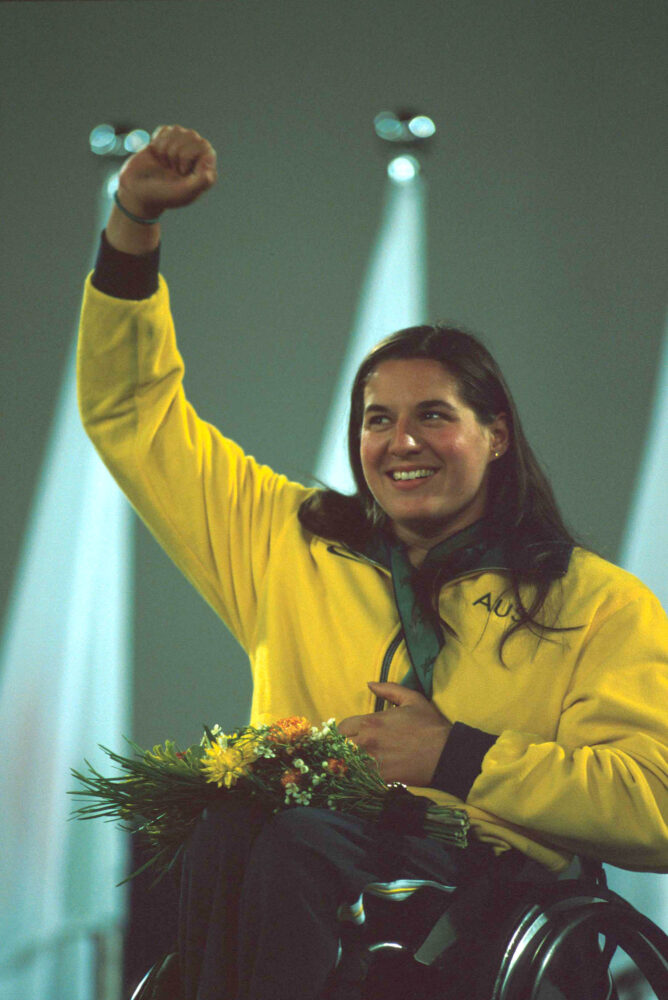
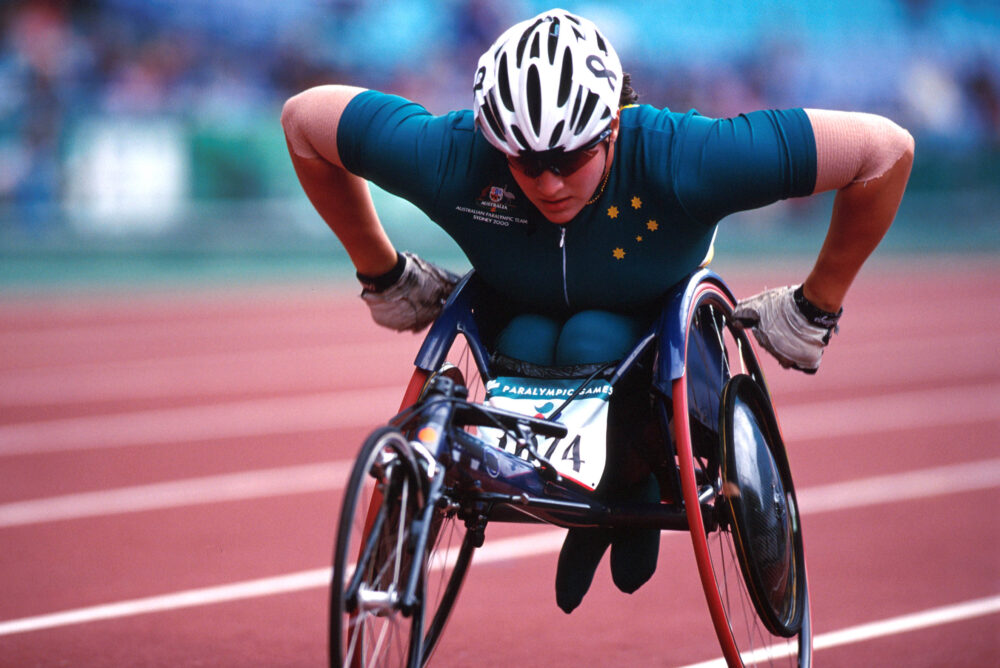
Apart from Sauvage’s performances – she won gold medals in the 5,000 metres T54 and 1500 metres T54, and a silver medal in the 800 metres T54 – the thing that sticks in her mind about the Sydney Games was the impact it had on the wider Paralympic Movement.
Atlanta 1996 had been deflating and there was ground to make up. The Sydney Games did it spectacularly.
“More than anything, it brought Paralympics to the forefront and it’s really gone on from those Games,” Sauvage said. “Sydney really set the standard and I was very proud that we were able to do that.
“The way it was embraced within the country, the way we were perceived by Australians and the crowds that came to see us… The media really took hold of it and it was such a huge event.
“The education they did prior to the Games, between the schoolchildren and the general public, they did such a fantastic job to make sure the Paralympics were not just the event after the Olympics, but that they were going to be something in their own right and would have their own presence.”
Sauvage said she didn’t think much of it when Australia was announced seven years earlier as host for the 2000 Games.
“But, definitely having seen what went on in Atlanta in 1996, knowing Sydney was going to host next, I was so enthused and excited that we could do a great job and I was very determined that we were going to have the best Paralympics ever.
“I think the people’s reaction to the Games was great. They were so amazed it was staged so well and received so well.”
Sauvage’s recollections are of a Games that brilliantly showcased the abilities of athletes with a disability. She remembers big crowds and a positive atmosphere, including the palpable enthusiasm of thousands of schoolchildren.
“They came out in their droves for the morning sessions and, if you happened to be in a final in the morning and the anthem was played, all the schoolkids would sing with you, which was quite cool,” she said.
“It was actually quite deafening with all of them screaming!”
 Sauvage continued to the 2004 Athens Paralympics, where she carried the Australian flag for the Opening Ceremony and won another two silver medals. In total, the wheelchair racing champion competed at four Paralympics and won nine gold medals and four silver medals. She also won 11 World Championship titles and marathons in Boston, Los Angeles, Honolulu, Berlin and in Japan.
Among her long list of awards, Sauvage was Australia’s Paralympian of the Year in 1994, 1996, 1997 and 1998, and the inaugural Laureus World Sportsperson of the Year with a Disability in 2000. She was inducted into the Sport Australia Hall of Fame in 2007, the Australian Paralympic Hall of Fame in 2011 and named a Sport Australia Hall of Fame Legend in 2019.
Amid all her achievements, the Sydney Paralympics will always hold a special place.
“I think the Paralympic Movement has really carried forward since then,” she said.
“We’ve now got commercial television covering the Paralympics, something that was unheard of back in the day. The presence we had and being able to maintain that momentum has been fantastic.
“Hosting the Games here signalled a big change in the way athletes with a disability are seen.”
By David Sygall, Paralympics Australia.
Published 18 October, 2025.