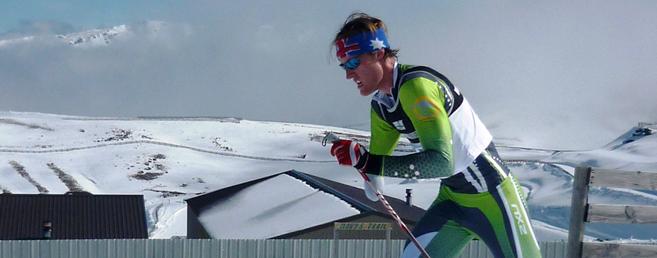


Cross Country Skiing

Cross Country Skiing

Sports Summary

Cross Country Skiing appeared for the first time at the 1976 Winter Games in Örnsköldsvik, Sweden.

The competition is open to athletes with a physical disability and blindness/visual impairment. Depending on functional disability, a competitor with little or no leg functionality uses a sit-ski, a chair equipped with a pair of skis.

Athletes with blindness/visual impairment compete in the event with a sighted guide. Male and female athletes compete in short distance, middle distance and long distance (ranging from 2.5km to 20km) or participate in a team relay using classical or free techniques.  


Events/Disciplines

  • Freestyle – 5km and 2.5km
  • Classic – 5km, 10km, 15km and 20km
  • Relay – 3X2.5km and 1X3.75km+2X5km

Classification

Who is eligible for Cross Country skiing? Athletes with a physical impairment (such as limb loss or limb deficiency, spinal cord injury, nerve damage, cerebral palsy) or vision impairment.

What are the classes? Athletes are classified into classes depending on their functional ability.
Athletes with a vision impairment: B1-B3 (athletes who ski standing)
Athletes with a physical impairment: LW 2-9 (athletes who ski standing) and LW10-12 (athletes who ski sitting)

How do I get a classification? Request a classification using the Get classified form.
 
Classification Rules, Forms, Policies and Procedures:  View International and National Cross Country Skiing Classification resources.

A percentage system is used to determine the overall place of each competitor relative to each of the classifications. The athlete’s actual time is multiplied by this percentage to determine his/her adjusted finishing time. Each disability class has different percentages for the different techniques, classic and free technique.


Rules & Equipment

Sit-Ski

An athlete with a lower-body disability uses a sledge, which is a specially built chair that can be attached to a pair of skis. The skis are almost identical to standard skis, although shorter, and are attached to the chair with a standard cross-country binding. 


Ski

Made from fibreglass, classical skis are usually 25cm to 30cm taller than the height of a skier. They are light, weighing less than 0.45kg each; and narrow, with curved tips and a cambered midsection, which is thicker and arched. Free technique skis are about 10cm to 15 cm shorter for greater manoeuvrability. They are also nominally stiffer and have tips that curve less than classical technique skis. The underside of both types of skis has a groove down the centre to keep the ski straight when going downhill.